Brussels – 29 November is just around the corner: on Sunday, Spain will go to the polls to decide whether to re-elect the Socialist Prime Minister, Pedro Sánchez, or replace him with right-wing parties. According to reports from the main news agencies, the opinion polls point to a potential coalition between the centre-right party, Partido Popular (PP), and the far-right party, Vox, as the only combination capable of securing the votes needed for an absolute majority in the Congreso de los Diputados, the lower house of the Spanish Parliament. As of today (26 November), the PP stands at around 31 per cent, Vox at 18 per cent and Sánchez’s “Partido Socialista Obrero Español” (PSOE) – the Spanish Socialist Workers’ Party – at 30 per cent. This would allow him to take second place, but he lacks a coalition with the other parties “further to the left”, which is key to securing victory.
Sánchez’s opponents
Although most statistics suggest that the PP-Vox “alliance” will emerge victorious, the Prime Minister said in an interview published this morning in La Repubblica that “Feijóo and Abascal will be defeated”. The former president of the Galicia region, Alberto Núñez Feijóo, has been leading the PP since April 2022. Although his party won the most votes in the 2023 general election, it failed to secure sufficient support to form a government. Since then, Feijóo has been the leader of the opposition. The Vox party leader, Santiago Abascal, built his political profile in the Basque Country by firmly opposing separatism and any form of independence movement in Spain. In 2014, he co-founded Vox, which has grown from a minor political force to become the third-largest party in the parliamentary monarchy. His main ‘battles’ include stricter immigration controls, the centralisation of state powers, lower taxes and a U-turn on many progressive social policies. “The two parties want to repeal the law on end-of-life care after it took 23 years to pass,” Sánchez said in the interview. Should the two groups join forces – and win – a far-right party could hold a ministerial post for the first time since the death of the dictator Francisco Franco in 1975.
Why are there early elections?
The Spanish Prime Minister
called a snap election on 2 October after Parliament rejected his decrees on rents and evictions. In Spain, the issue of scarce and unaffordable housing has taken centre stage in the election debates after an 87-year-old woman,
María del Carmen Abascal, was evicted from her home in Madrid. On the one hand, Sánchez has proposed rent caps and bans on short-term lettings; on the other hand, the opposition is pushing for deregulation. But more than the rejection of his measures, the political crisis stems from the events of this summer in
Ceuta – where, between 30 and 31 July,
some 60,000 migrants from Morocco entered the country – and the corruption investigations involving the Prime Minister’s closest aides and members of his family. These legal proceedings do not implicate the Prime Minister, who, for his part, has denied any wrongdoing.
At the heart of the election campaign, however,
as the Institute for International Political Studies (ISPI) points out, is, above all, the cost of living, despite the positive results Sánchez can boast of within the EU. “Spanish growth stood at 2.8 per cent in 2025 and is expected to reach 2.4 per cent this year, far outpacing other major European economies. However, the rise in Spanish GDP depends primarily on growth in the number of people in employment, concentrated in sectors with low added value. Consequently, economic expansion is not translating into a proportional increase in personal incomes, while the cost of living is taking its toll, particularly on housing. Since 2015, prices have risen by 43 per cent, almost double the European average. In short, GDP is growing, but not well-being, and the Spanish people are feeling the effects,” ISPI explains.
After the vote
All 350 seats in the lower house of Parliament are up for election, with candidates standing on closed party lists —an electoral system in which voters cast their vote for a party’s entire list without being able to express preferences for individual candidates or alter the order of the names—as well as 208 of the 266 seats in the Senate. Subsequently, the Congreso de los Diputados elects the Prime Minister. The regional parliaments appoint the remaining senators. The newly elected chamber will meet on 23 December and elect the so-called ‘speaker’. King Felipe will nominate a candidate for the premiership, who is usually the leader of the party that received the most votes. The candidate requires an absolute majority of at least 176 seats in the investiture vote, or a simple majority in a second round. There is no deadline for coalition talks, but a new government must be formed within two months of that vote to avoid another election.
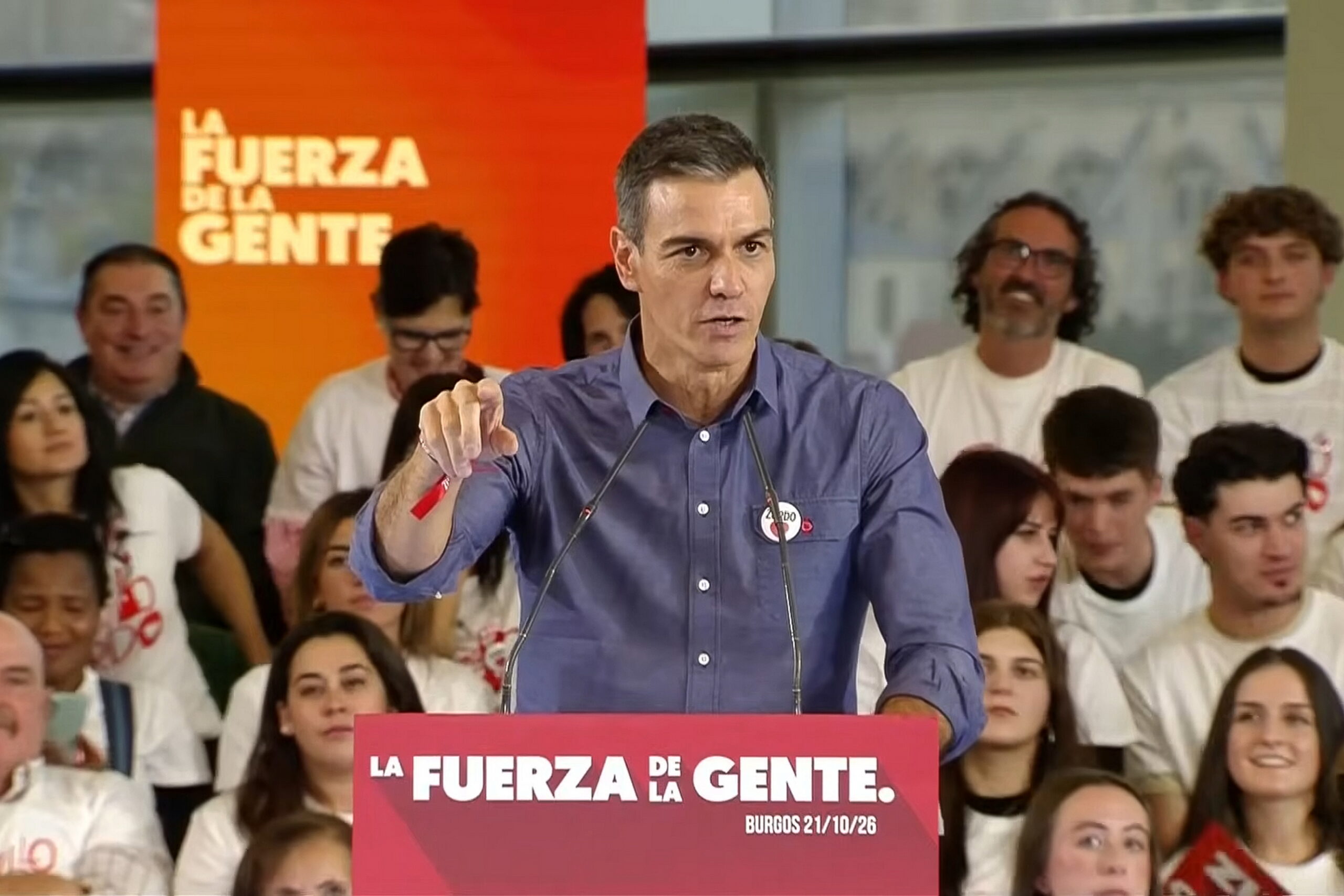
Sánchez has led the PSOE since 2017. With eight years in office behind him, he is the second-longest-serving prime minister since Spain returned to democracy in 1978. He has distinguished himself by governing during years in which Spain has recorded economic performance above the European average, and by resisting pressure from US President Donald Trump to increase military spending and denying him the use of Spanish airspace in the war in Iran. In today’s interview, he addressed the undecided voters: “We may have made mistakes, but, on the whole, Spain is currently experiencing one of its best periods in recent decades in terms of economic growth, job creation, rights and freedoms and, of course, the reduction of inequalities, which remains the primary task of any government”.
Should he lose, the European Union would lose one of its last remaining left-wing leaders: “If we do not want a far-right international for the world, how can we want one for our own country?” he concluded. But Sánchez’s defeat could also have repercussions in Brussels and across the EU, pushing the Socialists further into a corner within a centrist, pro-European majority whose majority partner is
the EPP, which has long preferred to look towards the far right.