
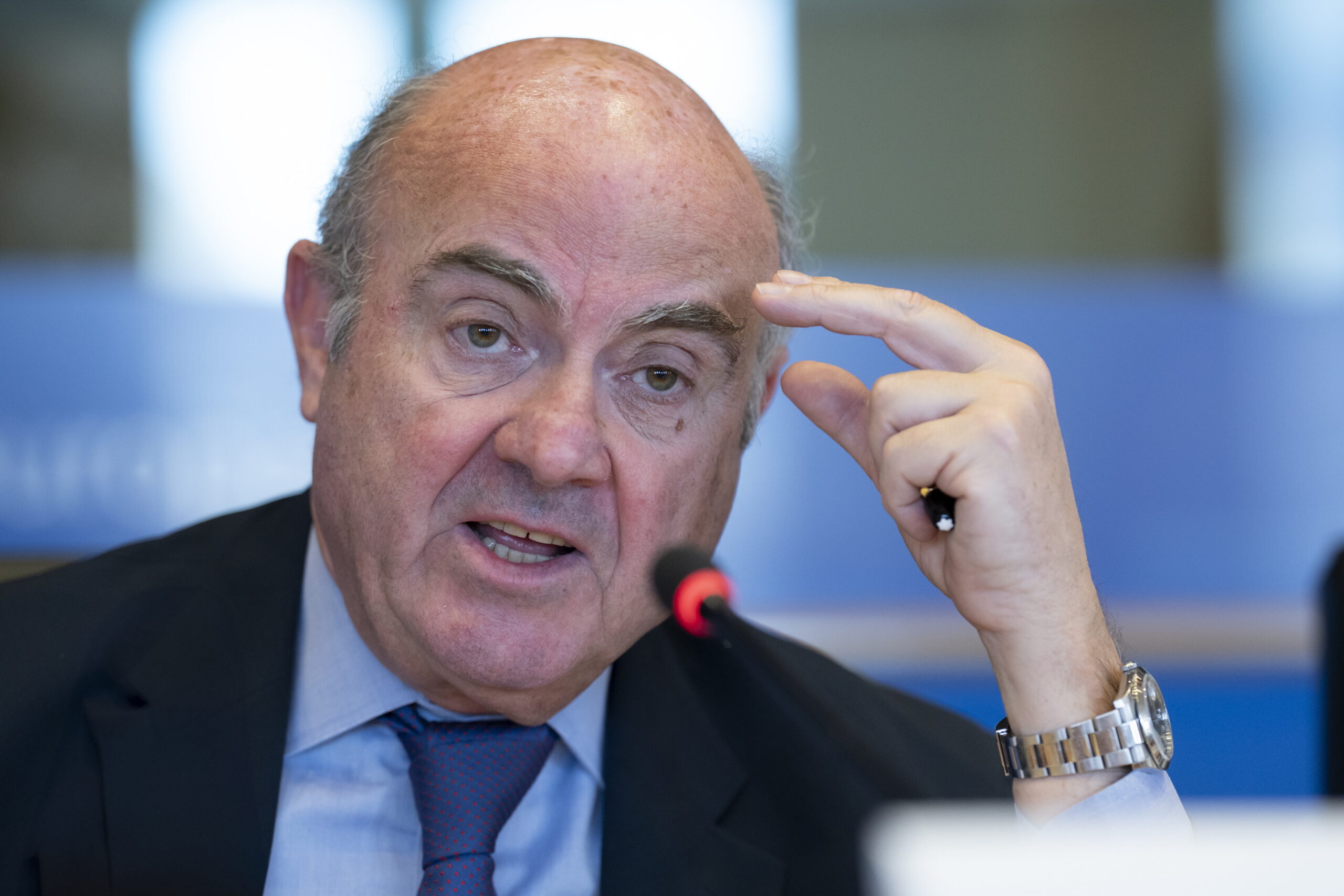
Brussels – Looking ahead, “it is likely that unreliability and unpredictability will persist for years to come, making uncertainty a defining characteristic that will not be overcome any time soon“. The Vice-President of the European Central Bank, Luis De Guindos, doesn’t beat around the bush: the EU is facing epochal challenges, and the answer lies in “more Europe and financial integration’.” He picks
Annual Joint Conference of the European Commission and the European Central Bank on European financial integration to once again relaunch a reform agenda loaded with actions that have never been completed.
“We must make progress on all fronts,” the ECB number two pressed. “The recent radical change in US economic policy and the multilateral rules-based system,” he says in reference to the politics of US President Donald Trump, must be “the opportunity to strengthen the European project as its future depends on us and us alone.” It is here that the project of more Europe comes to translate into financial integration.
Calviño: ‘A new world order is forming, don’t look to the past’
First, De Guindos notes, “a true single market for goods and services within the EU remains elusive, hampered by persistent barriers and divergent national rules.” Then, “the banking union remains incomplete,” and finally, “the EU’s capital markets remain fragmented.” That said, “we must seize the moment and make progress on these three fronts to strengthen the Economic and Monetary Union and promote growth.” The moment is now: “With the inflation around our 2 per cent target, structural reforms and growth-oriented fiscal policy become crucial to promote productivity and competitiveness in the EU.”
In the process of completing the banking union, at least two factors weigh heavily. Firstly, De Guindos continues, “deposit insurance remains at the national level.” An underlining that sounds like frustration over an agreement never found on EDIS, the European deposit guarantee scheme. This makes the separation between banking risks and sovereign debt ‘impossible’. Not a trivial problem, for the ECB vice-president, since “the geographical location of a bank influences the outcome of a resolution process, as there is no common protection mechanism”, he adds, referring to the backstop (a common protection instrument, precisely) that should have been created with the reform of the European Stability Mechanism blocked by the Italian non-ratification of the ‘new Mes’ treaty.
 This is, for the Meloni government, yet another new invitation to implement the political agreement reached at the end of January 2021, also with the Italian blessing (secondo governo Conte, ed.). “Completing the banking union and deepening Europe’s financial markets are essential to promote and retain innovative companies, as well as to attract talent and investment,” De Guindos stressed, reiterating: “The call for ‘more Europe’ resonates louder than ever. This stems from the increasing risk of over-reliance on non-European powers and the diminishing importance of a single country on the global stage“. Translated: no more reliance on the United States. “We need to prioritise the European project over national interests. We need decisive progress on all three fronts.”
![Il vicepresidente della Bce, Luis de Guindos, in commissione Affari economici [Bruxelles, 28 aprile 2025]](https://www.eunews.it/wp-content/uploads/2025/04/de-guindos-350x250.png)