- Europe, like you've never read before -
Monday, 23 November 2026
No Result
View All Result
  • en ENG
  • it ITA
Eunews
  • Politics
  • World
  • Business
  • News
  • Defence
  • Health
  • Agrifood
  • Other sections
    • Culture
    • Rights
    • Energy
    • Green Economy
    • Finance & Insurance
    • Industry & Markets
    • Media
    • Mobility & Logistics
    • Net & Tech
    • Sports
  • Eunews Newsletter
  • European 2024
    Eunews
    • Politics
    • World
    • Business
    • News
    • Defence
    • Health
    • Agrifood
    • Other sections
      • Culture
      • Rights
      • Energy
      • Green Economy
      • Finance & Insurance
      • Industry & Markets
      • Media
      • Mobility & Logistics
      • Net & Tech
      • Sports
    No Result
    View All Result
    Eunews
    No Result
    View All Result

    Home » World politics » Protests in Serbia are turning violent

    Protests in Serbia are turning violent

    Tensions continue to rise in the Balkan country, where pro-Russian President Aleksandar Vučić is implementing a harsh crackdown on dissent. Over the weekend, new clashes between protesters and pro-government factions, amid abuse by the security apparatus

    Francesco Bortoletto</a> <a class="social twitter" href="https://twitter.com/bortoletto_f" target="_blank">bortoletto_f</a> by Francesco Bortoletto bortoletto_f
    18 August 2025
    in World politics
    Serbia proteste

    Serbian riot police face anti-government protesters in Belgrade on August 14, 2025. Rallies have been taking place across the Balkan country, including the capital Belgrade August 14, 2025, following a night of violent clashes in towns and cities the previous night, when large groups of masked men, some wielding batons, confronted anti-graft demonstrators outside the ruling party offices. The protests come after nine months of large rallies drawing hundreds of thousands onto the streets, which started as a demand for transparent investigation into a rail tragedy and are now calling for snap elections. (Photo by Marko Djokovic / AFP)

    Brussels – The mesh of repression in Serbia is being tightened. The pro-Russian President Aleksandar Vučić intends to use an iron fist against the demonstrators who have been protesting on the streets of the Balkan country’s main cities for five days. The escalation of violence could mark a turning point in the anti-government protest, but for now, the EU has nothing to say about it. 

    “Arrest Vučić” was one of the many signs that appeared on placards dotting the plazas of half of Serbia over the weekend, in what observers describe as a recurrence of the clash between protesters and the government, which has been going on continuously since last autumn. 

    Over the past five days, the protests have turned violent across the country, especially in Belgrade, with heated clashes between some pro-government factions and protesters, some of whom set fire to the offices of the SNS, the party of President Aleksandar Vučić, in power since 2012, and their coalition allies. The security forces were accused of excessive use of force to quell the riots.
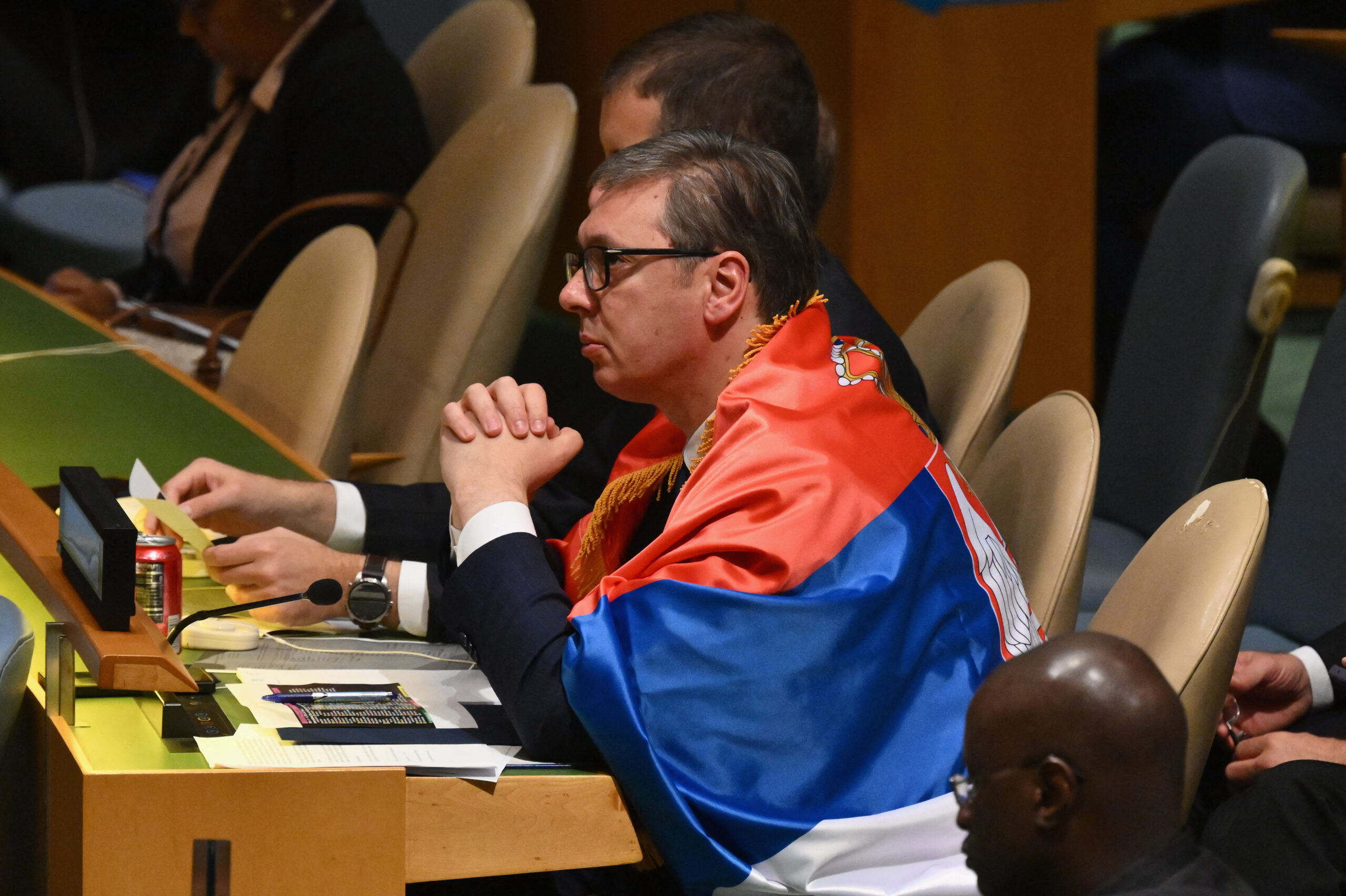
    Aleksandar Vucic Serbia
    (credits: Angela Weiss / AFP)

    But the head of state has no intention of relinquishing his grip on power and, indeed, is promising another crackdown on dissent. “If we don’t put in place tougher measures, it is only a matter of days before they (the protesters, ed) kill someone,” he declared yesterday (17 August), branding the protests as “pure terrorism” orchestrated by phantom outside forces who allegedly hatched a plot to unseat him. “You will witness the determination of the Serbian state,” the authoritarian leader threatened, warning that “we will use all means at our disposal to restore peace and order in the country.”

    The past few days have been the most serious escalation of the oceanic protests, considered the largest ones, since the implosion of Yugoslavia, and remaining largely peaceful until now, against the rampant corruption that erupted when the collapse of a bus shelter in Novi Sad last November killed fifteen people. Led mainly by students, the popular movement has never stopped contesting the leadership of Vučić, who responded with repression. 

    Repression that, so far, hasn’t seemed to bother those in charge in Brussels. In recent months, both the President of the European Council, António Costa, and the High Representative Kaja Kallas have visited Belgrade to reiterate the EU’s commitment to Serbia’s accession, turning a blind eye to the grave human rights violations, as well as Vučić’s embarrassing closeness to Russian President Vladimir Putin.

    English version by the Translation Service of Withub
    Tags: aleksandar vuciceu enlargementprotests serbiarepressioneserbia

    Related Posts

    (credits: Andrej Isakovic / Afp)
    Energy

    Orbán and Vučić want to bring Russian crude oil to Serbia via Hungary

    21 July 2025
    Aleksandar Vuci
    World politics

    Serbia, pro-Russian President Aleksandar Vučić in Ukraine for the first time

    11 June 2025
    kallas
    World politics

    EU silent on Serbia. After Costa, not even Kallas criticises Vučić

    22 May 2025
    map visualization
    SIBEG AZIENDA INDUSTRIA BEVANDE IMBOTTIGLIAMENTO IMBOTTIGLIAMENTI COCA COLA STABILIMENTO BOTTIGLIA BOTTIGLIE FABBRICA

    Coca-Cola Europacific Partners may have breached competition rules: the Commission launches a formal probe

    by Emanuele Bonini emanuelebonini
    23 November 2026

    According to the European Commission, the European bottler that distributes drinks under the ‘The Coca-Cola Company’ brand is alleged to...

    Stazione di servizio. Crediti: Saverio de Giglio via Imagoeconomica

    EU fuel prices rose by almost 30 per cent in October

    by Iolanda Cuomo
    23 November 2026

    The figures relate to private transport. Italy is (slightly) below the EU average, with a price rise of 27.1 per...

    METROPOLITANA DI ROMA TRASPORTI CAPIENZA LIMITATA
TRASPORTO PUBBLICO METRO MEZZI PUBBLICI
BINARIO

    Three in ten people in EU travel by public transport or on foot. Often because they are poor

    by Emanuele Bonini emanuelebonini
    23 November 2026

    Eurostat: In 2025, "people at risk of poverty or social exclusion relied on public transport as their main mode of...

    Una foto dal panel

    COP31 renews its focus on sustainable fuels: progress one year after the initiative launched by Italy, Brazil, Japan and India

    by David Chiaramonti *
    23 November 2026

    What game does Europe intend to play? The coming months will reveal what role our region will play in the...

    • Director’s Point of View
    • Opinions
    • About us
    • Contacts
    • Privacy Policy
    • Cookie policy

    Eunews is a registered newspaper
    Press Register of the Court of Turin n° 27

    Copyright © 2025 - WITHUB S.p.a., Via Savona 127/B, 20144 Milano
    VAT number: 10067080969 - ROC registration number n.30628
    Fully paid-up share capital 50.000,00€


    No Result
    View All Result
    • en ENG
    • it ITA
    • Politics
    • Newsletter
    • World politics
    • Business
    • General News
    • Defence & Security
    • Health
    • Agrifood
    • Altre sezioni
      • Culture
      • Rights
      • Energy
      • Green Economy
      • Gallery
      • Finance & Insurance
      • Industry & Markets
      • Media
      • Mobility & Logistics
      • Net & Tech
      • News
      • Opinions
      • Sports
    • Director’s Point of View
    • Draghi Report
    • Eunews Newsletter

    Attention