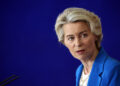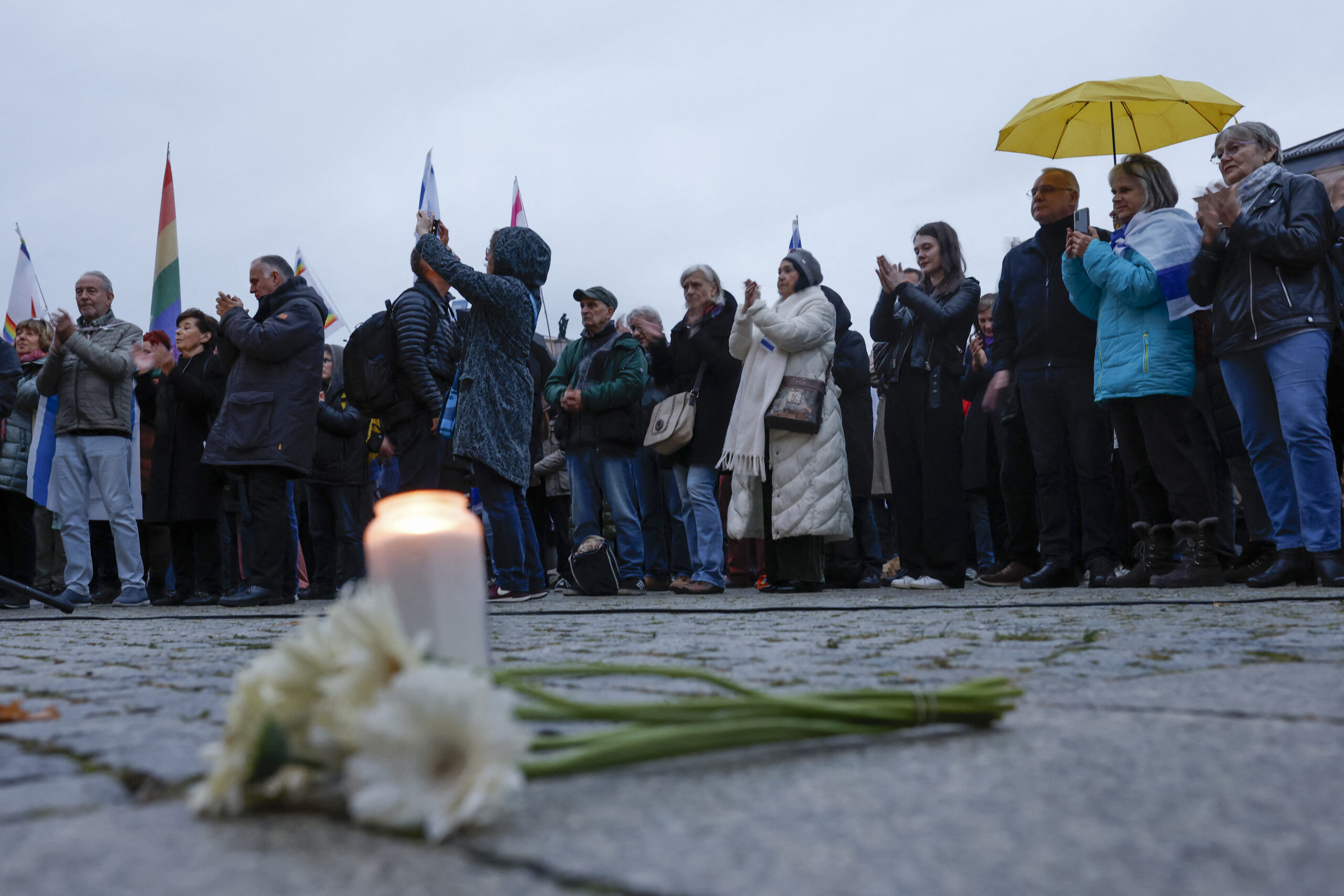
Brussels – With the rest of the world, Europe remembers today (7 October) the second anniversary of the Hamas attacks against Israel. “We will never forget the horror” of that day, write the President of the EU Commission, Ursula von der Leyen, and the President of the European Council, António Costa, in a joint post on X, nor “the pain caused to the innocent victims, their families, and the entire Israeli people.” “We honour their memory by working tirelessly for peace,” they add, referring to the negotiations underway in Egypt between emissaries of the Jewish state and the Palestinian organisation.
In addition to the remembrance of the Hamas attacks, there is also remembrance of the 1,195 victims (plus 251 hostages), condemnation of the attacks, and support for the efforts to reach a political solution to the conflict that has been raging for two years in the battered Gaza Strip, mediated by the United States on the basis of the 20-point plan proposed by Donald Trump.
From Strasbourg, where the plenary session of the EU Parliament began yesterday, the president, Roberta Metsola, called 7 October 2023 “a day that will forever be etched in the history of our time as a day of infamy.” The popular Maltese deplore the “cycle of war and violence that has claimed the lives of tens of thousands of people” (updated estimates speak of over 67,000 victims among the Gazawi population, largely civilians) but fails to go so far as to strongly condemn the disproportionate military response that Tel Aviv has launched in the exclave on the coast, described by the United Nations and Israeli NGOs themselves as a genocide in full swing.

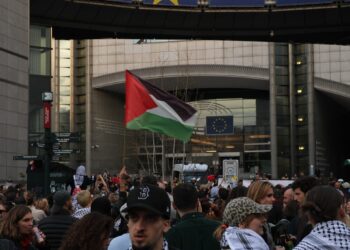
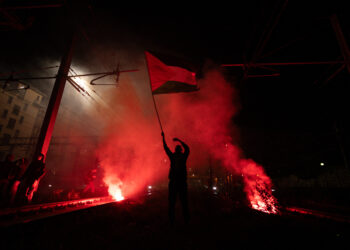
Speaking during the debate in the Parliament on the subject, Mediterranean Commissioner Dubravka Šuica conceded that “the situation in Gaza has become intolerable” and that the Israeli-led massacre in the Strip has “shaken the consciences of the world”, as evidenced plastically by the multiplication of the oceanic demonstrations that have erupted worldwide in recent weeks, also and above all in Italy.
Brussels, she continued, considers Trump’s plan “a credible framework for peace” and agrees with its key points: “No role for Hamas (post-war, ed), no forced population displacement, no annexations, including in the West Bank, no threats from Gaza to its neighbours and no military operations” in the Strip. The goal, Šuica concluded, is to ensure “the real security of Israel and a secure future for all Palestinians.”
The Socialist group leader in the Parliament, Iratxe García Pérez, also spoke of a “brutal terrorist attack.” Still, she did not hide and also condemned “Israel’s reaction with the genocide in Gaza.” Regarding the widely attended street protests, the Spanish MEP notes that “our task is to listen to the voice of the millions of citizens” who took to the streets because “our silence is complicit.” “We must ask the Commission to act to stop the massacre,” she concludes.
From the Socialists and Democrats (S&D), PD delegation leader Nicola Zingaretti reminds that “security is not built with force but with peace” and that “infinite violence calls for infinite terrorism“. His party colleague Sandro Ruotolo rebukes that today “it is the Palestinian people who pay the highest price“, stressing that in order to get closer to peace, it is necessary to break off hostilities and “resume a true political process, which finally recognises the Palestinians’ right to a free and sovereign state alongside Israel.” An argument that, planisphere in hand, would seem to be shared by an increasing number of governments around the world.

More incisive were the interventions of two Italian MEPs who had embarked with the Global Sumud Flotilla. The Dem Annalisa Corrado pointed out that the “ongoing genocide” in the Strip is “the result of criminal political choices” made by the cabinet of Benjamin Netanyahu (on whose head, moreover, hangs an arrest warrant for crimes of war and against humanity issued by the International Criminal Court) and that “the responsibilities of the Israeli government cannot be covered by an accomplice silence” like the one that, increasingly deafening, is rising from the chancelleries of the Twenty-Seven.
But, Corrado warned, one must also approach the ongoing negotiations with realism and avoid diktat between the warring parties (and their respective allies): “Peace is not built by imposing conditions from above, by denying the voice and dignity of the Palestinian people,” she argued. And pointed out that “without the recognition of Palestine, without a political process that ends the illegal occupations, any agreement will remain fragile and the roots of hatred will not be eradicated.” “Europe must stop oscillating between hypocrisy and connivance,” she concluded.
From the Green benches, Benedetta Scuderi (Avs) also wondered “why after two years of Palestinian genocide and ethnic cleansing we still do nothing to stop Israel,” and questioned her colleagues on their refusal to “speak about the Flotilla,” referring to the rejection by the chamber of two motions on the subject proposed by her group and the Left at the start of the entire plenary session. “If you do not care even for the rights of the Europeans you represent, of our colleagues, never will this Parliament be able to support the Palestinian people,” was her j’accuse.

On the boats of the transnational solidarity mission—intercepted using pirate methods by Tel Aviv between October 2 and 3—was also the Franco-Palestinian MEP Rima Hassan, of the Left. The activists recounted that they have suffered physical and psychological aggression and violence at the hands of the Israeli authorities. Scuderi argued that “Europe is dying in the silence and complicity of its institutions” but also notes that “there is another Europe, alive in the millions of people who fill the streets shouting “not in our name,” a Europe that believes in justice, law and peace, that does not want to repeat the mistakes of the past and that truly opposes genocide.”
The updates coming from Sharm el Sheikh, where the two negotiating teams are in indirect contact, are only partially encouraging. This is undoubtedly the most solid diplomatic attempt so far, but the positions remain distant on several crucial points despite the readiness declared in principle by both belligerents. Above all, Hamas demands the complete cessation of the Israeli campaign and the total withdrawal of the Tel Aviv army from the Strip, while the Jewish state demands the disarmament of the Palestinian group. Another issue unresolved for the moment is that of the post-war reconstruction of Gaza. Meanwhile, in the absence of an agreement, military operations continue.
English version by the Translation Service of Withub