Brussels – A few hours before the start of the EU summit, attended in person by Volodymyr Zelensky along with the leaders, the ambassadors of the twenty-seven reached an agreement on the adoption of the 19th package of sanctions against Russia. The Danish Council presidency announced the formal approval this morning (October 23) after Slovakia decided to lift its veto, according to Italian diplomatic sources.
Bratislava had blocked the new restrictive measures due to concerns primarily relating to the energy sector, especially after the recently approved phase-out of Russian fossil fuels (adopted with Slovakia and Hungary voting against). Once again, as in the past, Prime Minister Robert Fico obtained from the President of the European Commission, Ursula von der Leyen, the guarantees he was looking for regarding the energy supply and the emission trading system for buildings and transport (ETS2).
The contents of the package
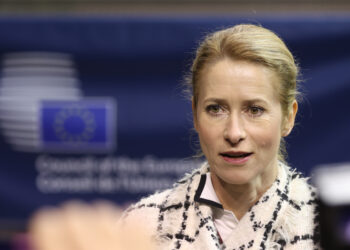
That the new package “affects, among other things, Russian banks, cryptocurrency exchanges, and entities in India and China,” the High Representative for Foreign Policy, Kaja Kallas, wrote on X, adding that “the EU is restricting the movements of Russian diplomats to counter destabilization attempts.” The twelve-star diplomacy chief announced earlier this week that she expected the sanctions – packaged by the EU executive a month ago – to be approved in conjunction with the summit of heads of state and government.

The new round of sanctions targets the Federation’s energy, financial, and trade interests, similar to previous ones. On the first front, the main novelty is a phased ban on the import of liquefied natural gas (LNG) from Moscow, in two stages: short-term contracts are to be terminated within six months, while there is time until January 1, 2027, for long-term ones. There is also a tightening of the ban on doing business with two Russian oil companies, while a further 117 ships are added to the list of the Kremlin’s shadow fleet, bringing the total to 558 vessels. Finally, there is an expansion of the criteria to identify third-country ports used for the transfer of UAVs and missiles to or from the Federation, or to evade sanctions on Moscow’s crude oil.
From a financial standpoint, the package introduces a total ban on transactions with five Russian banks. It also extends the existing restrictions to cover Russian electronic payment systems and four banks in Belarus and Kazakhstan. Similar restrictions are introduced for a further eight third-country entities (five banks, two oil traders, and one cryptocurrency exchange platform, some of which are based in China and India). There is also a total ban on crypto-asset services in the EU jurisdiction for Russian citizens and entities. Also introduced is a new prohibition on European operators signing economic contracts with nine Russian special economic zones, as well as a ban on providing reinsurance to Russian aircraft and ships in the first five years following a sale to a third country.
On the trade front, the 27 member states approved a series of measures aimed at enhancing the fight against the circumvention of existing sanctions. In this way, the package identifies 45 new entities that facilitate circumvention (17 of which are outside the borders of the Russian Federation). It extends export bans to industrial products (including salts, rubber, construction materials, and advanced technological goods) and to other categories of sensitive items (such as so-called CHP goods, used for the production of electricity and heat, and dual-use items for both military and civilian purposes). The margin granted to European companies to divest from Russia and cease business activities in the country is also extended by a further year.

In terms of services, the new package includes a ban on European operators from providing tourism-related services in the Federation, an extension of the prohibition on providing artificial intelligence services, cloud-computing, and the like, and a requirement to apply for authorization for all services that are still permitted (i.e., not explicitly prohibited) and aimed at Russian persons or entities.
One final development is the introduction of a mechanism to restrict the movement of Russian diplomats, which provides for a system whereby Member States will be able to notify the entry or transit of Moscow’s diplomatic personnel on their territory to the Commission, which will be able to authorize the chancelleries to take appropriate national measures. Finally, the package also includes the introduction of new lists concerning the Ukrainian children abducted by occupation troops and lists relating to Russia’s military research and development sector.
Support from Washington
The timing of the approval of the new round of restrictive measures by the 27 member states is politically significant, as just yesterday, the US administration imposed sanctions for the first time against Russia’s two largest oil companies, Rosneft and Lukoil. The move, announced by Treasury Secretary Scott Bessent, signals a substantial change of pace on the part of President Donald Trump, after months in which he had seemed to adopt a softer stance towards the Kremlin (from the
face-to-face with Vladimir Putin in Alaska to the reluctance to provide Tomahawk missiles in Kyiv).

Evidently, the tycoon was irritated by the reluctance of his Russian counterpart to end the war and to
meet with him in person in Budapest. That bilateral meeting, billed as yet another diplomatic victory for the US President (as well as a personal success for the Hungarian Prime Minister Viktor Orbán), has faded in recent hours precisely because of the Tsar’s unwillingness to accept compromises on the end of the conflict, starting with a ceasefire and freezing of the front line.
Kallas seized the opportunity and claimed the newfound unity of purpose on both sides of the Atlantic vis-à-vis the Kremlin. “We also are very happy about the signals we get from America on the sanctions regarding Russia,” she said on her arrival at the summit. “I think it is an important sign of strength that we are aligned here,” she added.
Another issue on the table of the EU leaders (which has been discussed for some time) is the reparation loans to Kyiv, which should be supported with the proceeds of frozen Russian assets currently held by the Belgian Euroclear institution. “There are still some issues we need to address,” Kallas admits, but “the fundamental message is that Russia is responsible for the damages caused in Ukraine and has to pay for those damages.” The High Representative acknowledges the doubts of the Belgian government, which does not intend to take legal responsibility for such a decisive action on its own: “Everyone agrees that no country should bear the risks or this burden alone,” she reasons, and assures that a mechanism is being worked on to provide guarantees to Belgium and ensure risk-sharing among the Twenty-Seven.
English version by the Translation Service of Withub