Brussels – Tonight it is Europe’s turn to have its say in the intricate peace talks to end the war in Ukraine. In Berlin, the German Chancellor Friedrich Merz will welcome European leaders (including Prime Minister Giorgia Meloni), the EU and NATO leadership, and the President of Ukraine, Volodymyr Zelensky, starting at 6.30 p.m. For the discussion to be a real exchange of ideas, however, the presence of the American counterpart will be necessary.
In Berlin today, 15 December, US envoys Steve Witkoff and Jared Kushner met with Ukrainian representatives for the second consecutive day. According to Zelensky, the aim is to “reach a full understanding by Christmas.” The talks were described as positive by both sides; the Ukrainian leader spoke of “important talks” even though they “were not easy.” For the Americans, often more optimistic than they should be, “90 per cent of the issues between Moscow and Kyiv have been solved.”
The phantom phone call with the EU Council
According to the German government spokesman, US representatives have been invited to this evening’s talks with European leaders. However, their presence is not yet certain. If one were to interpret the signals, it would not bode well for the video conference between the US envoys and the EU Defence Council this afternoon. According to the EU high representative at the press conference after the summit, the internet connection between Berlin and Brussels was reportedly broken after a few minutes “on the American side.” The conversation between Witkoff and the EU foreign ministers, therefore, did not take place.
Zelensky directly negotiating with Russia pic.twitter.com/VUyG9KguyN
– Joni Askola (@joni_askola) December 15, 2025
The dialogue between Washington and Kyiv continues
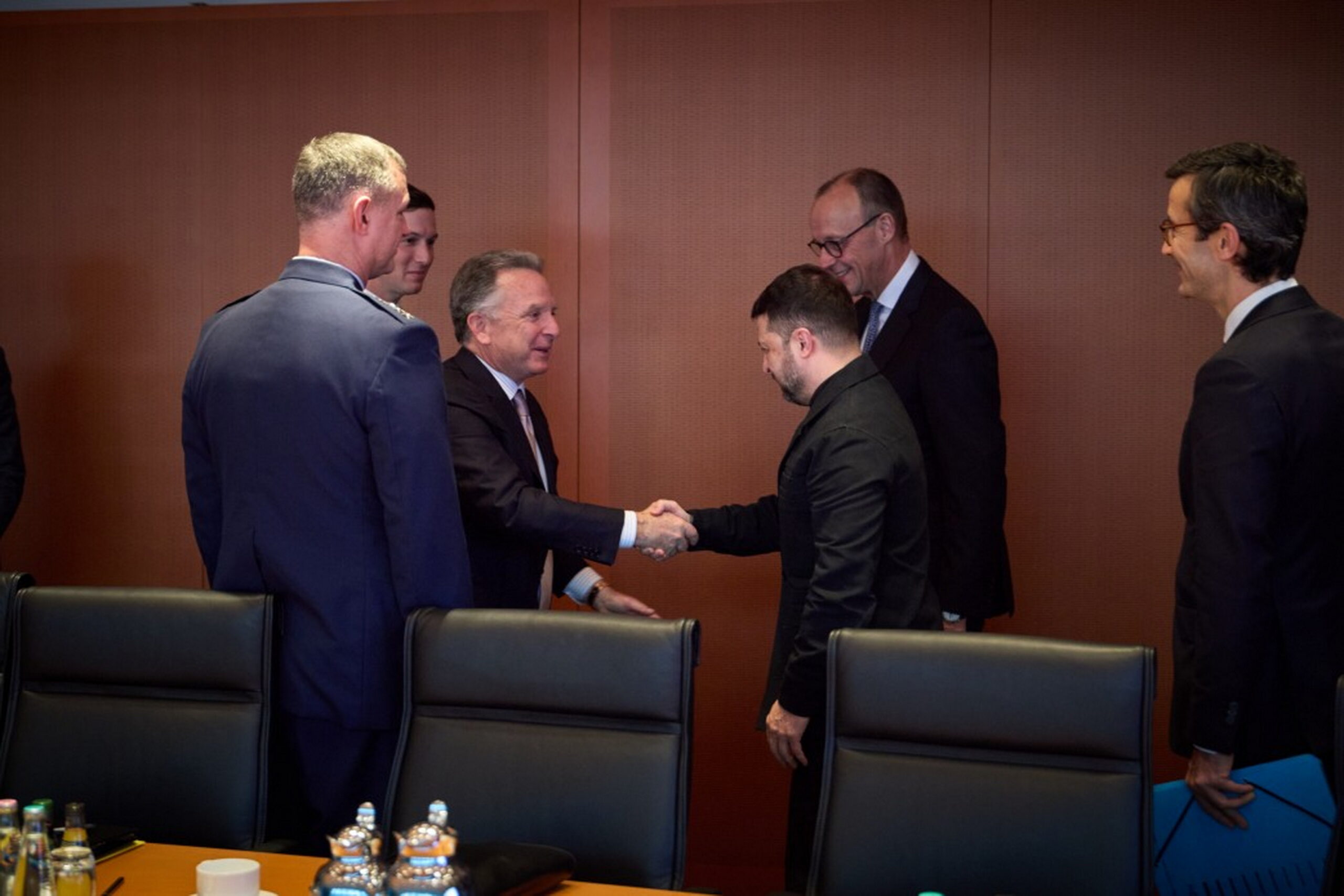
In the meantime, however, direct discussions between the US and Ukraine have continued. This morning, the two sides held talks for almost five hours. Only representatives of the two factions were at the table, although Chancellor Merz was pictured alongside the negotiators. When the doors closed, the German had to leave the room.
The positions reportedly remain the same as a few weeks ago. The United States is putting pressure on Kyiv to withdraw from the 25 per cent of Donetsk Oblast it still controls. The Ukrainians, on the other hand, continue to support the ceasefire hypothesis on the front line. The Kremlin, in the morning, through its spokesman, Dimitri Peskov, put pressure on the negotiators, stating that “President Putin wants a final peace agreement, not temporary truces,” and that “Ukraine’s non-access to NATO is the cornerstone of peace negotiations and requires precise legal guarantees.”
Yesterday, Zelensky had in fact made openings to that effect, saying he was satisfied with binding guarantees from the US and Europe without formally requesting entry into the Atlantic Alliance. Senior US representatives described the talks in a call with journalists as “a very positive meeting on many issues,” especially thanks to the contributions of “Germany, France, Britain.”
READOUT FROM U.S.-UKRAINE TALKS IN BERLIN, GERMANY:
The meeting in Berlin between President Zelenskyy, Special Envoy Witkoff, Jared Kushner, and delegations from the United States and Ukraine lasted over five hours. Representatives held in-depth discussions regarding the… pic.twitter.com/G7breh5Gab
— Special Envoy Steve Witkoff (@SEPeaceMissions) December 14, 2025
Europe prepares to have its say, Italy uncertain
The ball is now in the Europeans’ court. The most important match is being played in Brussels. Thursday’s European Council will be decisive for the fate of the Kyiv repair loan financed with frozen Russian assets. In the morning, the High Representative Kaja Kallas called it a take-it-or-leave-it week, declaring that “we will not leave the summit before we get a result.” The discussions are likely to be very long as a handful of states, including Italy, remain hesitant. In a draft resolution, prepared by the Italian majority, ahead of Wednesday’s parliamentary discussions in Rome on the next European Council, a certain timidity is reaffirmed. The text states that “the European Commission is requested to carry out a thorough examination of the legal and financial aspects of all financing options on the table.” A nay that will only become a yes-or-no on Thursday at the European Council.

The Special Commission of the Council of Europe
Meanwhile, at the European level, a commission will be set up by the Council of Europe to examine and evaluate claims submitted by Ukrainian victims of the Russian aggression. This is an unprecedented initiative for the supranational body, which has received the consensus of more than 30 countries out of its 46 members. The commission will be tasked with providing a monetary valuation of the damage Russia inflicted on Ukraine and establishing reparations. Among the plans of the international organisation that deals with human rights, democracy, and the rule of law in Europe is to establish a compensation fund, also fed by frozen Russian assets.
English version by the Translation Service of Withub![Kaja Kallas al suo arrivo al Consiglio Affari Esteri, 15/12/25 [Credits: Council of the EU]](https://www.eunews.it/wp-content/uploads/2025/12/dd011525-d46c-4718-b795-3c6e10daa226-350x250.jpg)