Brussels – Brussels keeps repeating the same mantra: seal the EU–Mercosur trade deal as soon as possible, ideally this Friday, when the ambassadors of the 27 member states meet, while addressing farmers’ concerns. “Of course, Mercosur is an important trade agreement, but it is equally important for us to ensure that farmers’ concerns are listened to carefully,” said Cypriot Agriculture Minister Maria Panayiotou at a press conference following the extraordinary meeting convened by the European Commission and the Cypriot Presidency of the EU Council with agriculture ministers.
“We want to ensure that the necessary guarantees are in place for our farmers. We must guarantee a safety net for our farmers, and we will wait to see the outcome of Friday’s discussions,” she added. For Italy, a country that could be decisive in one way or another in the vote, the agreement must make reciprocity explicit. “We are asking and will continue to ask today – and we hope that this will be included – that there be a clear term: reciprocity, what applies to our products also applies to products that compete with our products,” explained Agriculture Minister Francesco Lollobrigida at a press conference in Brussels ahead of the meeting.
“This is the key element that puts us in a position to have a good agreement, one that becomes an excellent agreement thanks to the work we have focused on,” he stressed. Lollobrigida pointed out that Italy is “an exporting nation.” For this reason, “we have always said that we viewed international agreements positively, except when they called into question certain elements of logic: if you impose rules on your producers, limiting their ability to compete on price, it is obvious that you cannot have a tariff system that allows others to compete on price, not because of the efficiency of their businesses or their model, but simply because they do not comply with your own rules on environmental rights, workers’ rights, etc.,” he pointed out.
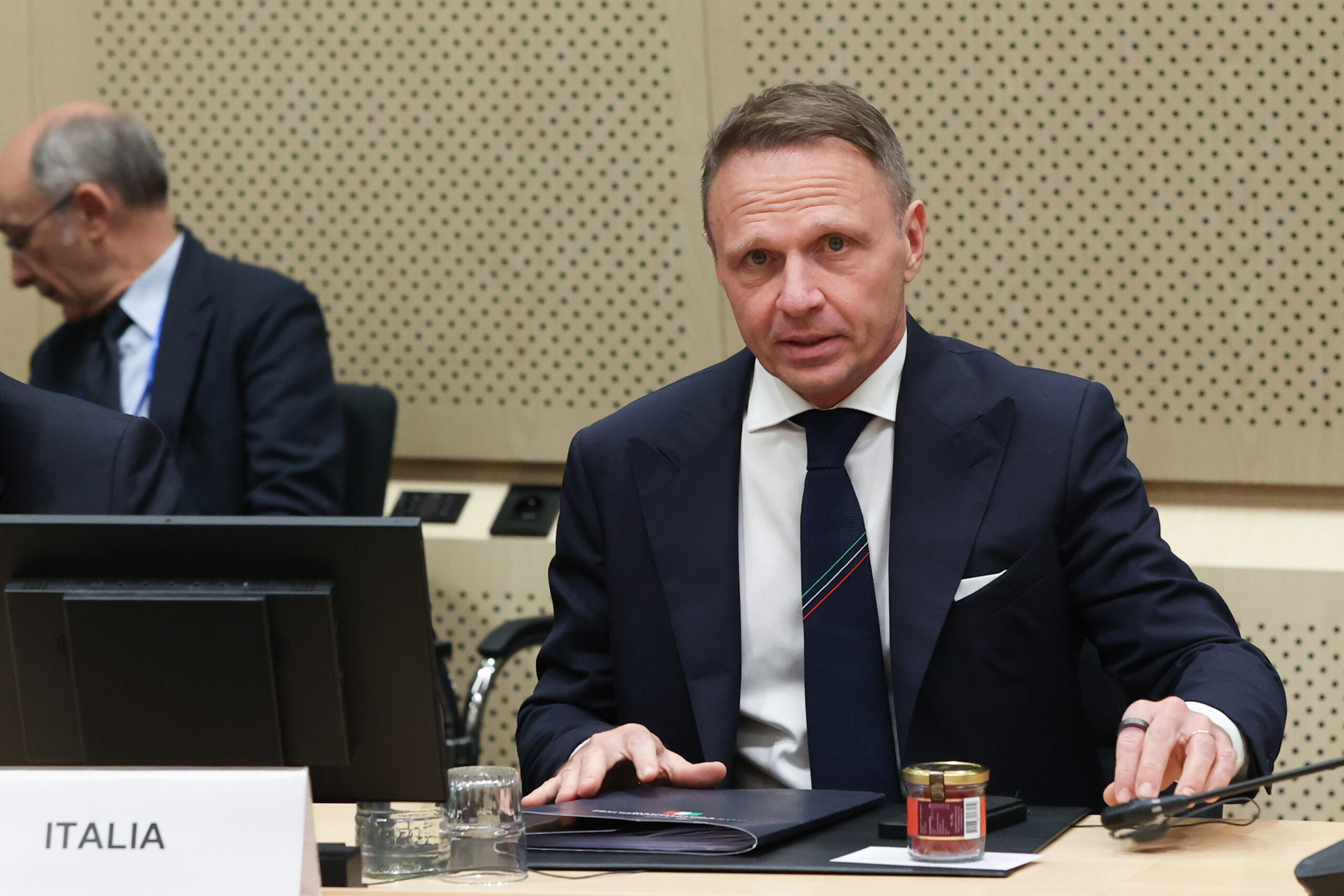
“We believe that this principle should be a general one: we can no longer enter into international agreements that call into question our European economic system, or even just part of it,” the minister emphasised. However, “if all the necessary safeguards for our manufacturing sector as a whole are confirmed, then of course we will approve the signing of the agreement at this stage,” the minister said.
After the conclusion of political negotiations in December 2024, the European Commission worked to introduce measures to make the agreement easier for EU capitals to accept. For example, a fund in the next EU Multiannual Budget (2028-2034) to help farmers in the event of market disruptions. It is a financial package exceeding 6 billion euros, designed to provide protection against market fluctuations that could harm certain sectors,” the minister explained. And then there is a handbrake, “which still doesn’t fully satisfy us, but which lowers the threshold from 10% to 8% in the event of a surge of imports or a depreciation of those products, even in just a single EU country. If this happens at the current threshold of 8% — although we believe it should be brought back to the 5% level set by the European Parliament, with proper controls — it will allow the effects of the Mercosur agreement to be suspended,” he added.
Meanwhile, Italy welcomed yesterday’s proposal by European Commission President Ursula von der Leyen that, in the next Multiannual Budget, additional resources will be made available to farmers as early as 2028, rather than waiting for the mid-term review. Approximately 45 billion can be mobilised immediately to support farmers. This is “good news,” which “confirms the seriousness of the work carried out by Italy,” Lollobrigida said. “We can say that not only has the 22% cut in resources dedicated to agriculture in the period 2028-2034 been cancelled, but the financial allocation has even been increased by one billion compared to the 2021-2027 period. Equally important is that, in essence, it will no longer be governments that decide which sector to allocate resources to, but the Commission that will determine the amount to be allocated exclusively to the primary sector. In this way, the specificity of the CAP is essentially preserved,” he commented.
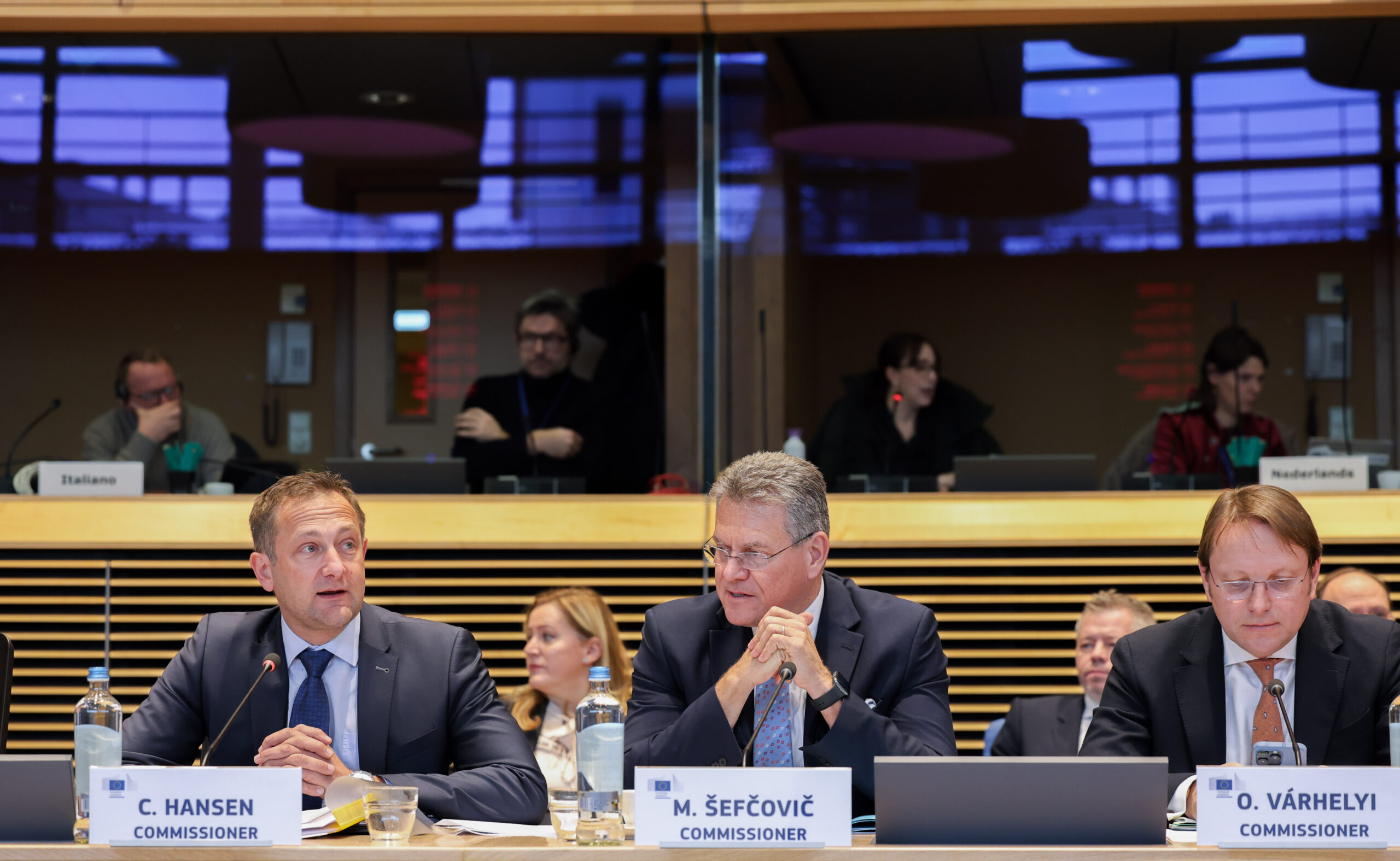
Finally, today the minister sent a letter to the European Commissioner for Agriculture and Rural Development, Christophe Hansen, requesting the suspension of the Carbon Border Adjustment Mechanism for fertilisers. “With the entry into force of the Carbon Border Adjustment Mechanism (CBAM) on 1 January, our agricultural sector will be exposed to a serious increase in the cost of fertilisers imported into the EU. The alarming market situation suggests that a clause suspending the effects of the CBAM for fertilisers should be activated as soon as possible, in light of the serious market circumstances and the expected impact on prices,” he wrote.
“In the immediate term, however, I would consider it appropriate to adopt a parallel measure to benefit our farmers by eliminating import duties on fertiliser from third countries. This measure should come into force quickly and be in line with the costs of the CBAM,” he clarified. “I leave these reflections to you in order to provide a concrete and timely response to the concerns of the agricultural world in a market context that looks highly worrying at the beginning of 2026,” Lollobrigida pointed out. The Commission agrees with this measure. “We will propose to temporarily suspend the remaining most-favoured-nation (MFN) duty on ammonia, urea, and, where necessary, other fertilisers. Robust safeguards will ensure that this relief is well-targeted and that its benefits flow directly to farmers,” said European Trade Commissioner Maros Sefcovic at a press conference after the extraordinary meeting. “The measure can enter into force swiftly, in 2026, and its impact would broadly offset the costs linked to the CBAM that took effect this January,” he added.
English version by the Translation Service of Withub
![Una delegazione di Coldiretti alla manifestazione degli agricoltori a Strasburgo, 21/1/26 [Credits: Federica Onnis]](https://www.eunews.it/wp-content/uploads/2026/01/WhatsApp-Image-2026-01-20-at-11.21.34-350x250.jpeg)