While the far-reaching implications of the Trump administration’s dismantling of USAID for humanitarian and development outcomes affecting vulnerable populations have been widely analysed over the past year, the profound consequences for the EU’s foreign and development policy objectives have received far less attention.
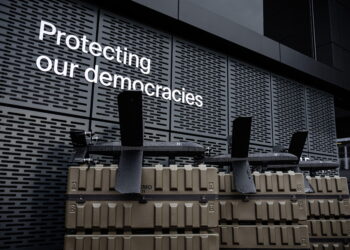
Institutions in Brussels and across the 27 Member States had a significant opportunity to strengthen Europe’s soft power worldwide. Yet, rather than filling the vacuum left by the United States’ retreat from global development leadership at a critical geopolitical moment, Europe is itself scaling back aid. At the same time, it is increasing defence spending and redefining its international role as a more security-driven and competitive global actor.
Germany, France, Italy and Spain were among the majority of EU countries that reduced development assistance in 2024 compared with the previous year.
From cooperation to competition
As explained by Celia Cranfield, Head of Advocacy at the CONCORD confederation – the primary European confederation of NGOs focused on sustainable development and international cooperation – “there has already been an overall decline in official development assistance from 2023 to 2024, and we expect this trend to worsen as Germany, France, Belgium and the Netherlands – traditionally among the countries with the highest levels of official development assistance – continue to cut funding.”
A reduction in economic support also corresponds to a new allocation of resources. “More attention is being given to investments in infrastructure that support the security of critical raw materials, as well as the digital and energy transitions. We always talk about soft power, but it is closely linked to hard power.”
We are, in fact, facing a shift from cooperation to competition. For Cranfield, the Commission led by Ursula von der Leyen aims to make Europe more competitive and to guarantee access to resources. As a result, assistance is moving away from its traditional people-centred approach towards prioritising the mutual interests that bind partner countries and Europe.
However, this approach is met with some scepticism by third countries, as it is perceived as highly top-down. The priorities given precedence are those of the European Union, with benefits to local populations often considered only as an afterthought. “Large infrastructure projects historically carry significant risks in terms of environmental impact, as well as human and labour rights, among other concerns. What partner countries are calling for is stronger civil society participation in these processes.”
Cuts at the national level are partly due to pressure from the far right, but mainly to the need to reduce budgets in order to comply with European debt limits. The philanthropic sector can support the third sector, but this is not sufficient.
“At the moment, what we are seeing are cuts. But there is also another problem. In many Member States, the role of civil society is increasingly being questioned, freedom of action is being restricted, smear campaigns against NGOs are taking place, and concrete legal constraints are being imposed to limit their ability to operate.”
What to expect from the EU’s future
In the EU’s next long-term budget – the 2028–2034 Multiannual Financial Framework (MFF) – the European Commission presents external action as a more ambitious and flexible instrument. Yet this ambition sits uneasily with political realities, as most Member States are cutting aid budgets while the EU is placing greater emphasis on defence spending.
“How do you make sure that the humanitarian principles will be preserved?” asks Mariella Di Ciommo, a senior policy analyst at the European Centre for Development Policy Management (ECDPM). “Not only because of how the regulation is written, but also because of how the politics surrounding the regulation lead to its implementation.”
Although the €215 billion allocated to the ‘Global Europe’ pillar – out of the overall €1.9 trillion budget – represents an increase of around 75% compared with current external action funding, the proposal must still survive negotiations between the EU co-legislators. Based on past experience, the likelihood of cuts “is very high,” Di Ciommo notes. Moreover, it is the new structure itself that raises concerns about how much funding will ultimately be allocated to development aid.
A simpler and more flexible framework has been consolidated into a single instrument, merging what was previously financed under the NDICI—Global Europe with pre-accession assistance and humanitarian aid. This approach could generate tensions between different EU policy areas, particularly given the shift from thematic to geographic pillars. “I think there is a risk that traditional poverty reduction is being overshadowed by geopolitical and security considerations,” warns Anita Käppeli, Director of Policy Outreach Europe at the Center for Global Development (CGD). She points out that, by eliminating thematic allocations, investment may increasingly tilt towards competitiveness and other geopolitical interests.
According to the Regulation establishing Global Europe, programming would be driven by “mutual interests and shared priorities” rather than by development concerns alone. In addition, multiannual indicative programmes may be reviewed “as necessary” to ensure effective implementation if a degree of “urgency” justifies such flexibility. Legitimate questions therefore arise about how partner countries will be involved, not only at the outset but throughout the implementation process and any subsequent reviews. Di Ciommo stresses that “predictability, historically one of the advantages brought by EU financing, is somewhat lost in this context of adaptability.”
“This article was produced as part of the Thematic Networks of PULSE, a European initiative that supports transnational journalistic collaborations.”
English version by the Translation Service of Withub