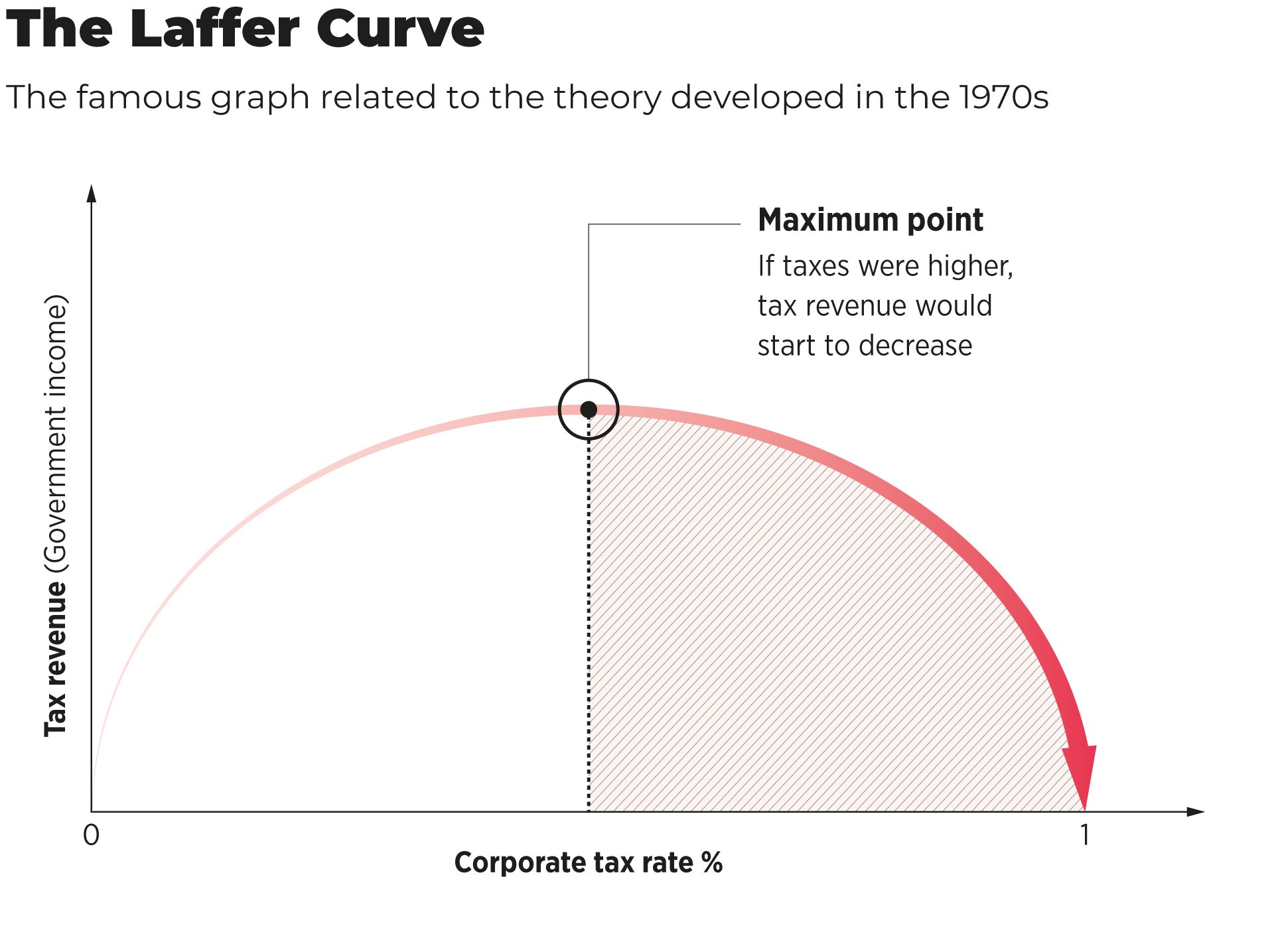
Brussels – The best form of welfare is a good, well-paid job. Don’t tax the wealthy or corporations, which are the only ones capable of investing and creating opportunities. This is the belief of Dr. Arthur Betz Laffer: American economist and member of Reagan’s Economic Policy Advisory Board (1981-1989) during the Ronald Reagan administration, the inventor of the Laffer Curve. He served as economic advisor to Donald Trump’s 2016 presidential campaign, and was awarded the Presidential Medal of Freedom by Trump in 2019 for his contributions to economics. We met him in Brussels, where he is visiting for various work commitments.
After decades, the transatlantic relationship is experiencing some tensions, how do you consider them and the tariff policy launched by the president, Donald Trump?
“Donald Trump is uniquely American. We see Donald Trump. You generally do not. And my suggestion to you – and only suggestion – is take Donald Trump very seriously, but not literally. He’s going to change the world a lot, but he does gestures and he says this and that: don’t get distracted. Watch what he does. For example, in his first term, he had five trade deals: USMCA, Japan, South Korea, Brazil and Colombia. Those were the five deals he did, and all of them were freer trade. He reduced tariffs and quotas. So he says: ‘I’m the tariff man’. That’s a negotiation strategy to bring you to the table to negotiate freer trade, period. So if you take him at his words, you’ll think ‘Oh, my God, it’s off’. But look at what he’s doing right now with Ukraine and Russia. Do you have anyone here that does that? We do. That’s what he’s. And he’s going to win. He’s going to get a deal”.
Does he pose any threat to Europe, to the unity of the European Union?
“Well, I don’t know. I know the 27 countries fairly well. I love Europe. I understand the diversity. It’s a tough place to put together. You’ve been separate for a long time, thousands of years. It is tough and you’re making a good show of it, but you need us and we need you. I mean, we absolutely adore you: the diversity, the history, the whole culture and everything. We understand that, but you need us to. We are not divided like you are, and we can cooperate”.
So, we shouldn’t be afraid about tariffs…
“We should always be afraid about everything, be cautious, be careful. And things can always happen. You know what happened? Kennedy got shot, and that ended that. We then got Johnson, who was horrible. But I’m so optimistic. The truth of the matter is we are on a good track. We finally are getting some politicians who try to do something for their citizens. I look at the EU and I don’t see that. I see politicians who are worried about themselves, about their budgets. They shouldn’t be worried about their budgets, they should be worried about their citizens budgets. That’s all. Every dollar they take away, someone loses it. In fact, they lose a lot more than that. How do you cure a bad economy? You cut tax rates. You have a low rate, broad based, flat tax, sound money, minimal regulation, free trade and minimal restrained spending, and then get the hell out of the way. People know how to take care of themselves. The government has a very good function and once it’s done that, stop already and then just get out of the way and let people solve it. You can’t correct everything on earth through government”.
This is at the core of the Curve of Laffer that you invented.
“Yes. Do you think that by taxing the citizens you make them better off? I mean, for every dollar the government gets, there’s a dollar that someone else doesn’t get. This is a transfer: the taxpayers pay the money, it goes to the government, then government gives it to someone else for whatever reason. It’s a transfer. Now, the way we usually think of a transfer is to tax the rich people. The poor people need it and the rich people have a lot of it. They have way more than they need. They’ll live fine without it. And you give it to the poor people and they desperately need it. Now, it is not an opinion, it’s not left wing or right wing, liberal or conservative, Republican or Democrat, it’s just math: what we’re suggesting right now is you take from those who have a little bit more and you give to those who have a little bit less. By taking from those who have a little bit more, you reduce their incentives to produce and they will produce a little bit less. When you give to those who have a little bit less, you provide them with an alternative source of income other than working, and they too will produce a little bit less. If you tax people who work and you pay people who don’t work, you’re going to get less people working. So the first thing is whenever you transfer resources, you always reduce total income. The more you redistribute, the larger the transfer, the bigger the drop in total income. If you were able to redistribute income in such a way that everyone came out the same, the utopian redistribution of income, there would be no income whatsoever. To get everyone to come out the exact same, you have to tax everyone above the average income, 100% of the excess, to bring them down. You have to subsidize everyone below the average income up to the average income 100% of the gap. Now, if you actually did that, we would all be equal at zero income. It’s the end. When you talk about taxing the rich and reducing inequality, you do reduce income and inequality and make everyone equally poor”.
 The EU is looking to find new resources for its budget, trying to increase its budget for its wide agenda in defence, energy, climate and digital transitions and other points. Shouldn’t they do that?
“Should they be out seeking more revenue? No. Should they be out seeking more prosperity? Yes. And they should be trying to help the poor. How do you help the poor? By writing checks to them? No, by providing jobs. Good, high-paying jobs. Kennedy said it so beautifully. The best form of welfare is a good high-paying job. Now, if there are people who can’t work, they’re handicapped or something, of course you don’t let them starve in the street, you treat them nicely. But you don’t want to distribute so much welfare that it creates people who don’t work. So, what I would suggest is the EU goes to a low rate, broad based flat tax and cuts its spending to the point where the damage done by the last dollar of taxes collected is just less than the benefit done from the last dollar spent. Our highest personal income tax rate is 37% now. Your highest is 40% or more. There are some places where I think it’s over 60%. High tax rates guarantee that the poor never earn enough income. We need to help the poor. By taxing the rich? No. You help the poor by allowing them to become rich. And high taxes on the rich guarantee the poor can’t become rich. Take smoking: everyone knows it’s bad for you. But the truth is that the people who smoke the most are usually those with lower incomes. So when the EU keeps raising cigarette taxes, it ends up hitting the poorest the hardest. And where do those people go? Straight into the hands of the illegal market, which means governments lose tax revenue and people end up buying unregulated products. Best example of lose lose situation. Unlike the U.S., from what I’ve read, the EU and several Member States are actually making it harder for smokers to switch away from cigarettes and move to newer, less harmful alternatives — through bans, over regulation and the wrong kind of taxation. It doesn’t make sense. In the end, you’re not improving public health, you’re not helping poor people, you’re not helping state budgets — you’re just helping traffickers and the illicit trade. This is definitely not the way forward”.
Almost three years ago, you said you were very concerned about the US and the global economy. Do you still feel the same?
“There have been two times in my life when I’ve actually wondered whether there was a creator. You know, I don’t know if there is one or not, but in the 1970s, we had Presidents Johnson, Nixon, Ford, Carter—the Four Stooges. The largest assemblage of bipartisan ignorance ever seen on planet Earth. And then Ronald Reagan was elected president, and I could see the sun rising in the east. The wars stopped, and jobs were plentiful. I mean, it was one of the greatest periods of history. And then we had Bill Clinton, one of the best presidents ever. I voted for Clinton. I’m not a Republican; I’m not a Democrat. I vote for growth. And then of course, we slipped back again: we then had Bush, Obama, Biden, and I got to be very depressed. And then all of a sudden, Trump won reelection. We got the big, beautiful bill passed. We’ve got the tax cuts done. I’m seeing that sunrise again. It’s going to be better tax policy, better spending policy, better monetary policy, lower interest rates, more prosperity, better regulation. We decontrolled energy, we decontrolled health care. Before putting one new rule in, we have to take away 10 of them before. Better trade policies. Peace through strength. Once again, I’m feeling just the way I did in early 1980. It’s just the most glorious period. You can’t believe how beautiful life is going to be over the next 15 or 20 years. You have no idea how spectacular it will be”.
Venezuela, Greenland, the Monroe Doctrine…will Donald Trump, with his policy, bring all the world towards a new international order, a new space based on new rules?
“It is based on very old rules. But, you know, with Reagan and Gorbachev, with Perestroika, we had peace deals and they lasted. Reagan left office in ‘88. So that’s 35 years in which we did pretty well. Now we need another period of growth, because every generation needs to relearn the lessons”.
So, a new pattern?
“A new pattern, but it’s really re-establishing an old pattern. And it is peace through strength. If you want to be partners with us, we’d love to have you. But, if you want to hurt us. No. We’ve got a good defense, and that’s called peace through strength. Speak softly, but carry a big stick is the key”.
What do you think this 2026 will bring to the US and the EU and the relationship?
“Very honestly, I’ve never been more excited, more optimistic than I am today. We have good tax policy, good spending policy, good monetary policy with Kevin Warsh at Federal Reserve. We have good trade policy, and we have great regulatory policy deregulating all over. I am expecting the economy in 2026 to be very good and that prosperity to continue for years and years to come, and the contagion that has hit us, I think will come to Europe as well. I think you’re going to see a much freer, safer and better world. Honestly, I’ve never been so optimistic as I am now. I’m 85 years old, and I plan on living long enough to really enjoy the prosperity”.
![Il castello di Alden Biesen, in Belgio, dove si riuniranno i leader dell'UE per il vertice informale dedicato a mercato unico e competitività [foto: European Council]](https://www.eunews.it/wp-content/uploads/2026/02/aldenbiesen-350x250.jpg)

![Da sinistra: il presidente del Consiglio europeo, Antonio Costa; il presidente dell'Ucraina, Volodymir Zelensky: la presidente della Commissione europea, Ursula von der Leyen [Bruxelles, 18 giugno 2024. Foto: European Council]](https://www.eunews.it/wp-content/uploads/2026/06/euco_ua260618-120x86.jpg)
![[foto: Saverio De Giglio/imagoeconomica]](https://www.eunews.it/wp-content/uploads/2026/10/cpt-120x86.png)