- Europe, like you've never read before -
Friday, 24 April 2026
No Result
View All Result
  • it ITA
  • en ENG
Eunews
  • Politics
  • World
  • Business
  • News
  • Defence
  • Health
  • Agrifood
  • Other sections
    • Culture
    • Diritti
    • Energy
    • Green Economy
    • Finance & Insurance
    • Industry & Markets
    • Media
    • Mobility & Logistics
    • Net & Tech
    • Sports
  • Newsletter
  • European 2024
    Eunews
    • Politics
    • World
    • Business
    • News
    • Defence
    • Health
    • Agrifood
    • Other sections
      • Culture
      • Diritti
      • Energy
      • Green Economy
      • Finance & Insurance
      • Industry & Markets
      • Media
      • Mobility & Logistics
      • Net & Tech
      • Sports
    No Result
    View All Result
    Eunews
    No Result
    View All Result

    Home » Business » EU: in 2024, women in managerial roles will rise to 35.2 per cent, but Italy lags behind: Eurostat data

    EU: in 2024, women in managerial roles will rise to 35.2 per cent, but Italy lags behind: Eurostat data

    According to the report released today by Eurostat, the figures are up from 31.8 per cent in 2014. However, there remain significant differences between countries and age groups.

    Giorgio Dell'Omodarme by Giorgio Dell'Omodarme
    2 March 2026
    in Business, Diritti
    GENDER GAPDISPARITA' DI GENERE SUL LAVOROSALARIALE SALARIORETRIBUZIONE DIFFERENZEUE EU EUROPAUOMO DONNAMASCHIO FEMMINAREDDITOPAGAMENTOENTRATEMONETEFAMIGLIAFIGLIRISPARMI

    GENDER GAPDISPARITA' DI GENERE SUL LAVOROSALARIALE SALARIORETRIBUZIONE DIFFERENZEUE EU EUROPAUOMO DONNAMASCHIO FEMMINAREDDITOPAGAMENTOENTRATEMONETEFAMIGLIAFIGLIRISPARMI

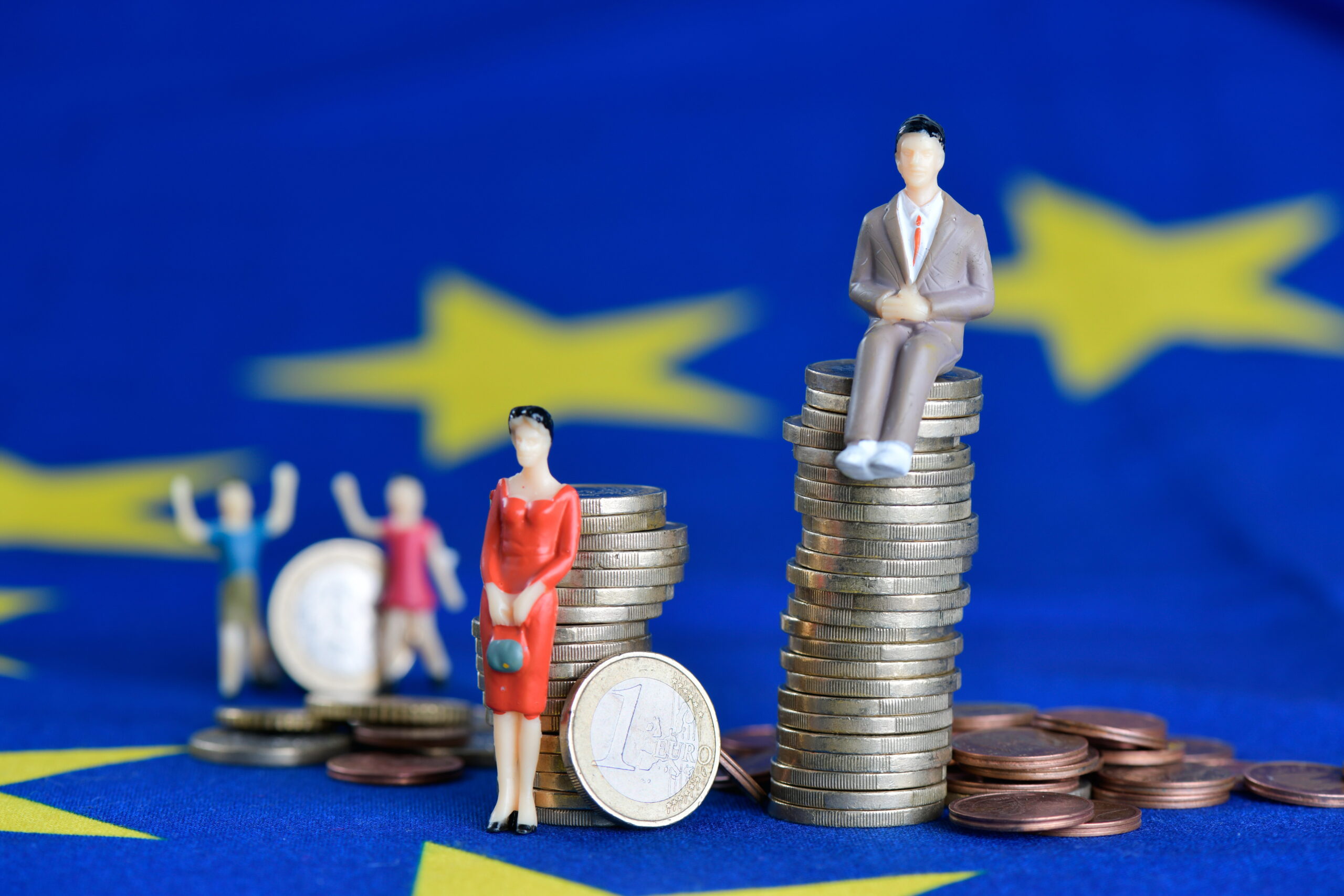
    Brussels – In 2024, 35.2 per cent of managerial positions within the European Union were held by women, up from 31.8 per cent ten years earlier. This was revealed by Eurostat, the EU’s statistical office, in a report published today (2 March). In particular, the proportion of women in senior positions was higher in the younger age group (aged 15 to 39), where they accounted for 39 per cent. The figures were significantly lower among those aged between 40 and 64 (34.4 per cent) and even lower for the over-65s (26.5 per cent). These figures show that the increase in the number of women in managerial roles is a relatively recent phenomenon. Further differences emerge when comparing data from different Member States. In 2024, the most virtuous countries were Sweden, with 44.4 per cent of women in top positions, Latvia (43.4 per cent) and Poland (41.8 per cent). At the bottom of the ranking, with 27.9 per cent, was Italy, which was only surpassed by Croatia (27.6 per cent) and Cyprus (25.3 per cent). 

    At the same time, Cyprus is among the EU countries that have made the most progress over the decade 2014–2024, with an increase in the percentage of women in managerial positions of almost 8 percentage points: a result surpassed only by Malta (+10.1 percentage points)and Luxembourg (+13.7 percentage points). Overall, 24 out of 27 countries recorded an improvement (including Italy, which ten years ago was just above 26 per cent), while in three countries the 2024 figure was lower than ten years earlier: this was the case in Slovenia (-3.8 percentage points), Latvia (-0.7 percentage points), and Lithuania (-0.2 percentage points). 

    Less than a week before International Women’s Day—ahead of which Eurostat will publish further studies on the status of women in the EU—the figures contained in today’s report show that the labour market is only slowly moving towards gender equality. Meanwhile, uncertainties along the way and differences between individual countries remain significant. 

    In this context, Eurostat also highlighted that, in 2024, there was a significant gap between the employment rates of men and women aged 20 to 64: while the male employment rate in the EU stood at 80.8 per cent, the female employment rate was only 70.8 per cent, with a gender employment gap of 10 percentage points (pp). Six EU countries have gender employment gaps larger than the EU average: in ascending order of size, these are Poland, the Czech Republic, Malta, Romania, Greece, and Italy. The largest gender employment gaps were observed in Greece (18.8 pp) and Italy (19.3 pp), where less than 60 per cent of the female population was employed, compared to over 75 per cent of the male population. In contrast, the gender employment gap was relatively small in the Baltic countries (Lithuania, Estonia, and Latvia), with gaps of around 3 pp or less, while in Finland, the gap was almost negligible (0.7 pp).

    English version by the Translation Service of Withub
    Tags: croatiacypruseurostatgender equalitygiveslatvialithuaniaLussemburgomaltamanagerpolandsloveniasveziawork

    Related Posts

    Diritti

    Women and politics, the EU paradox: at the top of institutions, but representation is declining

    27 February 2026
    Aborto
    Diritti

    No additional funds: the battle of “My Voice, My Choice” for safe abortion ends with a rejection from the EU Commission

    26 February 2026
    [foto: Flautomagico25/Wikimedia Commons]
    Business

    Italy, many study in one field but work in another; only half of young Europeans find suitable employment

    18 February 2026
    map visualization
    Le dichiarazioni alla stampa dei presidenti del Consiglio europeo, Antonio Costa, della Commissione europea, Ursula von der Leyen,

    Von der Leyen to Middle Eastern leaders: “In times of crisis, bonds grow stronger”

    by Giulia Torbidoni
    24 April 2026

    EU leaders note that Europe’s security is “closely linked” to that of the region in turmoil and, in addition to...

    Across the EU, 24.3 per cent of young Europeans are involved in online activism

    by Iolanda Cuomo
    24 April 2026

    According to Eurostat, 24.3 per cent of young Europeans have been involved in online activism, either by expressing an opinion...

    The European Council faces an uphill battle over the budget. Meloni: “Extremely difficult negotiations”

    by Emanuele Bonini emanuelebonini
    24 April 2026

    At the informal summit of heads of state and government on the seven-year budget (MFF 2028–2034), positions remain far apart...

    L'aula del Parlamento europeo nella sede di Strasburgo. Fonte:

    The EU budget, the energy crisis and Ukraine: the topics on the agenda at the EU Parliament’s plenary session

    by Giorgio Dell'Omodarme
    24 April 2026

    The proposal by the EPP, S&D, and Renew Europe on the next MFF suggests raising Member States’ contributions to 1.27...

    • Director’s Point of View
    • Opinions
    • About us
    • Contacts
    • Privacy Policy
    • Cookie policy

    Eunews is a registered newspaper
    Press Register of the Court of Turin n° 27


    Copyright © 2025 - WITHUB S.p.a., Via Rubens 19 - 20148 Milan
    VAT number: 10067080969 - ROC registration number n.30628
    Fully paid-up share capital 50.000,00€


    No Result
    View All Result
    • it ITA
    • en ENG
    • Politics
    • Newsletter
    • World politics
    • Business
    • General News
    • Defence & Security
    • Health
    • Agrifood
    • Altre sezioni
      • Culture
      • Diritti
      • Energy
      • Green Economy
      • Gallery
      • Finance & Insurance
      • Industry & Markets
      • Media
      • Mobility & Logistics
      • Net & Tech
      • News
      • Opinions
      • Sports
    • Director’s Point of View
    • Draghi Report
    • Eunews Newsletter

    No Result
    View All Result
    • it ITA
    • en ENG
    • Politics
    • Newsletter
    • World politics
    • Business
    • General News
    • Defence & Security
    • Health
    • Agrifood
    • Altre sezioni
      • Culture
      • Diritti
      • Energy
      • Green Economy
      • Gallery
      • Finance & Insurance
      • Industry & Markets
      • Media
      • Mobility & Logistics
      • Net & Tech
      • News
      • Opinions
      • Sports
    • Director’s Point of View
    • Draghi Report
    • Eunews Newsletter

    Attention