
Brussels – Georgia is now really far from the European Union. The European Commission has decided to suspend the visa-free travel regime for diplomatic staff and civil servants, with immediate effect and for one year, until 6 March 2027. The move by the EU executive is explained by the deterioration of the situation in the Caucasian republic, and effectively marks the end of the country’s EU accession process as it has been known until now. In light of the decision taken in Brussels, it is now mandatory to have a visa to enter the Schengen area, even for official reasons.
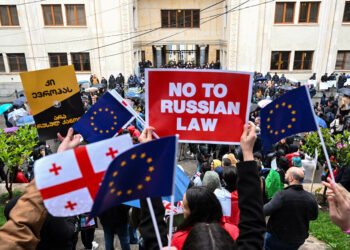
The European Commission’s patience has run out. It is contesting the actions taken “since October 2024,” including the repression of demonstrators, opposition politicians, and independent media. All events that “have had a negative impact” on the situation in Georgia and have led to “violations of several fundamental rights” and international legal standards. A real authoritarian drift already censured by the European Parliament, to which are now added the decisions of the Commission, which is imposing a real crackdown on Georgia and its government.
The von der Leyen team has adopted guidelines for consular authorities and border guards of Member States to support EU Member States in the effective implementation of the decision to suspend the visa exemption. The guidelines recommend stricter checks on all Georgian citizens crossing the EU’s external borders. Specifically, representatives of the Georgian authorities must use diplomatic or service passports when travelling to the EU for official and diplomatic purposes. Failure to comply with this requirement may result in an entry ban.
The temporary suspension of the visa-free travel regime for one year is a signal to the Georgian government: “If the governance and rule of law issues are not addressed by the Georgian authorities, the Commission can extend the suspension for a period of up to 24 months,” and therefore until 6 March 2028, the European Commission warned.
“The decision is a response to the violent repression against peaceful protesters, political opponents, and independent media, which started following the Georgian authorities’ announcement not to open negotiations with the EU until 2028,” Henna Virkkunen, Executive Vice-President for Technological Sovereignty, Security and Democracy, explained. “Visa liberalisation is key to facilitating mobility between the EU and partner countries around the world. Those who fail to respect fundamental rights should not benefit from this freedom.”
English version by the Translation Service of Withub