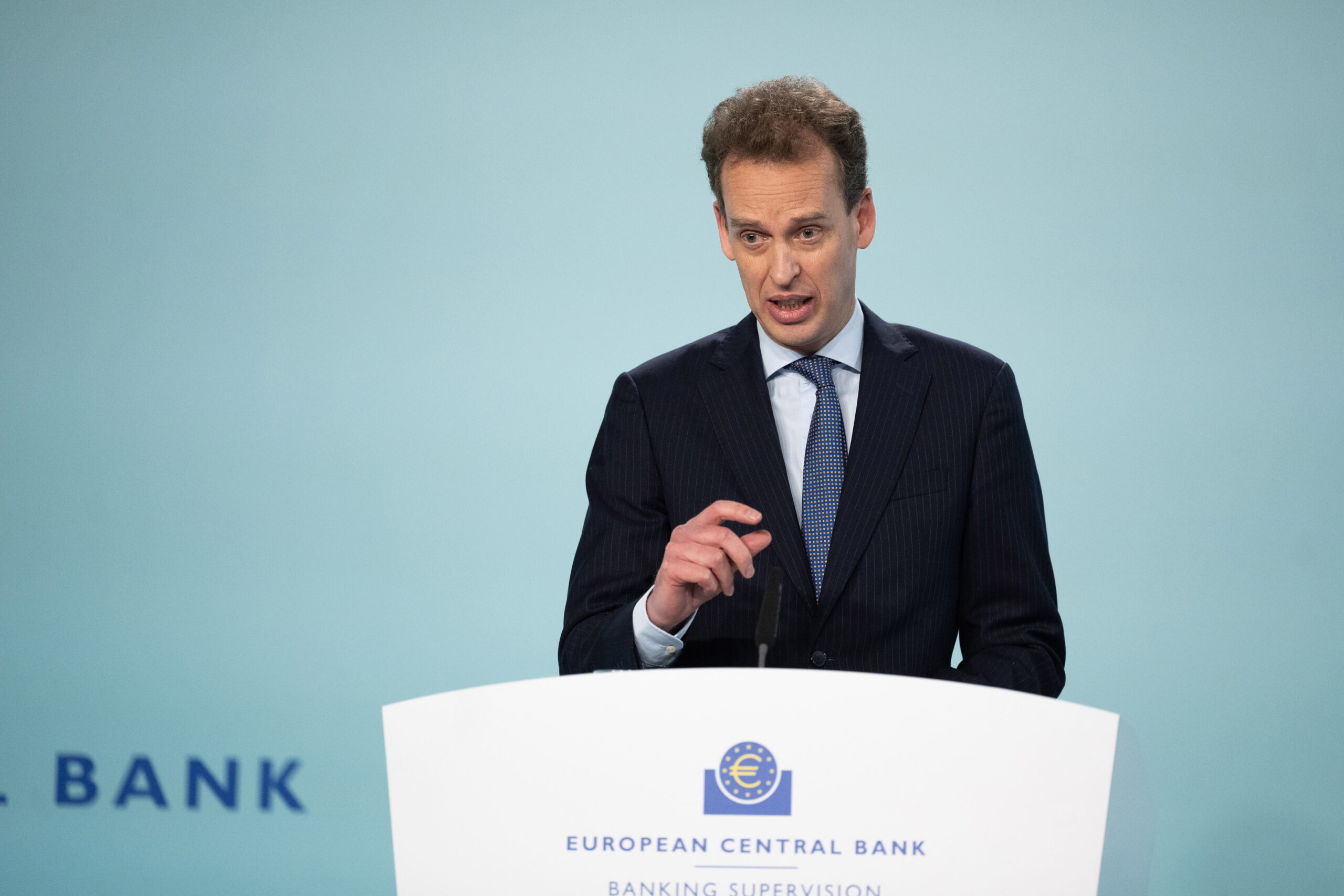
Brussels – “Europe’s fossil fuel dependence poses risks to price stability,” and at the same time, “increasingly complicates the task” of the European Central Bank of maintaining price stability. It is the Vice-Chair of the ECB’s Supervisory Board, Frank Elderson, who highlights the implications for the EU and the euro area of the ongoing energy crisis stemming from the US-Israeli war in Iran. In a post on the ECB blog, Elderson once again confirms the difficulty the Governing Council faces in leaving interest rates unchanged. Completing the task of ensuring price stability implies that the ECB, as already signaled, will have no choice but to raise borrowing costs if things take a turn for the worse, and Inflation indicators already suggest that the situation has deteriorated.
In addition, Elderson’s concerns are set out in writing at the same time as those of the Executive Director of the International Energy Agency (IEA), Fatih Birol, who, in an interview with the French newspaper Le Figaro, described himself as “very pessimistic” about the current energy crisis. According to Birol, the current crisis is worse than those of 1973, 1979, and 2022 combined, and there is a risk of a “Black April” if the Strait of Hormuz is not reopened by the end of the month.
According to the ECB, against this backdrop, the choices are “clear” because they are right before the eyes of national governments: the transition to alternative and sustainable energy sources. “Europe cannot eliminate geopolitical risk, but it can significantly reduce its exposure to it,” Elderson argues in his post. In this regard, he specifies, “the most effective way to do that is by cutting reliance on imported fossil fuels and accelerating an orderly shift to home‑grown clean energy.”
Of course, “none of this is easy,” because sustainability comes at a cost. “It is true that according to the European Commission, investment will need to reach around 660 billion euros per year between 2026 and 2030. But focusing only on these costs is profoundly misleading,” the ECB Supervisory Board Vice-Chair noted. It must be understood that “investing in clean, sustainable energy replaces substantial spending on fossil fuels.” Governments, Elderson insists, must act decisively because “domestically produced, clean and sustainable energy…strengthens macroeconomic stability, lowers long‑term costs, and supports economic growth.”
English version by the Translation Service of Withub![[fonte foto: CEPS. Elaborazione: Eunews]](https://www.eunews.it/wp-content/uploads/2021/01/recessione-1.png)
![Il commissario per l'Energia, Dan Jorgensen [Bruxelles, 31 marzo 2026. Foto: European Council]](https://www.eunews.it/wp-content/uploads/2026/03/jorgensen-260331-350x250.jpg)