
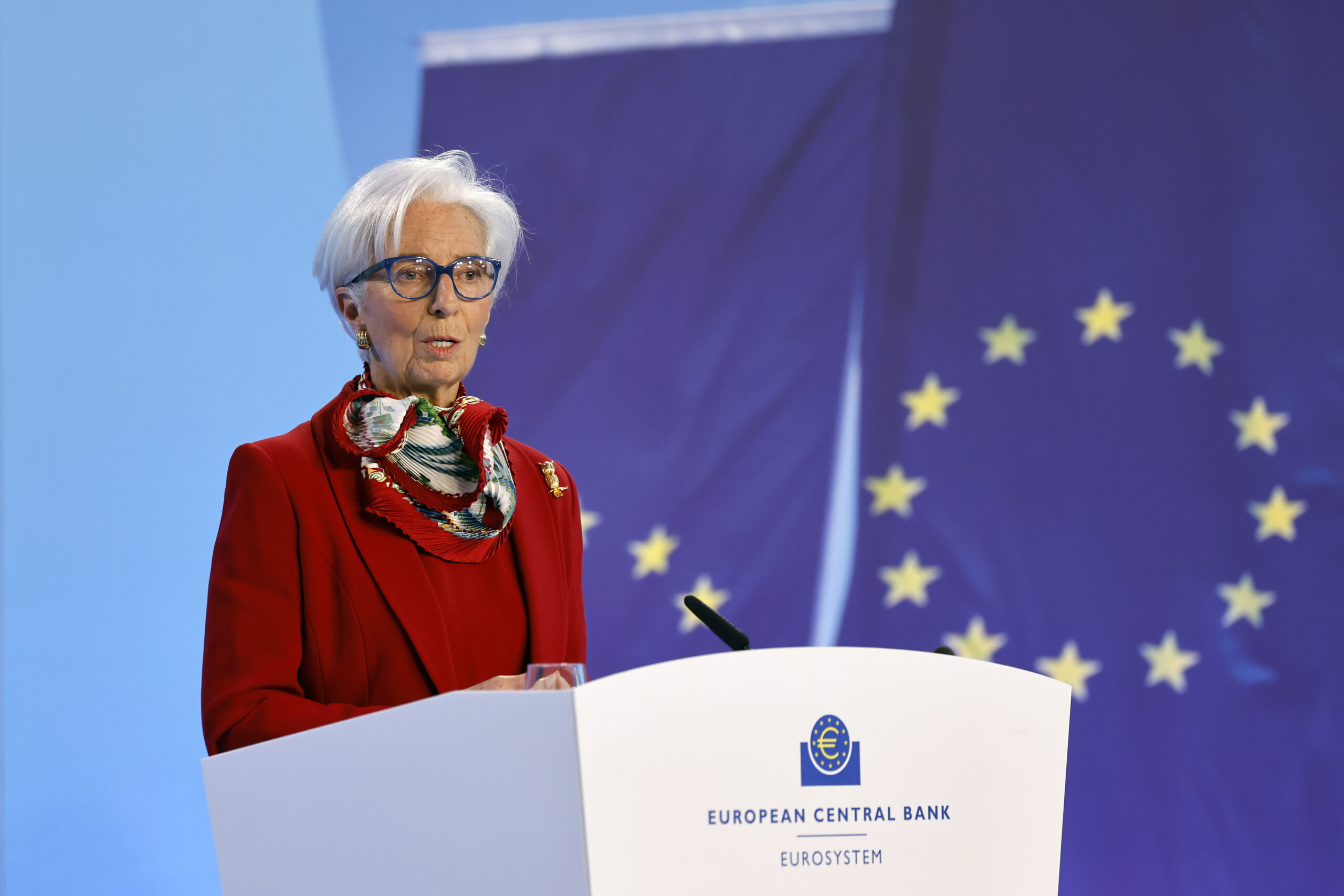
Brussels – A rise in interest rates in response to the effects of the US-Israeli conflict in Iran and the crisis in the Middle East is a possibility that the European Central Bank cannot rule out, and one which it is, in fact, beginning to consider. The ECB President, Christine Lagarde, makes no secret of this nor does she shy away from it: “Monetary policy cannot bring down energy prices,” she stated when speaking at the conference entitled “The ECB and its observers”, organised by the Institute for Monetary and Financial Stability in Frankfurt. However, she adds, “we must identify when rising energy costs risk triggering generalised inflation, both through indirect effects and through second-round effects on wages and inflation expectations.” It is in this second scenario that the ECB can intervene.
“Our updated strategy is clear on this point: significant and prolonged deviations require decisive monetary policy action,” Lagarde states. Translated: interest rates are adjusted through increases that are slowly reversed. Because, continues the head of the Eurotower, any decisive monetary policy intervention “will evolve into a policy of persistence as the tightening cycle takes hold, to prevent such deviations from becoming entrenched.” In short, if the rise in energy prices were to feed through to the general cost of living, causing a marked and lasting deviation from the 2 per cent reference target, the cost of borrowing would rise once again.
Lagarde’s words are not a warning, but are intended to prepare the public and economic operators for measures that may not even be taken; however, it is made clear that even though the Governing Council decided at its last meeting not to change interest rates, this does not mean that this decision will necessarily be upheld. “It is too early to say where we will need to position ourselves on this spectrum” of the situation and decision-making, the ECB President anticipates, adding that whatever monetary policy choices are made, the data-dependent approach and the “case-by-case” logic remain unchanged.
The task facing the ECB will not be easy, Lagarde explains. The course of the war in Iran and the unpredictability of the parties involved make it impossible to draw up precise scenarios. “Since the effects of significant price shocks on inflation can be non-linear, we must work with scenarios and pay close attention to early signs that the shock is taking root in broader inflationary dynamics.” Against this backdrop of general uncertainty, two key factors for the outlook for growth and inflation remain unchanged: the first factor, Lagarde emphasises, is “the intensity and duration of the shock“, and the second is “the propagation of the shock, which depends on the macroeconomic context in which it occurs.” The ECB’s response, including any potential interest rate intervention, will depend on this.
English version by the Translation Service of Withub
![Il ministro dell'Economia, Giancarlo Giorgetti (destra), con il commissario per l'Econonia, Valdis Dombrovskis [Bruxelles, 9 marzo 2026. Foto: European Council]](https://www.eunews.it/wp-content/uploads/2026/03/giorgetti-dombrovskis-350x250.jpg)



![Il ministro dei Trasporti, Matteo Salvini [Bruxelles, 5 dicembre 2024. Foto: Emanuele Bonini per Eunews]](https://www.eunews.it/wp-content/uploads/2024/12/salvini241205-120x86.jpeg)