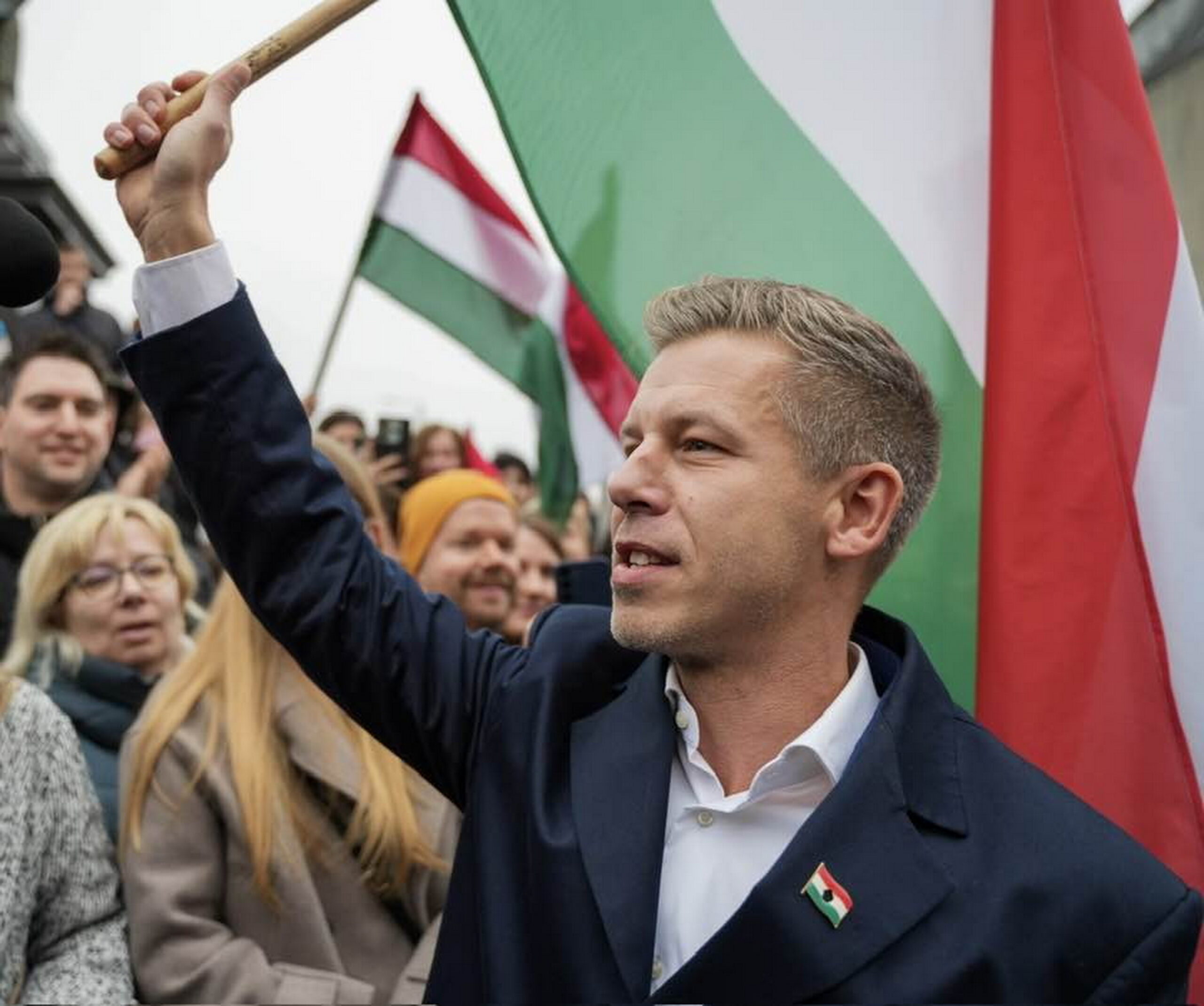
Brussels – European Union leaders are beginning to get to know Hungary’s new prime minister, Péter Magyar, with the aim of rebuilding a relationship that has deteriorated significantly following sixteen years of government under Viktor Orbán. Having called the leader of TISZA just a few hours after the polls closed late on Sunday evening (12 April) and congratulated him on the victory achieved in the Hungarian parliamentary elections, the President of the European Commission, Ursula von der Leyen, picked up the phone again this afternoon. And this time, the conversation took a far more pragmatic and concrete turn. “I spoke again with the Prime Minister-elect, Péter Magyar, and we discussed the immediate priorities,” wrote the German politician su X, emphasising that “there is work to be done swiftly to restore, realign, and reform: restoring the rule of law, realigning with our shared European values, and reforming to unlock the opportunities offered by European investment.”
The Hungarian Prime Minister-designate has made it even clearer what the main topic of his conversation with von der Leyen was: “The release of EU funds allocated for the Hungarian people, but frozen due to the corruption of the previous government,” a mission defined by Magyar as “the fundamental priority” to which he will devote himself once the handover with Orbán is complete. “The new government,” he continued, “will take the key policy decisions on how to release and invest these funds,” and “the Commission will work closely with us to meet the extremely tight deadline” for submitting the payment request.
Orbán’s former right-hand man is referring to the €17 billion in European funds earmarked for Hungary that Brussels has frozen in recent years due to the Orbán government’s systematic violations of the rule of law. , As the spokesperson for the Berlaymont Building, Balasz Ujvari, explained this morning (14 April), “around €7.6 billion form part of the EU Cohesion Policy and a further €10.4 billion relates to the Resilience and Recovery Facility (RRF)“, the main instrument of the NextGenerationEU package, created by the EU to support Member States in their economic and social recovery following the COVID-19 pandemic.
Magyar wants to act swiftly to secure what would be valuable resources for a country currently suffering economically and financially, and this was also evident in a curious detail in his post commenting on the call with von der Leyen. As The Guardian pointed out, the first version of the message did not contain the adverb “extremely” in reference to the “imminent deadline”, and it was only added in a subsequent edit to further emphasise the sensitivity of the matter.
Lexical choices aside, the urgency is clear. This is particularly true regarding the RRF funds. For Hungary to benefit from these frozen funds, it must demonstrate that it has met the so-called 27 super milestones, namely the mandatory milestones that the Council of the EU established in a 2022 decision to ensure that Budapest implements the necessary reforms regarding judicial independence, transparency in the use of European funds, and the implementation of anti-corruption measures.
The reason for the urgency is clear: the final deadline for Hungary to demonstrate that it has begun implementing the required reforms and submit a formal payment request is 31 August 2026. “Time is running out,” warned Maciej Popowski, another Commission spokesperson, who also highlighted a paradox: “We know that some of these reforms have already been implemented by the outgoing government, but we cannot yet formally certify this because Hungary has not sent us the payment request.”
Magyar, therefore, may well pay the price for his predecessor’s inaction, especially given that Popowski has been categorical about the impossibility of extending the 31 August deadline: “It is out of the question; the programme’s duration is very clear, and the deadline is set in stone. This applies to Hungary, just as it does to all other countries.” Rather, according to the European Commission spokesperson, the new Hungarian government has two options to recover the frozen funds in time. “The first is to submit the payment request (as soon as possible, ed.) so that we can assess whether the milestones have been met; while the second is to review their Recovery Plan in order to streamline it and retain only those reforms and investments whose implementation is feasible by the end of August,” he explained. “If Magyar believes there are measures that Hungary could not implement by this deadline, it would make sense to consider this option,” Popowski added.
It is a race against time, and the leader of TISZA seems aware of it. But, as observers at the Berlaymont Building note, for the man capable of bringing Viktor Orbán’s era to an end, “where there’s a will, there’s a way.”
English version by the Translation Service of Withub
!["Niente valori, niente soldi". Il Parlamento europeo torna a chiedere provvedimenti contro l'Ungheria di Viktor Orban [foto: Renew Europe, sito internet del gruppo]](https://www.eunews.it/wp-content/uploads/2022/08/orban-rff.png)

![Da sinistra: il presidente del Consiglio europeo, Antonio Costa; il presidente dell'Ucraina, Volodymir Zelensky: la presidente della Commissione europea, Ursula von der Leyen [Bruxelles, 18 giugno 2024. Foto: European Council]](https://www.eunews.it/wp-content/uploads/2026/06/euco_ua260618-120x86.jpg)
![[foto: Saverio De Giglio/imagoeconomica]](https://www.eunews.it/wp-content/uploads/2026/10/cpt-120x86.png)