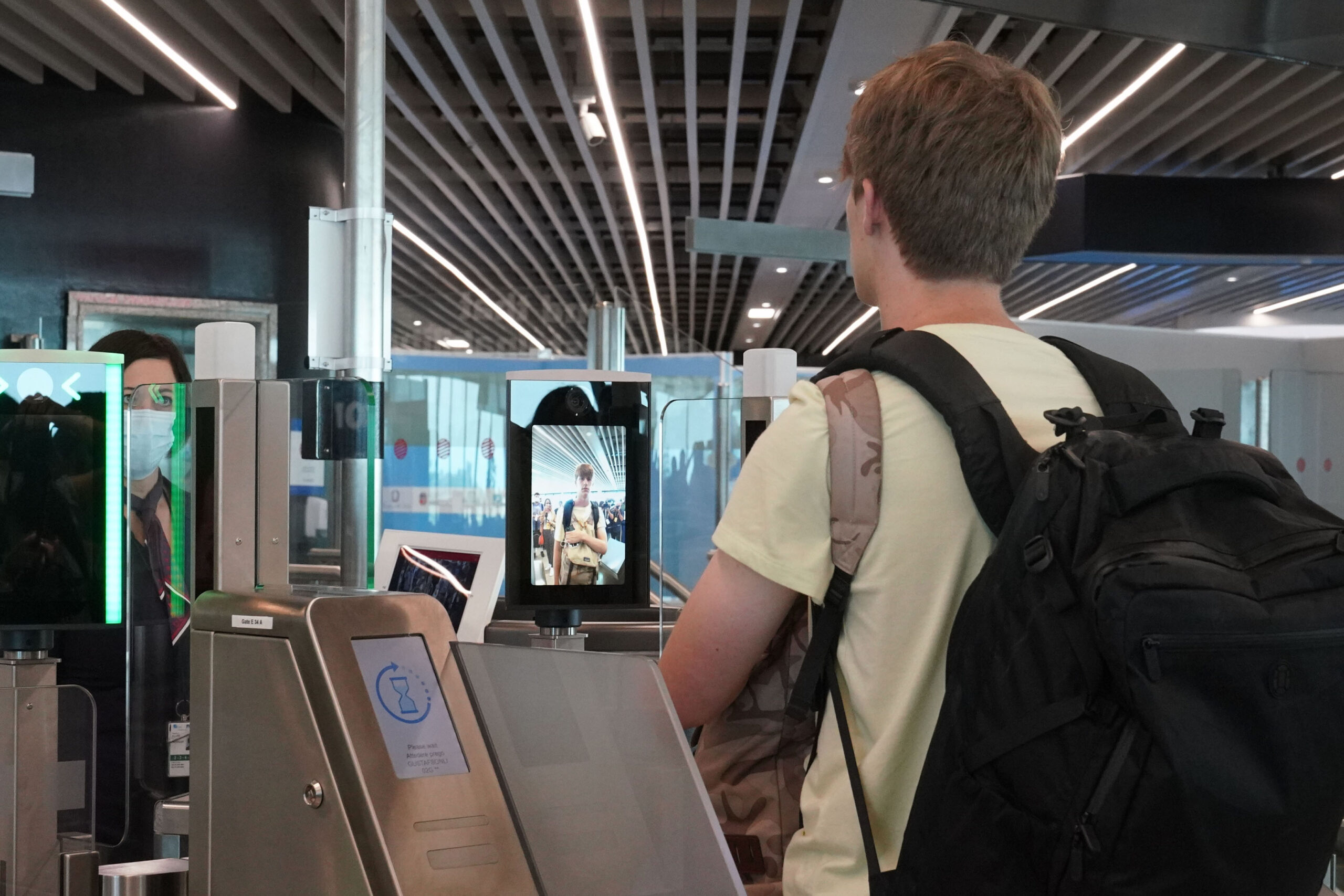
Brussels – Improving internal security and speeding up border checks through greater digitalization. These are the two areas in which the European Commission had assured that significant progress would be seen when, last October, it began the gradual roll-out of the Entry/Exit System (EES), the new EU system for the automatic registration of entries and exits from the Schengen area by third-country nationals. Yet many who have had direct experience of the EES during these first few months of trial seem to disagree, with criticism growing increasingly harsh since the system came into full effect on 10 April. While the Commission can indeed boast having rejected “around 700 people identified as a security threat for Europe” within a few months, the increasingly frequent complaints of inconvenience from passengers and staff at many airports, and the long waiting times with queues reportedly reaching as long as 3–4 hours suggest a system that is (for the time being) less efficient than had been anticipated.
To understand the reasons behind these issues, it is necessary to understand how the EES works. Until last October, customs checks on non-EU nationals intending to make relatively short stays within the Schengen area were limited to the simple application of a manual stamp on their travel document. Following a debate lasting more than a decade, Brussels concluded that this system did not provide the necessary guarantees regarding the security of its borders and decided to introduce a more stringent control mechanism. Under the EES, non-European travelers staying in a Schengen area country for up to 90 days must undergo a thorough collection of biometric data, including facial scanning and fingerprinting, the results of which are then recorded in a digital file and stored in a secure database. This is followed by the collection of key personal details from the passport and the recording of the date and place of entry (or any refusal of entry, if the check result is negative).
While the Commission claims that under the new EES system, the average check-in time would not exceed 70 seconds, most industry insiders take a very different view. According to the Airports Council International (ACI), the professional association representing airport operators worldwide, checks can take up to 5 minutes per passenger.
On top of a process that is already more complicated than before (because it is more stringent from a security perspective), the system is still in the early stages of implementation. This means, first and foremost, that almost all travelers entering the Schengen area in recent months must undergo the first scan, which is also the longest: biometric checks are carried out the first time a person crosses an external border following the activation of the EES, a situation in which the vast majority of passengers currently find themselves.
Furthermore, many airports still lack the necessary technology to actually speed up security checks under the new system compared to the manual checks of the past. This appears to be the cause, for example, of the massive disruption experienced last Sunday (12 April) at Milan Linate airport, where more than 100 passengers on a flight to Manchester were unable to board due to long passport control queues. According to Repubblica, the Lombardy airport has not yet acquired sufficient quantities of certain equipment explicitly recommended by the Commission, such as self-service check-in systems or mobile apps that allow passengers to pre-enter certain details before it is their turn.
According to Oliver Jankovec, director of the ACI’s European division, airports across Europe need more time. “This situation is set to become simply unmanageable in the coming weeks, and even more so during the peak summer months,” warned Jankovec, speaking to the Financial Times and calling for airport operators to be granted at least the right to suspend EES checks entirely “whenever waiting times are excessive.” His call was echoed by Ryanair’s CEO, Michael O’Leary, who used much harsher language, calling for an extension until October for the actual launch of a system he described as “a shit show and a shambles.”
For the time being, the European Commission shows no sign of backing down or of giving undue importance to the difficulties encountered. The Guardian quoted a Commission spokesperson as dismissing the criticism, arguing that “what we are seeing in these first few days of full operation is that the system is working very well.” “In the overwhelming majority of Member States, there are no issues, and only in a few countries have technical problems been identified that will be addressed,” the spokesperson added, before passing the responsibility back to national governments: “It is up to them to ensure the proper implementation of the EES.”
English version by the Translation Service of Withub



![[Copyright: European Union]](https://www.eunews.it/wp-content/uploads/2026/10/euco-261015-120x86.png)