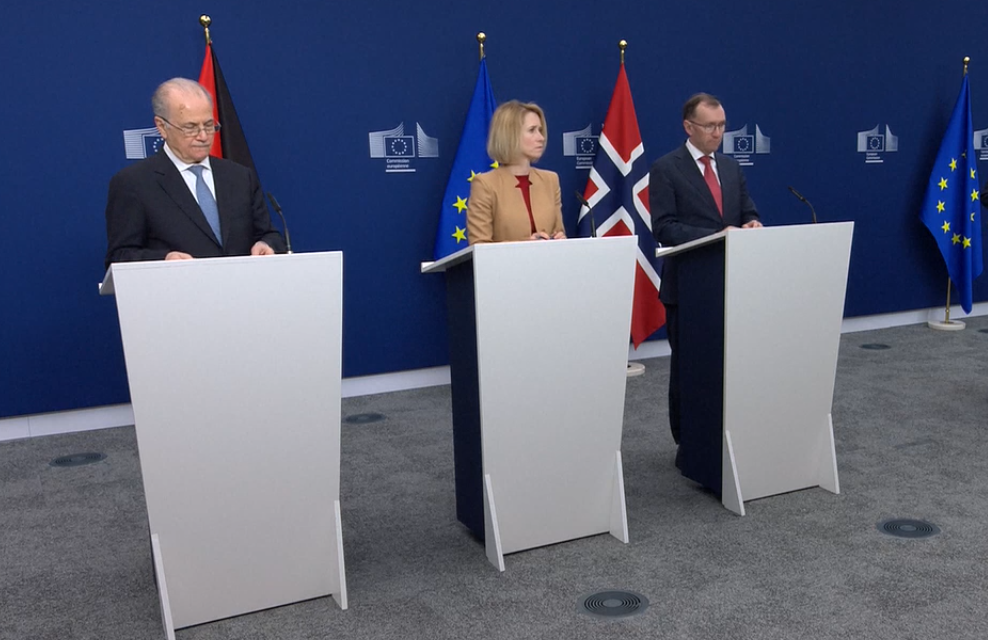
Brussels – “I reject the accusations of double standards: we are helping Ukraine just as we support Palestine.” The High Representative of the European Union for Foreign Affairs and Security Policy, Kaja Kallas, wishes to dismiss the accusations levelled at the European Commission regarding its stance: aid is being provided, and not in small amounts, as claimed. As for sanctions, if they are lacking, the fault lies with others: Viktor Orbán’s Hungary. The press conference held during the meeting of the Ad Hoc Liaison Committee (AHLC) on Palestine became the scene of direct and repeated accusations.
Kallas points to the over €1.2 billion in humanitarian aid granted from 2000 to the present day, with around half of the aid (€680 million) allocated from 2023 onwards. “We are the main donor. You will not find stronger support anywhere else in the world,” she emphasises. To this she adds the ongoing diplomatic efforts towards a two-state solution to the Arab-Israeli conflict, which remains the only path to pursue. “After years of debate, we must acknowledge that the solution has not made much progress,” the High Representative admits, though she is pressed on what leads the EU executive to be accused of double standards: sanctions that do not exist. For Ukraine, the EU Commission has put 20 packages of sanctions against Russia on the table; for Palestine, not a single one against Israel.
“There are 27 Member States: 26 want sanctions against the settlers, one does not,” she states bluntly. It is an indictment of Hungary, a country she does not name outright but which she helps to identify: “This country [which has imposed a veto] has held elections and it will soon have a new government, and we shall see if it can adopt a new approach.” The European Commission is therefore waiting for Péter Magyar to try to bring about a change of course, as also called for by the Palestinian Prime Minister, Mohammad Mustafa.
“War will not bring peace; siege will not bring security; occupation will not bring stability; displacement will not bring legitimacy: only a fair political solution can bring all of this,” states the Palestinian Prime Minister, who openly accuses Israel and Benjamin Netanyahu’s government of sabotaging the entire process: “The situation in the West Bank is unprecedented, with violence by settlers on a scale never seen before. It is something organised, and backed by the army and the government,” he claims. The reason? “Israel wants to annex our territories.”
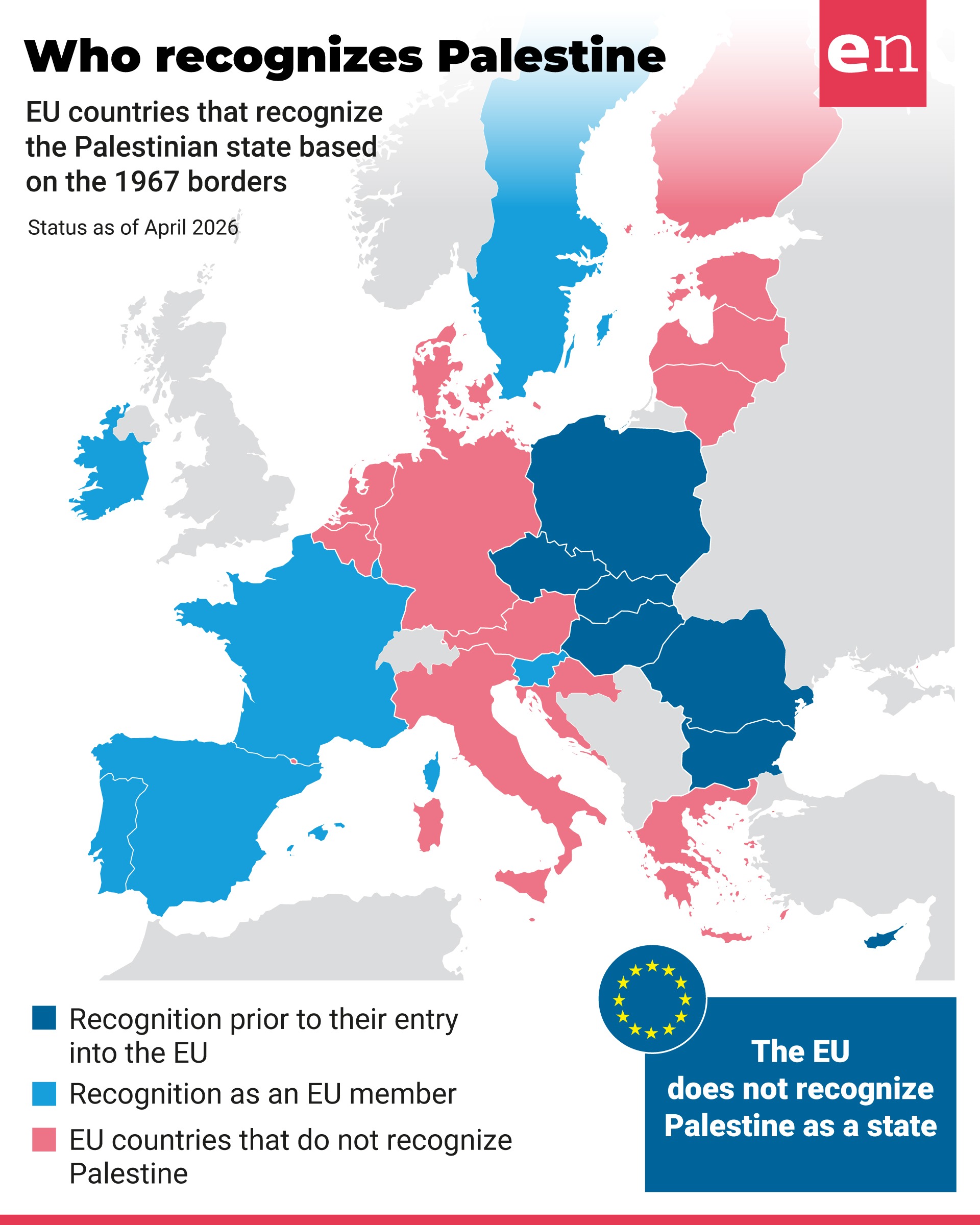
Mustafa does not criticise the EU, but he certainly calls for, and expects, more than just humanitarian aid. He calls for genuine political support. There are still EU Member States that do not recognise Palestine as a state. “Recognition is important,” admits the Palestinian Prime Minister, though he adds: “The problem is not recognition; it is the occupation” by Israel. To the detriment of the Palestinian Territories, “there has been an occupation going on for 70 years.” The EU therefore needs to do more than has already been done. Kallas’s defence of the EU’s actions, therefore, is only valid to a certain extent.



![Il ministro dei Trasporti, Matteo Salvini [Bruxelles, 5 dicembre 2024. Foto: Emanuele Bonini per Eunews]](https://www.eunews.it/wp-content/uploads/2024/12/salvini241205-120x86.jpeg)