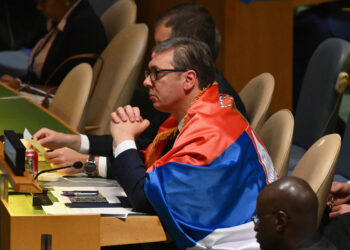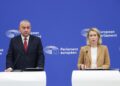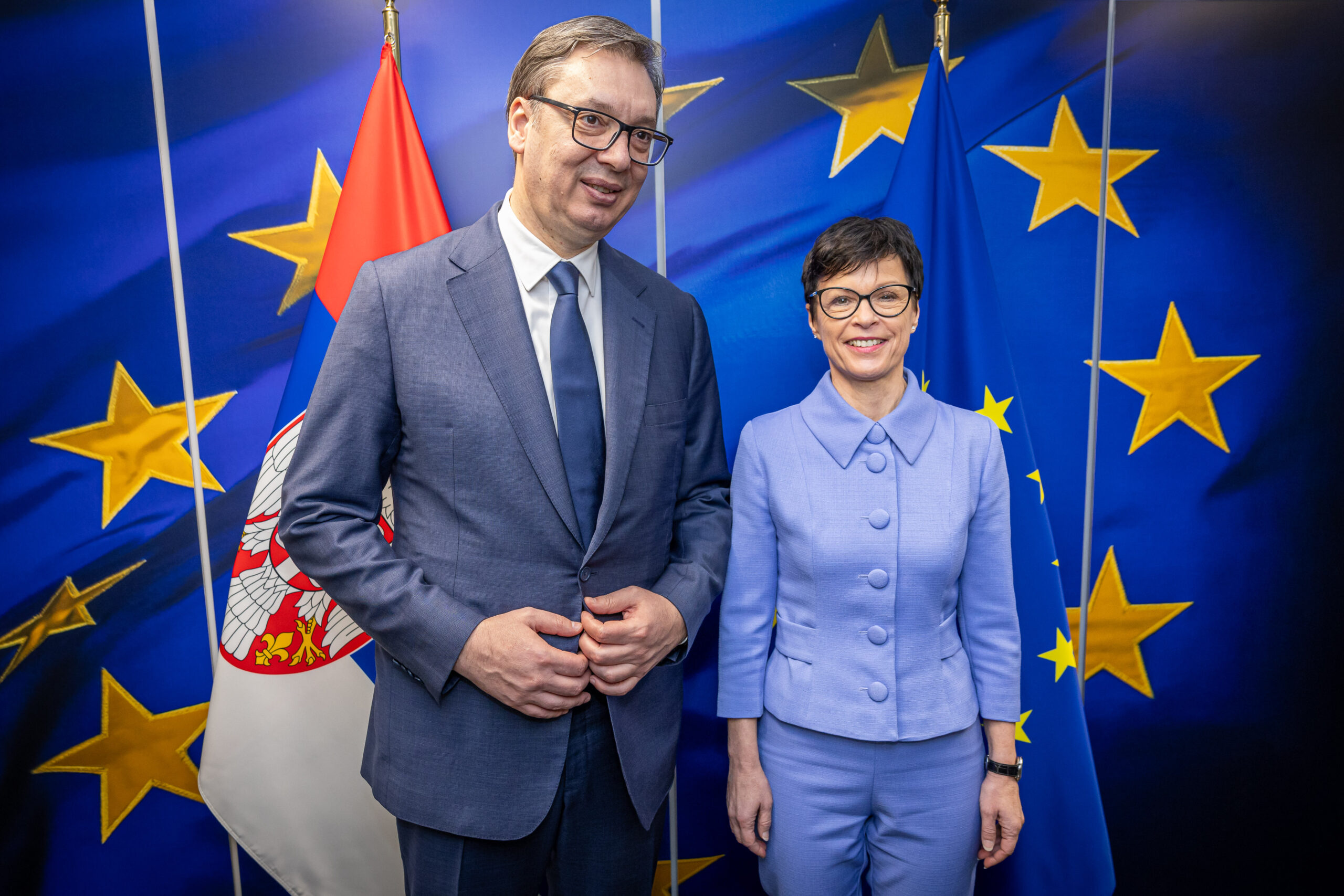
Brussels – “We’re currently assessing whether the country still fulfils the conditions for payments under the EU’s financial instruments.” With these words, the EU Commissioner for Enlargement, Marta Kos, has officially confirmed a rumour appearing in various newspapers in recent days, according to which the EU executive is seriously considering freezing the disbursement of approximately €1.5 billion in EU funds earmarked for Belgrade. The decision is reportedly linked to Serbia’s failure to comply with some of the key benchmarks set by Brussels for the disbursement of these loans. In particular, three issues are causing concern, which Kos specifically mentioned during today’s Dialogue session with the Foreign Affairs Committee (AFET) meeting of the European Parliament: “The judicial reform that undermines the independence of the judiciary, the repression of street demonstrations and the recurring interference to the detriment of independent media”.
Serbia—which is not a member of the EU but receives economic assistance from it, having launched accession negotiations in January 2014—has received a total of €7 billion in EU funds in just over ten years, a figure that makes the EU the main provider of financial support to Belgrade. Despite this, Brussels has repeatedly expressed dissatisfaction with how the country, particularly since the start of the presidency of the conservative Aleksandar Vucic in 2017, has spent this money, which was intended to implement the reforms required for it to be deemed eligible for EU membership. In November 2025, for example, the Commission’s regular report on enlargement compared the progress of reforms in Serbia with that of two countries, Turkey and Georgia, whose path towards Brussels has long been at a standstill. And this assessment was reiterated today by Kos, who stated that “Serbia ranks last in terms of the rate of reform implementation, having completed only 30 per cent“.
The justice reform approved by the Serbian Parliament in January this year is undoubtedly one of the EU’s main causes for concern. The package of laws that makes up the bill aims to restructure the courts and to amend the procedures for appointing judges and prosecutors, but the view in Brussels and among the main Serbian opposition parties is that the real objective is to strengthen the government’s control over the judiciary, thereby reducing its independence. Kos had already described this set of measures as “a serious step backwards” in terms of Belgrade’s future accession to the Union, but today she went further. Referring to the opinion that the Venice Commission (the Council of Europe body with advisory powers in legal matters) will publish on the reform at the end of April, the former Slovenian diplomat stated that “we will continue to support Belgrade on its path towards the EU, but we expect the government to bring its judicial laws fully into line with the Commission’s recommendations.” In a sort of ultimatum, Kos warned Vucic that “if this does not happen, we will not be able to authorise the release of new funds to Serbia.”
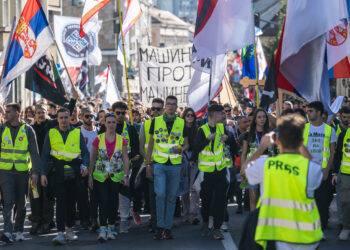
Another area in which the Commissioner has called for progress is the handling of anti-government demonstrations. Following the collapse of a canopy at Novi Sad railway station in November 2024—seen as a symbol of widespread corruption and a lack of transparency in public works contracts in Serbia—the frequency of protests against Vučić increased significantly, eventually developing into a full-blown movement, led mainly by university students. On several occasions, and especially from the summer of 2025, the Serbian police have used particularly violent methods against demonstrators, with several protests ending with hundreds of injuries. Addressing MEPs, Kos highlighted in particular the most recent cases of repression during the large demonstrations organised in March this year to contest the outcome of the local elections, whose legitimacy has been called into question by various reports and international observers.
Brussels’ growing mistrust of Belgrade is linked to a further issue, which Kos avoided mentioning explicitly during today’s hearing: Serbia’s foreign policy and, in particular, the very close ties between Vučić and the Russian president, Vladimir Putin. For predominantly economic reasons (Serbia relies on Russian gas for over 80 per cent of its annual requirements), the leader of the Serbian Progressive Party (SNS) adopted a stance towards Moscow that differed significantly from that of the EU at the time of the Russian invasion of Ukraine. In particular, he has consistently refused to impose sanctions on Moscow, despite the European Parliament having formally asked him to do so, to avoid jeopardising Belgrade’s chances of successfully completing its path to EU accession. “As a candidate country, we expect Serbia to stand by our side in foreign policy and align itself more closely with our positions,” Kos told Politico some time ago. At present, however, Vucic has shown no intention of reconsidering his foreign policy choices.
While Serbia finds itself on the “bad” list in the metaphorical notebook produced by Slovenian politicians during today’s hearing, there are countries that have made significant progress on their path towards EU accession. “Montenegro has successfully closed 14 negotiation chapters; Albania has opened all six negotiation clusters within a year; Ukraine has an implementation rate of 87 per cent for the necessary reforms and is surpassed only by Moldova with 93 per cent,” explained the Commissioner. Figures that, when compared with those of Belgrade, increasingly rule out the possibility of granting EU membership to all candidate countries (or at least to all Balkan countries) simultaneously, as suggested by Vucic himself last December.
English version by the Translation Service of Withub