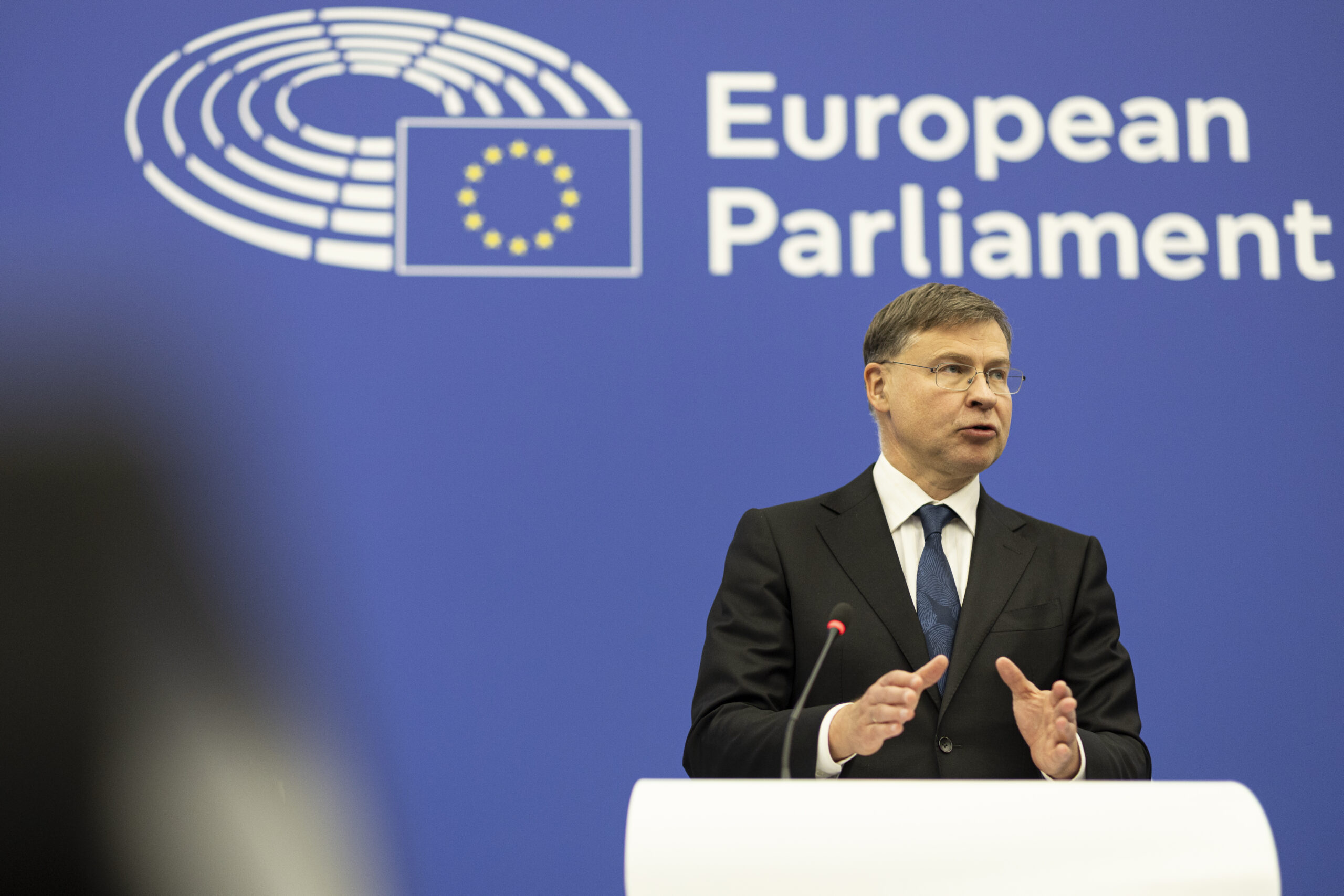
Brussels – The European Commission also wants to keep pace with the times in the legislative process. The European Commissioner for the Economy, Valdis Dombrovskis, presented today (28 April) a plan divided into five sectors on which the European executive will act to modernise the legislative process at the EU level, “ensuring that laws are clearer, simpler, applied more efficiently, based on concrete evidence, and better aligned with the needs of citizens and businesses.” The Commissioner made this statement at a press conference to the European Parliament in Strasbourg, on the sidelines of the weekly meeting of the College of Commissioners.
The starting point is the Berlaymont’s key concept, simplification, which must be applied right from the start of the drafting of a law, because “it is always better to start with the right foundations than to have to change course later on,” Dombrovskis pointed out. The Commission’s aim is “leaner, clearer, and easier to implement rules, with realistic implementation deadlines. It should be crystal clear who must act, how to comply, and the consequences of non-compliance,” the press release states.
This is followed by strengthening the system for better regulation: in other words, improving transparency, efficiency, and public involvement during the law-making process. The Commissioner emphasised that the current framework “ is already recognised as one of the very best systems internationally, but we can do even better.”
In its third point, the European Commission proposes a comprehensive regulatory review to bring order to the vast existing body of legislation. This is an essential step, as it will enable the Commission to “tackle fragmented rules, inconsistencies and overlapping provisions, and reduce complexity.”
Fourthly, the EU executive intends to tackle so-called “gold-plating”: the aim is to help Member States identify and reduce “unnecessary complexities and barriers to the single market,” where requirements are stricter or more extensive than those laid down in EU law. Gold-plating “creates barriers, increases costs and fragments the single market: we must identify and correct it, because more is not always better.” The Commission intends to do this by working with Member States and providing best practices and guidance for the transposition and implementation of EU law.
Finally, the Commission considers it necessary to ensure faster and more robust enforcement of the law, “because EU rules only deliver their intended benefits for our people and businesses when Member States implement them correctly and on time.” The Commission therefore intends to strengthen the enforcement of the Single Market Regulation in selected policy areas.
The European Parliament and the Council will have a “key role to play in helping to turn the objectives set out in this communication into reality.” The Commission therefore calls on the co-legislators to ensure that the principles of “simplicity by design” and better regulation are applied consistently by each institution throughout the legislative process.
The plan presented today is in line with von der Leyen’s political guidelines for the period 2024–2029 and with the commitments made at the leaders’ retreat on 12 February 2026 on competitiveness. This is because “Europe needs clear and consistent legislation that fully meets the needs of our citizens and businesses. This is a key contribution to strengthening our competitiveness,” commented the President of the European Commission.
English version by the Translation Service of Withub
![La sede della BCE, a Francoforte [foto: European Central Bank]](https://www.eunews.it/wp-content/uploads/2025/11/eurotower-350x250.jpg)