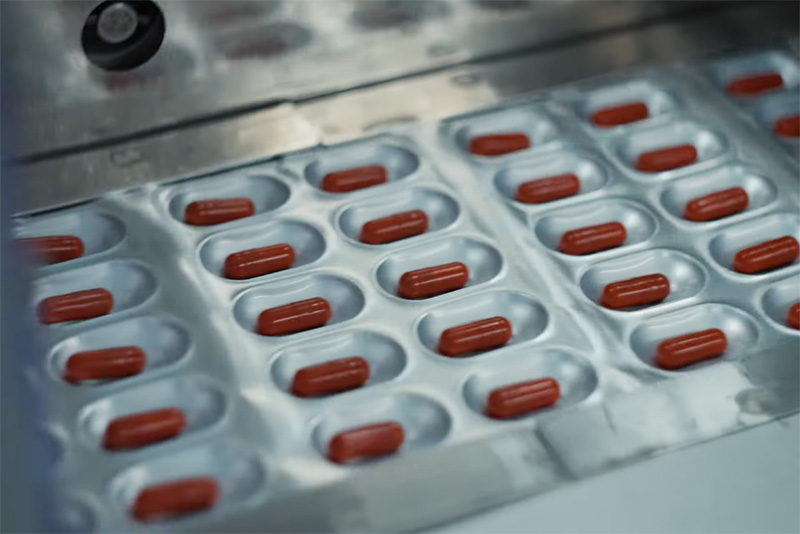
Brussels – Strengthening strategic autonomy is taking on an increasingly central role on the European Union’s political agenda. Achieving this objective also depends on a sector of crucial importance for the competitiveness and security of the Old Continent: healthcare. Early this morning (12 May), after more than 12 hours of negotiations, the European Parliament and the EU Council announced that they had reached a provisional agreement on the text of the Critical Medicines Act . Launched by the Commission in March 2025, the new regulation on critical medicines aims to address one of the main challenges facing the European pharmaceutical sector: excessive dependence on non-EU countries for the supply of medicines considered essential for public health, such as vaccines, antibiotics, and other life-saving medicines.
Over time, Member States have increasingly relied on countries – such as China and India – that offer these products at much lower costs than their European competitors, but whose supply chains are far more fragile and vulnerable to external shocks. Europe has paid a heavy price for this trade choice, repeatedly contending with serious shortages of critical medicines. The crisis that occurred during the COVID-19 pandemic was the most serious in this regard.
To address this weakness, the compromise reached today proposes a series of measures to strengthen the competitiveness of the European pharmaceutical industry and ensure a high level of health protection for EU citizens.
Firstly, the new regulation provides for the launch of a series of “strategic projects” aimed at “creating, modernising and increasing the production capacity” of EU companies. Provided they meet certain conditions, such as prioritising the European market, the selected companies will be eligible for funding from European funds and national aid for investment, as well as simplified bureaucratic procedures.
Moreover, following Parliament’s victory over the Council, the scope of eligible companies has been extended beyond mere manufacturers of critical medicines to include suppliers of medicines of common interest (those treatments for which availability is insufficient in several Member States) and so-called orphan medicines, intended for the treatment of rare diseases. Their industrial production is often limited (hence the name given to them), but between 5,000 and 10,000 European citizens require them.
But the real issue that needs to be addressed in order to counter the dominance of non-EU pharmaceutical giants is the way public procurement works, through which Member States and national health systems select the companies from which to purchase the medicines they need. In the absence of stricter rules, the choice inevitably falls on whoever offers the lowest price, and it is precisely this dynamic that has led Europe to become overly dependent on countries such as China and India and to penalise domestic manufacturers.
To fill this regulatory gap, today’s agreement aims to impose an obligation on Member States to also take into account two further assessment criteria: on the one hand, the diversification of supply sources; on the other, the proportion of critical medicines and their active ingredients actually produced within the EU.
This is the crux of the measure, and the Croatian MEP and rapporteur for the text, Tomislav Sokol (EPP), summarises the rationale as follows: “By favouring companies that manufacture medicines in Europe in procurement procedures, we are sending a clear signal: the EU is committed to strengthening its pharmaceutical manufacturing base,” he explained. He was echoed by Forza Italia MEP Letizia Moratti (EPP), who highlighted that “the decision to introduce criteria that prioritise production within the EU does not mean closing the market.” On the contrary, it means “greater resilience, less vulnerability, and a better ability to respond to health crises.”
Still on the subject of procurement, Sokol also highlighted the new measures relating to joint tenders at the European level. The text stipulates that, following a request from at least five Member States, the Commission will be required to organise a single tender to procure medicines on behalf of all the countries involved. Drawing inspiration from the model adopted during the pandemic for vaccine supplies, the aim is to prevent excessive competition among states from driving up prices and putting smaller, less wealthy countries at a disadvantage. By replacing the five (or more) separate national negotiations with a single continent-wide negotiation, the bargaining power of the entire Union would increase and with it the likelihood of securing better prices and greater supply guarantees.
Once again, the MEPs’ position prevailed over that of the Member States: the latter had wanted to set the minimum threshold for applicant countries at nine, but ultimately went along with the European Parliament’s proposal.
Despite these differences, the Cypriot Presidency of the Council of the EU has also expressed its satisfaction with the compromise reached. In a statement, Nicosia’s Health Minister, Neophytos Charalambides, emphasised that “with today’s agreement, we are taking concrete steps to reduce our vulnerabilities, diversify supply chains, and strengthen Europe’s capacity to produce critical medicines domestically.”
Equally pleased was the Commissioner for Health, Oliver Varhelyi, who stated that “this agreement represents an essential safety net for Europe: it prevents medicine shortages, reduces dependence on single suppliers, and strengthens local production to protect public health.”
Given its provisional nature, the text of the Critical Medicines Act will formally enter into force only after final approval by Parliament and the Council.
English version by the Translation Service of Withub