Brussels – There are places in the world where people are forced to grow up faster, where the freedoms we take for granted here are a rare commodity. And the Serbia of President Aleksandar Vučic, in power since May 2017, is increasingly becoming one of these.
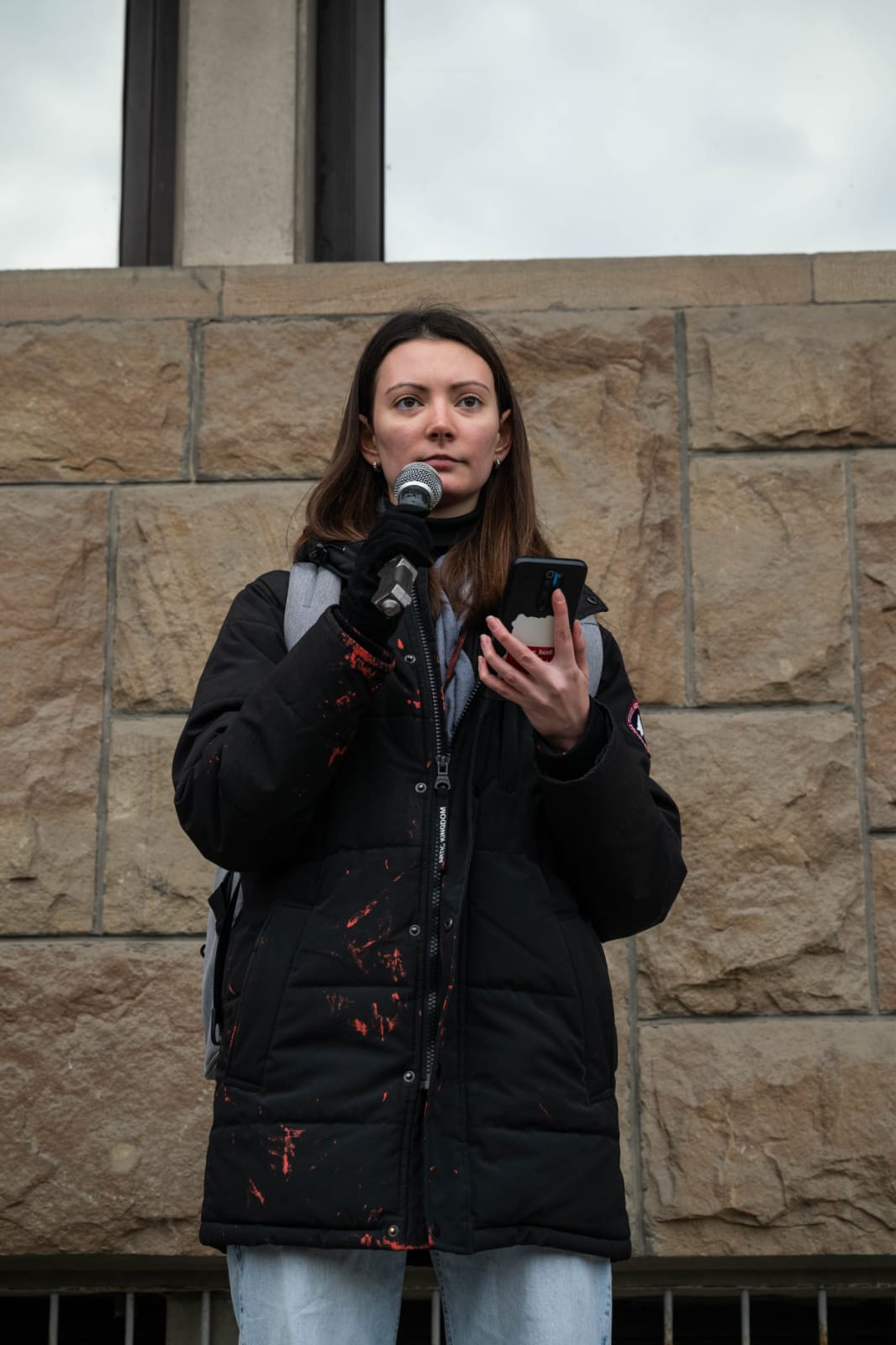
Doroteja Antic and Branislav Djordjevic are two young Serbs: she has recently graduated in Communication and works at a public relations agency; he is a Political Science student. Above all, Doroteja and Branislav are two activists committed to fighting Vučić’s authoritarian regime. Following the 2023 parliamentary elections, which they describe as “stolen”, they helped found the youth movement Students Against the Authoritarian Regime (STAV) and, together with thousands of their fellow students, filled the squares and university courtyards across the country to protest against corruption and the anti-democratic drift of the Belgrade government. Until, in March 2025, the Serbian police issued an arrest warrant against them for attempting to “violently overthrow the constitutional order of Serbia.” A trumped-up charge that forced them to flee into exile in Zagreb, where they found refuge thanks to an EU law transposed by Croatia that guarantees protection for human rights defenders.
Doroteja is 24, and Branislav will soon be turning the same age. The author of these lines is the same age as they are. And yet, right from the very start of the interview with Eunews, the feeling was that of being in the presence of two people who have already lived many more lives than their age would suggest. This is evident in the courage and civic awareness that emanate from the words they used to tell their story.
Eunews: How did you get started in activism in Serbia?
Branislav Djordjevic: “Quite early on. I remember my first protest in 2018, but I usually stayed in the background. In 2023, during the parliamentary elections in Serbia, which were rigged, there was a protest in Belgrade and for the first time, I made it to the front line. It was there that we decided, with some friends, including Doroteja, to create a movement to be better organised. That’s how STAV was born.”
Doroteja Antic: “I was already active in the field of human rights and had been working with a number of NGOs since 2019. When some people I knew suggested I join STAV, I was very keen because I thought it could bring about small changes at the local level. But then it turned out to be something bigger: initially, we made a name for ourselves only in Novi Sad, the city where we grew up, but the movement quickly expanded. With the start of the major anti-government protests at the end of 2024, we expanded across the whole of Serbia.”
E: The event that sparked student protests across the country was the accident in Novi Sad: on 1 November 2024, a railway station shelter collapsed, killing 16 people. Why did that incident have such a powerful impact?
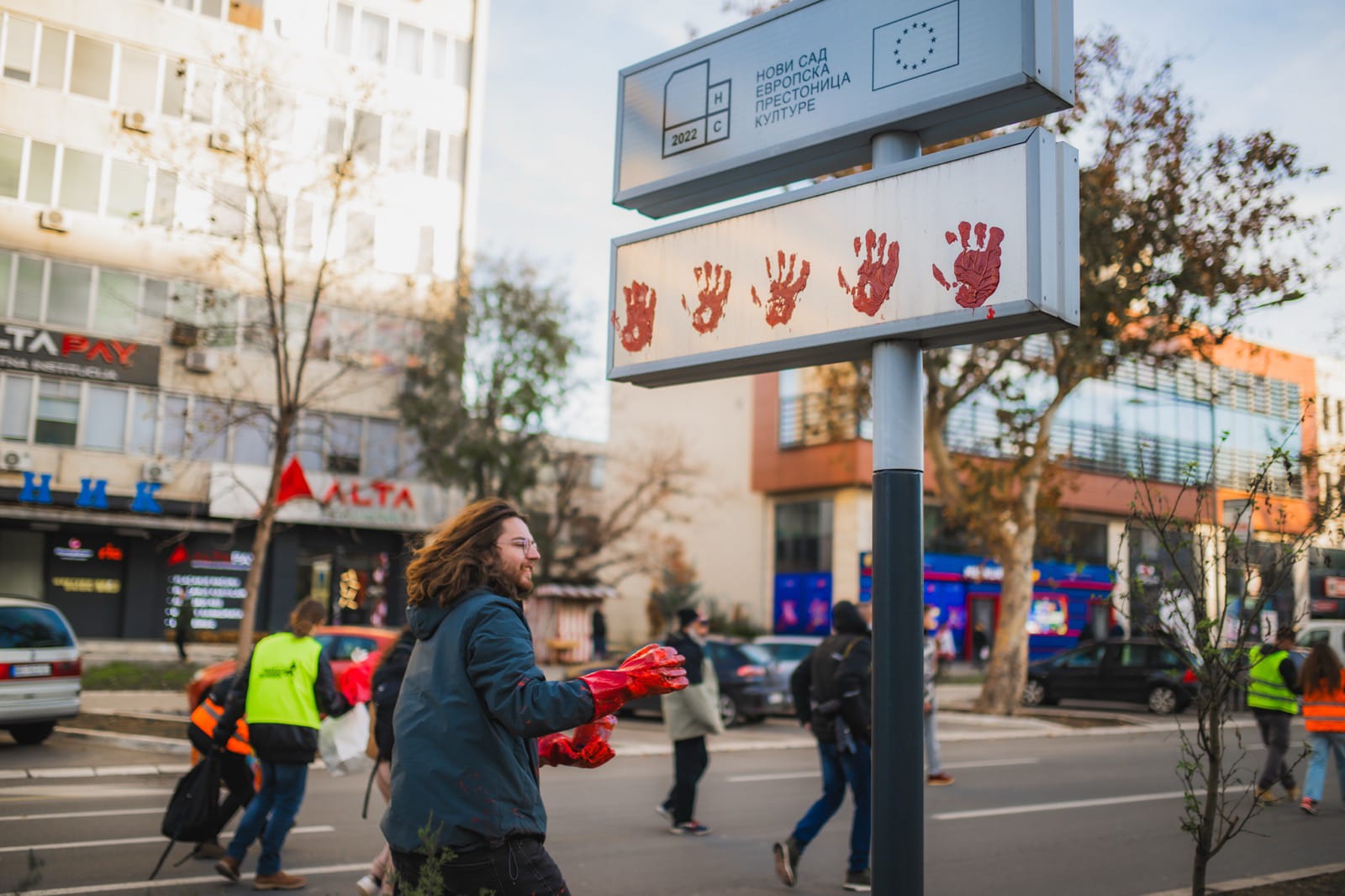
B.D.: “Because it was a symbol of the regime’s political and economic corruption. There had already been incidents of this kind in the past: for example, about ten years ago, an army medical rescue helicopter crashed because the Health Minister wanted to have his photo taken. But these were events that the public couldn’t really ‘grasp’. The collapse of the canopy was different because everyone in the city used that railway station. It had been renovated and inaugurated twice by Vučić, and at one point the authorities had even called it ‘the safest railway station in Europe’. After the collapse, no one in the government took responsibility. At first, they said the entire structure had been renovated except for the canopy, but documents showed that the canopy had been renovated as well, albeit incorrectly. So they promised that someone would pay for the mistake, but immediately afterwards they tried to divert attention: they started saying that the collapse had been caused by a terrorist attack, that student movements were behind it, and so on. In short, within two or three days, the story changed five times and lie upon lie was told. It really was the straw that broke the camel’s back.”
E: Before long, the police began to violently suppress the protests, leaving hundreds injured. Have you ever experienced anything like this? What kind of violence have you witnessed or endured?
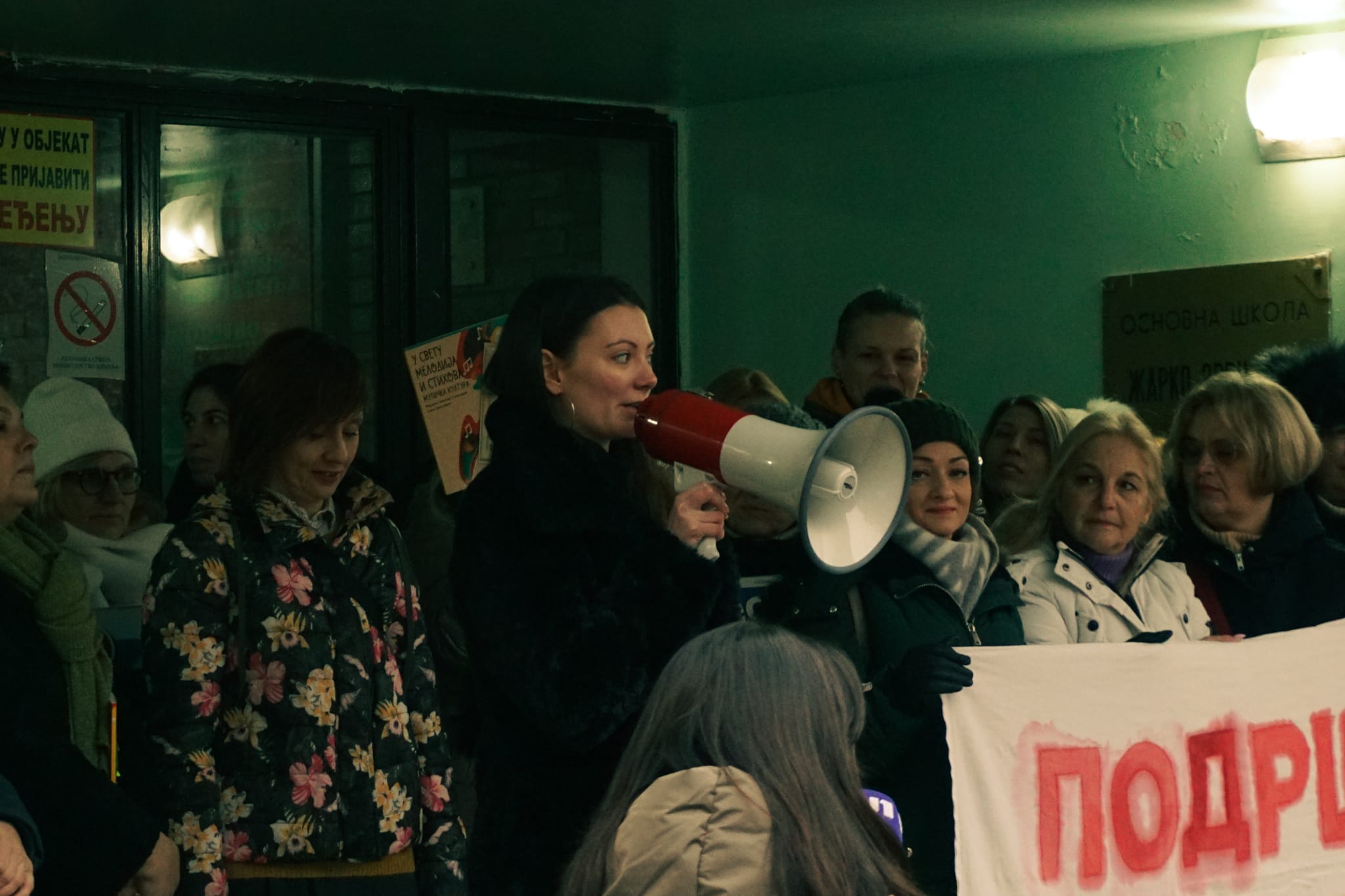
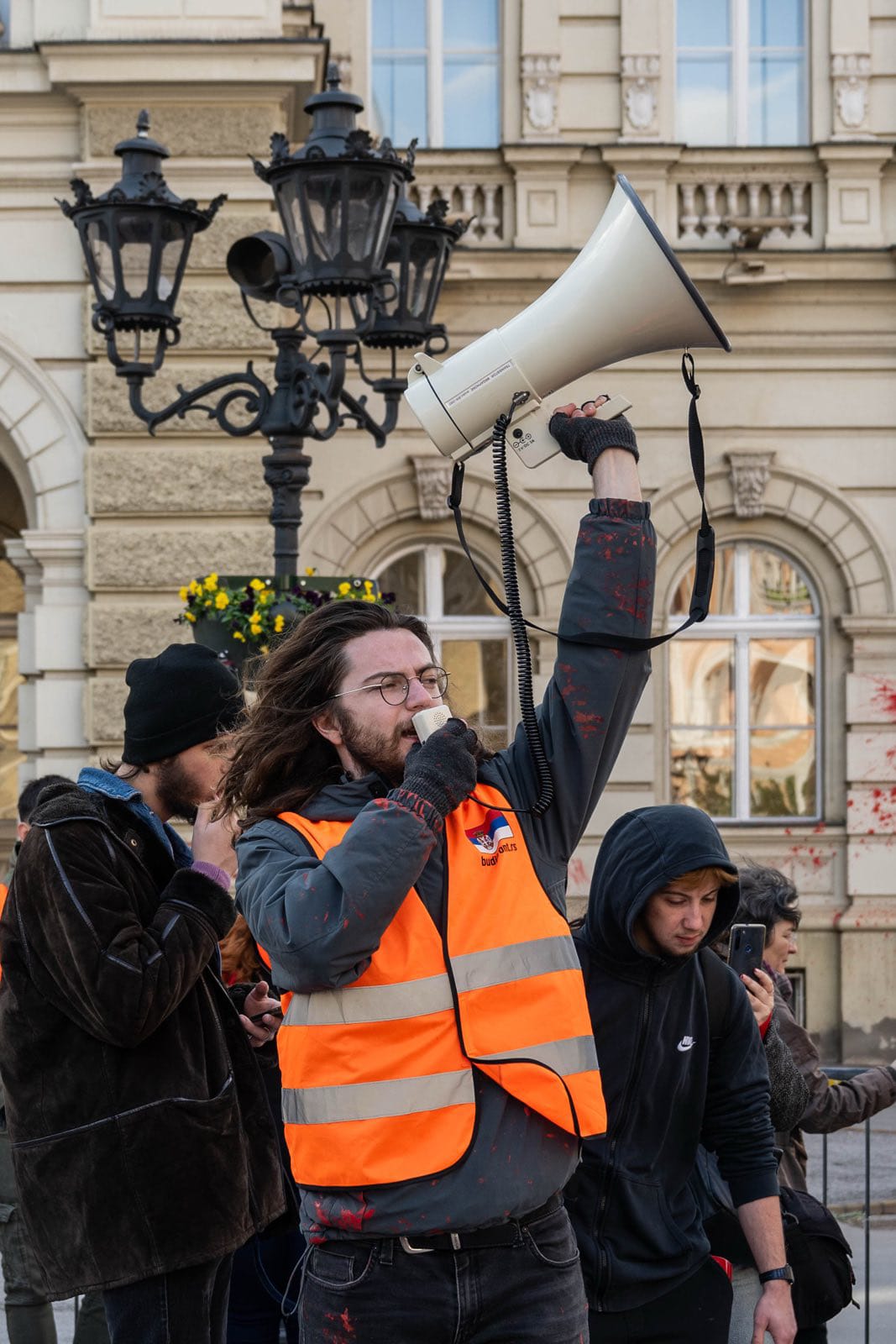
B.D.: “At first, it was localised violence: media attacks, assaults on individuals by groups of thugs. It wasn’t yet full-blown state repression. Then everything changed around March last year, following the largest protest in Serbia’s history, organised in Belgrade on 15 March. The thugs from Caciland (the derogatory name given to the camp that Vučic’s supporters set up in Belgrade’s Pioneer Park to oppose the student demonstrations, ed.) sprang into action, and police repression began to grow increasingly violent month by month.”
D.A.: “As for our personal experiences, we have suffered various forms of repression. Branislav was taken into custody a couple of times for questioning, and the same happened to a friend of ours and me when we were picked up by the intelligence services on our way home from work. Other comrades were beaten by the police during the protests. By now, this has become the norm, and that is the most absurd thing about it.”
E: It was in March 2025, at the height of the protest movement, that the regime launched a legal crackdown against you. What happened?
D.A.“On the evening of 12 March, Branislav, I, and 12 other members of STAV met at the Novi Sad headquarters of the Free Citizens’ Movement, a local party made up mainly of activists rather than career politicians. We discussed how we wanted to organise the big demonstration on 15 March and subsequently decided that the following day, five of us would go to Dubrovnik (in Croatia, ed.) to take part in a panel at a festival dedicated to student protests in Serbia. What we didn’t know was that the secret services were recording our entire meeting. So on the evening of 13 March, while we were already in Dubrovnik, five different national television channels broadcast the meeting. The following day, the other six comrades who had remained in Serbia were arrested and spent two and a half months in pre-trial detention and a further five months under house arrest. As for us, our lawyers advised us not to return because we would be arrested. And indeed, within a couple of days, a national arrest warrant was issued.”
E: What have you been formally charged with?
D.A. “Attempt to violently overthrow the constitutional order of Serbia. The court has sought a five-year prison sentence, the maximum penalty for this type of offence: I don’t think we’ve seen anything like this since the days of Josip Broz Tito…”
E: So, from 13 March 2025, what is effectively your exile in Croatia began. What is your legal status?
D.A.: “Yes, after six days in Dubrovnik, we moved to Zagreb: it’s easier for our family and our lawyers to reach us here, and there are more job opportunities. Legally, we are under a humanitarian protection regime based on a European Union regulation reserved for specific cases of non-EU citizens who enter Croatia and may remain longer than the 90 days permitted by European legislation due to exceptional circumstances preventing them from returning to their own country. Our permit is due to expire in October, but we intend to renew it because our case has not yet been closed.”
E: You’re currently in Vienna on business. So do you have complete freedom of movement?
B.D.: “We can travel throughout the Schengen area, but we are advised not to leave it. Furthermore, there are some EU countries where we would be at risk, as their governments have ties to Vučic: this was the case with Viktor Orbán’s Hungary and remains the case with Robert Fico’s Slovakia.”
D.A.: “The same applies to the Western Balkan countries that are not part of the European Union, such as Montenegro and Bosnia and Herzegovina. In this case, the problem is not so much their proximity to Vučic but the fact that they are non-EU states. Ours is a residence permit in an EU country, so we are safer if we remain within its borders.”
E: Your account shows that in Serbia, the judiciary no longer fulfils its natural role of overseeing and curbing the excesses of the executive. Will the reform promoted by the regime make matters even worse?
B.D.: “It has already done so. One of the main consequences of the reform is that it has strengthened senior prosecutors’ control over individual cases. We see this in cases involving activists, students, and even corruption cases. This increases the potential for political pressure. Recently, the government has made amendments to the reform, but these are cosmetic changes that do not really solve the problems: it is a bit like putting make-up on a dead man. We hope that international pressure—in particular from the Venice Commission of the Council of Europe, which is due to issue an opinion on the text shortly—will force the authorities to withdraw these provisions.”
E: Looking at the current situation in Serbia, do you think the protests over the last two years have led to any positive changes?
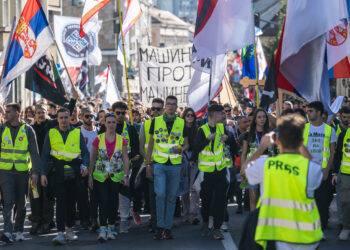
D.A.: “Absolutely. The most significant change concerns the renewed hope for a better future, a sentiment that now encompasses the entire Serbian population. The protests of recent years have not been confined to major cities, such as Belgrade, Novi Sad or Niš, but have reached even the smallest villages. There have been cases of villages with 300 residents where half of them took to the streets to protest: something completely unimaginable until two years ago. All this was made possible by a genuine door-to-door campaign led by students: they walked across the whole of Serbia, deliberately choosing the most difficult routes to pass through the smallest villages and show people that young people are trying to fight for a better future.”
B.D: “All this is demonstrated by the results of last year’s local elections. Tiny villages that for 30 years have always voted for the SNS (the Serbian Progressive Party, the political force led by Vučić, ed.) and where now 60 per cent of the population is choosing the opposition. We are talking about places where there is often no electricity and the television network does not work. Yet, even without independent information, they have begun to oppose the status quo.”
E: Presidential elections are due to take place next year. Do you think this new political climate will result in Vučic’s defeat and the dawn of a new era for Serbia?
B.D. “The key to making this happen is for the traditional opposition parties to withdraw from the election in order to support the list led by the student movement. We already have a list of political groups that have made this decision.”
E: Serbia has long been a candidate for EU membership, but its shift towards authoritarianism has significantly slowed down the process. Yet, two weeks ago, the President of the European Council, António Costa, was optimistic as he spoke of a “concrete timetable” for reforms that Vučić had presented to him to bring Belgrade into line with EU values. Do you think he can be trusted?
D.A.: “Absolutely not. Vučic is a pathological liar, almost diabolical. You see him every day across countless media outlets, constantly changing his story. When he attends meetings with EU representatives, he lies about what he’s doing to align with European standards. This is demonstrated by the fact that we already have a whole host of laws that the EU has asked us to introduce into our legal system, but the government simply isn’t implementing them. No progress is being made, and I think we have never been further from joining the Union.
E: So what should the EU do? Suspend the accession process?
B.D.: “Brussels should take a more radical stance, freezing all EU funds earmarked for Belgrade and suspending accession talks until fundamental human rights are respected. Just to give one example: in the case of the collapse of the bus shelter in Novi Sad, there was a misuse of EU funds, yet it was decided to let it slide…”
D.A: “It breaks my heart to say this, because I believe the European path is the right one. But the violations are truly too serious, and halting the process is the only sensible thing to do”.
E: I’ll finish with a personal question. What do you miss most about Serbia?
D.A.: “I miss my family and friends, although it’s good that they can come to Croatia without any problems at the border. Of course, it would be better if we could go and visit them, rather than just waiting for them to find the time to come here.”
B.D.: “What I miss most are the people. Not just my family and friends, but also all the Serbs who continue to struggle and suffer under the regime, yet refuse to give up because they believe a better tomorrow will come.”
English version by the Translation Service of Withub