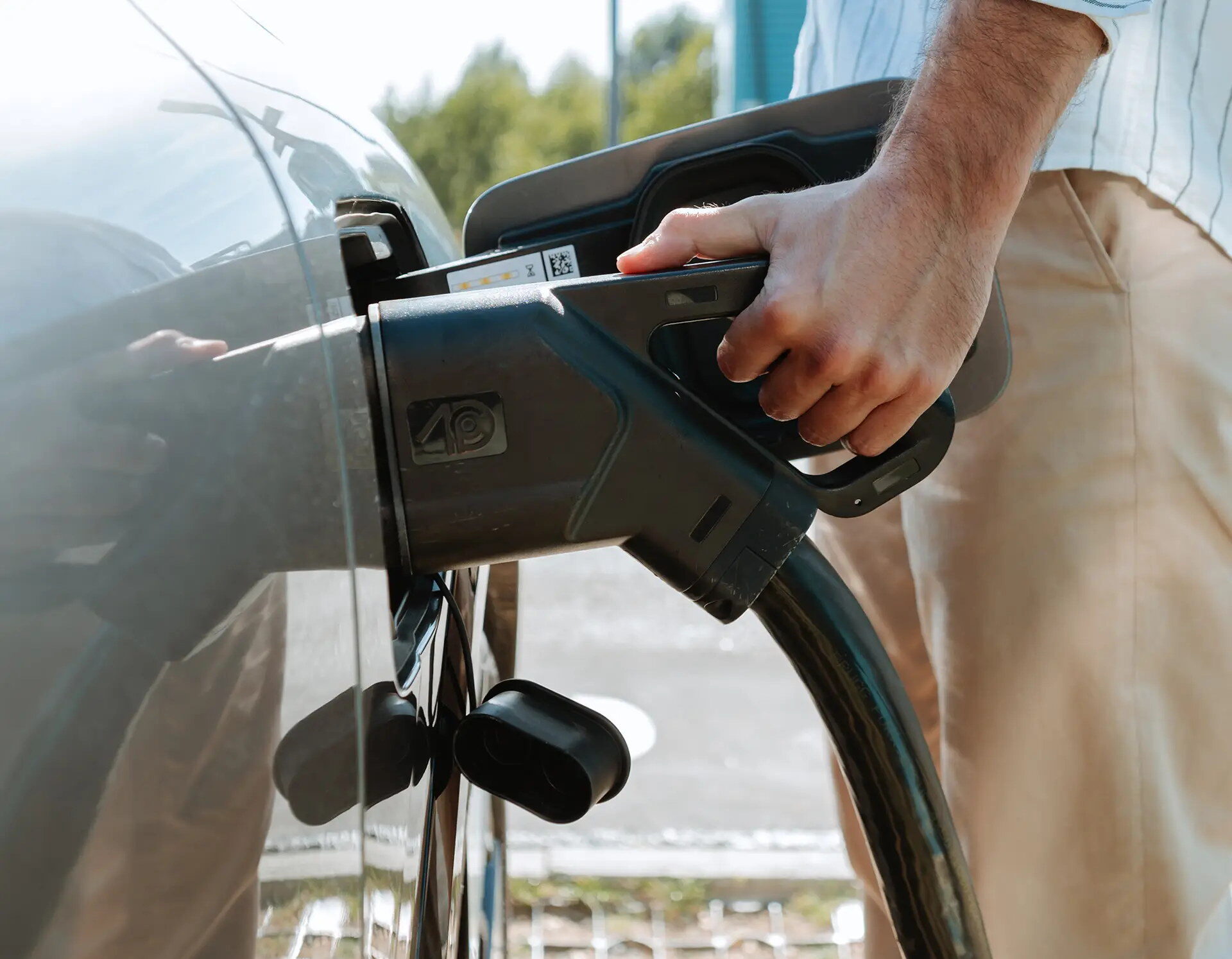
from our correspondent in Strasbourg – Moving forward with EU automotive policies. The European Commission is calling for support for a package of measures aimed at innovation, competitiveness and sustainability in a sector considered strategic, and Parliament is responding by fostering a climate of openness on an extremely sensitive issue which nevertheless attracts its fair share of criticism. The Chamber is seeing a familiar dynamic: the Socialists and Greens are calling for the “green” framework of mobility policies not to be dismantled; the right is attacking what it sees as a policy that is counter-productive from an industrial perspective; while the People’s Party (EPP) is opting for a mediating line: press ahead with the decarbonisation of the automotive sector, but with flexibility.
With the car package, the industrial accelerator and the omnibus bill for the automotive sector, “we have tabled three bills which we believe address all the issues,” claims the Executive Vice-President for Industrial Strategy, Stéphane Séjourné, who urges the House to “adopt the legislative proposals on the table as soon as possible.” To those who have criticised the approach to the development of electric mobility in recent years, Séjourné points out that “20 per cent of vehicles sold worldwide are electric, and the trend is rising.” If the EU fails to meet this demand, someone else – a well-known player – will: “China’s share is growing steadily, accounting for over 15 per cent of the electric vehicle market.”
The Commission finds support within the EPP, the political group it represents. “The automotive package is one of the key elements in securing a future for European manufacturing,” Massimiliano Salini (FI) stressed, who nevertheless has at least one criticism to make: “The market is signalling that this ambitious pace is not being met.” He noted that the available figures suggest that electric vehicles will account for “20 per cent of the total vehicle fleet at present, 38 per cent by 2030 and 64 per cent by 2035.” The transport revolution is underway, but it is not gathering pace. “The right conditions must be created; otherwise, we risk having to buy rights from non-European countries,” and in this regard, the Forza Italia MEP stresses, the EU has “two major assets: flexibility and technological neutrality.” The EPP “will work towards this,” which for Italy means biofuels – a sector in which the country has much to offer.
The Liberals (RE) suggest making the most of this favourable moment: “In June, we saw record figures for demand for electric vehicles, but to be honest, it is the rise in fossil fuel prices that is making them affordable,” said Sigrid Friis, who signals the group’s pushback against attempts to undermine the Green Deal. “Some would like to reopen the debate in the name of protecting industry, but that is not the case. It would mean investing less. We must be bold.”
Moving forward with the European agenda for clean mobility remains a priority for the Socialists too: “The demand for second-hand electric vehicles must be encouraged,” Mohammed Chahim (S&D) stressed, who is also determined to continue with the mobility agenda set out so far. “We have mocked electric vehicles for too long; now we must tackle the issue.”
Doubts and criticism are coming from the Conservative benches (ECR): “China is gaining ground; we have already lost 200,000 jobs, and we are seeing factories and supply chains shut down,” argues Elena Donazzan (FdI). Meanwhile, from the PfE sovereigntists – of which the League is a member – the Czech MEP Klara Dostanova adds to the criticism: in the face of the crisis in the automotive sector, “the proposed approach is, unfortunately, not the right one.” The Commission, she complains, “is increasingly dictating what to do instead of allowing innovation to flourish.”
Sarah Matthieu, of the Greens, criticises the industry, singling out one company in particular: “If Volkswagen’s chief executive spent more time competing with China, we would be in a different situation,” she said, referring to the possibility of closures and redundancies by the German group.
English version by the Translation Service of Withub


![Da sinistra: il presidente del Consiglio europeo, Antonio Costa; il presidente dell'Ucraina, Volodymir Zelensky: la presidente della Commissione europea, Ursula von der Leyen [Bruxelles, 18 giugno 2024. Foto: European Council]](https://www.eunews.it/wp-content/uploads/2026/06/euco_ua260618-120x86.jpg)
![[foto: Saverio De Giglio/imagoeconomica]](https://www.eunews.it/wp-content/uploads/2026/10/cpt-120x86.png)