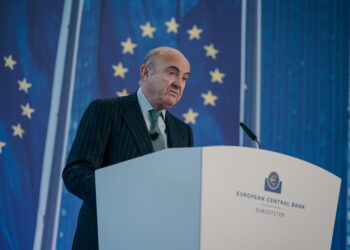
Brussels – Faced with geopolitical uncertainties and trade tensions, banks are prioritising their own survival, making it more difficult to access credit and secure loans and undermining the ambitions for growth, investment, and competitiveness that are central to the EU’s political agenda. This is what emerges from an analysis carried out by experts at the European Central Bank and published on the ECB’s blog. The current situation can be read both ways. “While euro area banks continue to maintain robust balance sheets, they have been forced to adjust their strategic planning regularly and adopt more cautious lending practices in order to navigate these trade-related risks.“
Essentially, credit institutions are primarily concerned with protecting themselves against risks. While this approach is understandable and responsible and helps to prevent future liquidity crises, another aspect that emerges is that banks “have also adopted a more cautious stance when lending to firms.” This is a particular problem for small and medium-sized enterprises (SMEs), which are most in need of finance and hardest hit by the disruption to the flow of borrowed capital. Moreover, uncertainties and tensions are themselves causing businesses to postpone investments. ECB economists note that “for firms, higher trade risks have not only led to tighter lending conditions, but they have also dampened loan demand.”
The situation therefore sees businesses refraining from applying for bank loans, while those that do apply face rejection or increasingly onerous conditions to obtain what they need. This trend predates the US and Israeli war in Iran and its consequences. The study conducted by ECB experts notes that “in 2025, about half of the banks participating in the euro area BLS (bank lending survey, ed) reported that trade risks were important, and expected similar levels of exposure in 2026.” Subsequent developments have only served to exacerbate the situation.
Ultimately, however, the root of the problem lies with the Trump administration and a tariff deal it forcefully pushed through, which has led to higher prices for ‘Made in EU’ goods sold across the Atlantic. These increases have had an impact by “prompting the banks most exposed to firms exporting to the United States to further tighten their lending conditions.” In short, if banks are no longer granting loans to companies — and are offering fewer of them on tougher terms — the blame lies (also) with the US president and with the European Member States that went along with his wishes to avoid trade wars. Frankfurt, therefore, confirms what had already been forecast: the tariff agreement is a defeat for the EU, its eurozone, and its ambitions for greater competitiveness.
English version by the Translation Service of Withub