- Europe, like you've never read before -
Wednesday, 12 August 2026
No Result
View All Result
  • it ITA
  • en ENG
Eunews
  • Politics
  • World
  • Business
  • News
  • Defence
  • Health
  • Agrifood
  • Other sections
    • Culture
    • Rights
    • Energy
    • Green Economy
    • Finance & Insurance
    • Industry & Markets
    • Media
    • Mobility & Logistics
    • Net & Tech
    • Sports
  • Newsletter
  • European 2024
    Eunews
    • Politics
    • World
    • Business
    • News
    • Defence
    • Health
    • Agrifood
    • Other sections
      • Culture
      • Rights
      • Energy
      • Green Economy
      • Finance & Insurance
      • Industry & Markets
      • Media
      • Mobility & Logistics
      • Net & Tech
      • Sports
    No Result
    View All Result
    Eunews
    No Result
    View All Result

    Home » General News » Oceans, the “sleeping giants” of climate change: 1.7 million Britons at risk of flooding

    Oceans, the “sleeping giants” of climate change: 1.7 million Britons at risk of flooding

    The findings of a study carried out by researchers from the Met Office and the University of Bristol, in collaboration with the specialist firm Fathom, which analyses for the first time the direct impact of rising sea levels on the population of the United Kingdom

    Elena Fois by Elena Fois
    21 July 2026
    in General News
    Photo de Marcus Woodbridgesur Unsplash

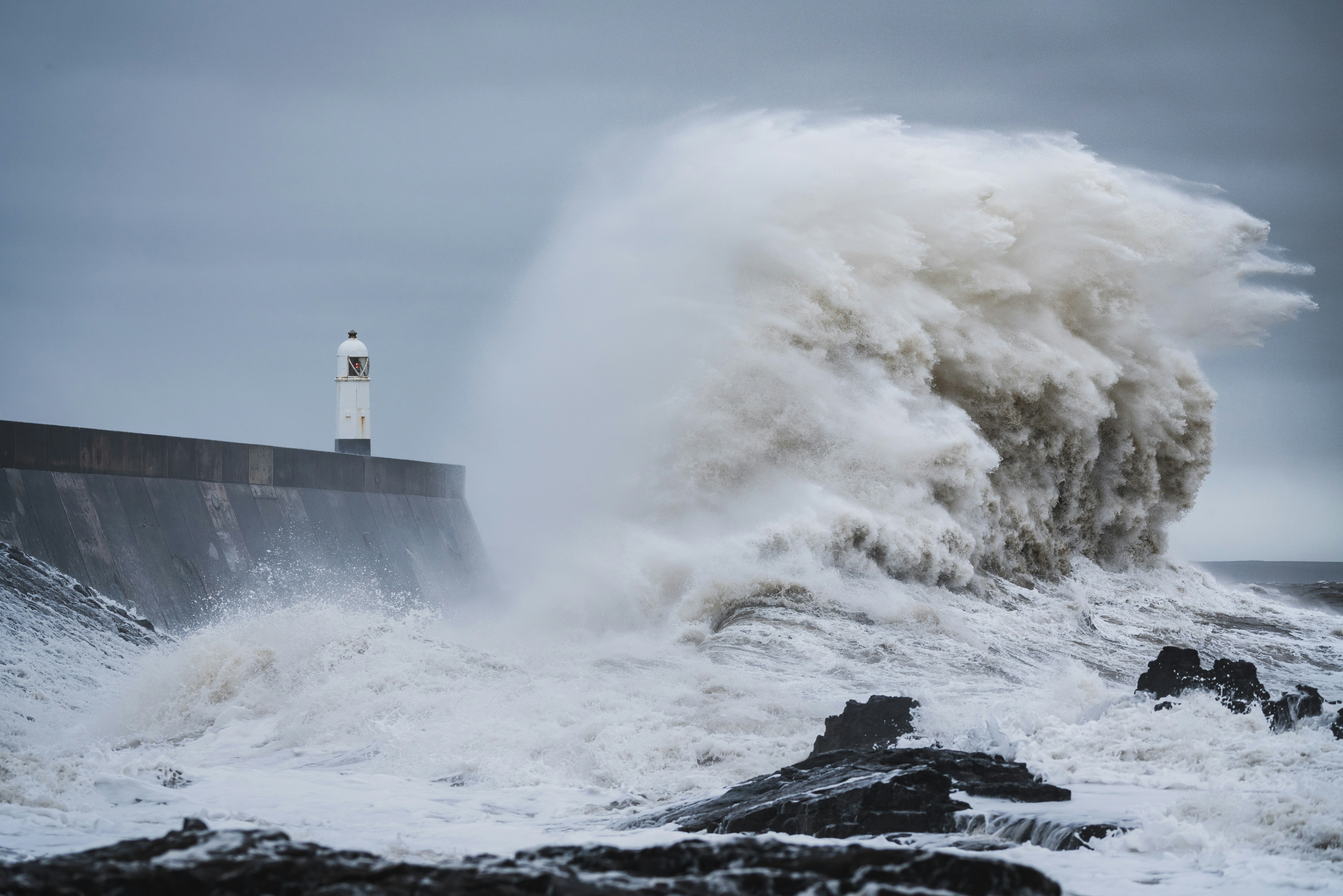
    Porthcawl, UK. Photo de Marcus Woodbridgesur Unsplash

    Brussels – The planet’s oceans and glaciers possess an extremely long memory and immense inertia. They respond slowly to global warming, but once set in motion, halting them becomes a task that spans generations. This is why scientists describe rising sea levels as the “sleeping giant” of climate change: a silent threat which, even in the best-case scenario, will continue to reshape our coastlines for centuries to come. Quantifying the scale of this challenge with unprecedented precision is a pioneering study published in the Nature Communications journal. Carried out by researchers at the Met Office and the University of Bristol, in collaboration with the specialist firm Fathom, the study analyses, for the first time, the direct impact of rising sea levels on the UK population, projecting it along a timeline extending into the 23rd century. 

    The figures paint a picture of an inevitable geographical and demographic transformation, highlighting the urgent need for structural adaptation strategies. According to the study’s estimates, by the end of this century the sea level along the British coastline will have risen by between 0.4 and 0.6 metres. This may appear to be a modest change, but it is sufficient to increase the area classified as at risk of flooding by 13 per cent. Put in human terms: by the start of the next century, at least half a million more people in the UK will be exposed to the risk of coastal flooding, marking a 25 per cent increase on current levels. But the impact does not stop in 2100. Even if global policies manage to meet the most stringent emission reduction targets set by the Paris Agreement, the effect of heat accumulation in the oceans will continue to push the water levels upwards: by 2200, around 1.4 million more people will be at risk of coastal flooding; by 2300, this figure will rise to 1.7 million people, with sea levels set to triple compared with the end of this century (+1.2 / +1.8 metres) and a 56 per cent increase in the areas at risk. 

    To arrive at these findings, the research team cross-referenced data provided by the IPCC (the United Nations Intergovernmental Panel on Climate Change) with a very high-resolution hydrodynamic model developed by Fathom. The low-lying areas of the British east coast naturally top the list of the most vulnerable regions. In particular, the large Wash estuary and the Humber estuary are identified by scientists as true hotspots for future hydrogeological risk. The implications of this research go far beyond mere scientific speculation and highlight the need to radically rethink urban planning and coastal infrastructure. While emissions reduction remains the first line of defence against the most dramatic scenarios, policymakers must recognise that a portion of this rise is now “written into” the physics of the planet.

    * In collaboration with GEA News Agency

    English version by the Translation Service of Withub

    Tags: climate changeFathomfloodsinglesimariMet OfficeNature CommunicationoceanirischiostudioUniversità di Bristol

    Related Posts

    Caldo, Giugno 2026, Copernicus
    General News

    A hellish month: June 2026 was the hottest on record in Western Europe and the second‑hottest globally

    9 July 2026
    Source: Copernicus
    General News

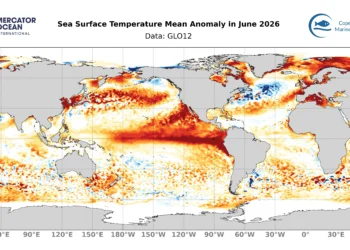
    Warm seas: ocean temperatures hit a record 20.98°C in June

    1 July 2026
    Foto da una manifestazione per il clima in Germania nel 2019. Photo de Markus Spiskesur Unsplash
    Energy

    Copernicus: “Global warming is accelerating; temperatures could exceed 1.5 °C within four years”

    11 June 2026
    map visualization
    Università - Eurostat

    More and more women are graduating from university in the EU, yet STEM subjects remain predominantly male

    by Annachiara Magenta annacmag
    12 August 2026

    Brussels – In 2024, the European Union recorded 4.5 million new graduates, with women clearly outnumbering men at university: 2.6...

    Migranti - Mediterraneo - Europa

    Fewer arrivals, more deadly routes. The Mediterranean is becoming increasingly dangerous for migrants

    by Annachiara Magenta annacmag
    12 August 2026

    According to the report by the International Organisation for Migration (IOM), the most dramatic figure relates to the Central Mediterranean...

    CAMERA DEI DEPUTATI, AULA, MISURE DI CONSOLIDAMENTO E SVILUPPO DEL SETTORE AGRICOLO

    ECB experts: “Reforms are needed to boost investment, starting with the labour market”

    by Emanuele Bonini emanuelebonini
    12 August 2026

    A working paper on the link between government action and support for competitiveness has been published in Frankfurt. Reform of...

    METTE FREDERIKSEN PRIMO MINISTRO DANIMARCA - CEUTA

    Ceuta sends shockwaves through Copenhagen; Frederiksen: “If migration flows resume, we’ll close the borders”

    by Annachiara Magenta annacmag
    12 August 2026

    The Danish Prime Minister has convened an extraordinary session of the Folketing to discuss the crisis in Ceuta and its...

    • Director’s Point of View
    • Opinions
    • About us
    • Contacts
    • Privacy Policy
    • Cookie policy

    Eunews is a registered newspaper
    Press Register of the Court of Turin n° 27


    Copyright © 2025 - WITHUB S.p.a., Via Rubens 19 - 20148 Milan
    VAT number: 10067080969 - ROC registration number n.30628
    Fully paid-up share capital 50.000,00€


    No Result
    View All Result
    • it ITA
    • en ENG
    • Politics
    • Newsletter
    • World politics
    • Business
    • General News
    • Defence & Security
    • Health
    • Agrifood
    • Altre sezioni
      • Culture
      • Rights
      • Energy
      • Green Economy
      • Gallery
      • Finance & Insurance
      • Industry & Markets
      • Media
      • Mobility & Logistics
      • Net & Tech
      • News
      • Opinions
      • Sports
    • Director’s Point of View
    • Draghi Report
    • Eunews Newsletter

    No Result
    View All Result
    • it ITA
    • en ENG
    • Politics
    • Newsletter
    • World politics
    • Business
    • General News
    • Defence & Security
    • Health
    • Agrifood
    • Altre sezioni
      • Culture
      • Rights
      • Energy
      • Green Economy
      • Gallery
      • Finance & Insurance
      • Industry & Markets
      • Media
      • Mobility & Logistics
      • Net & Tech
      • News
      • Opinions
      • Sports
    • Director’s Point of View
    • Draghi Report
    • Eunews Newsletter

    Attention