Brussels – The average age at which Europeans leave their parental home is rising: in 2025, it stood at 26.3 years, up slightly from 26.2 in 2024, according to figures released by Eurostat. The European Union’s statistical office notes that since 2022, the average age has remained around 26 years. Croatia (31.5 years), Greece and Slovakia (both 30.9 years), and Spain and Italy (both 30.2 years) recorded the highest average ages at leaving the parental home. Meanwhile, those leaving the parental home earliest are the Finns (at 21.4 years), the Danes (at 21.8 years), and the Estonians and Lithuanians (both at 22.7 years).
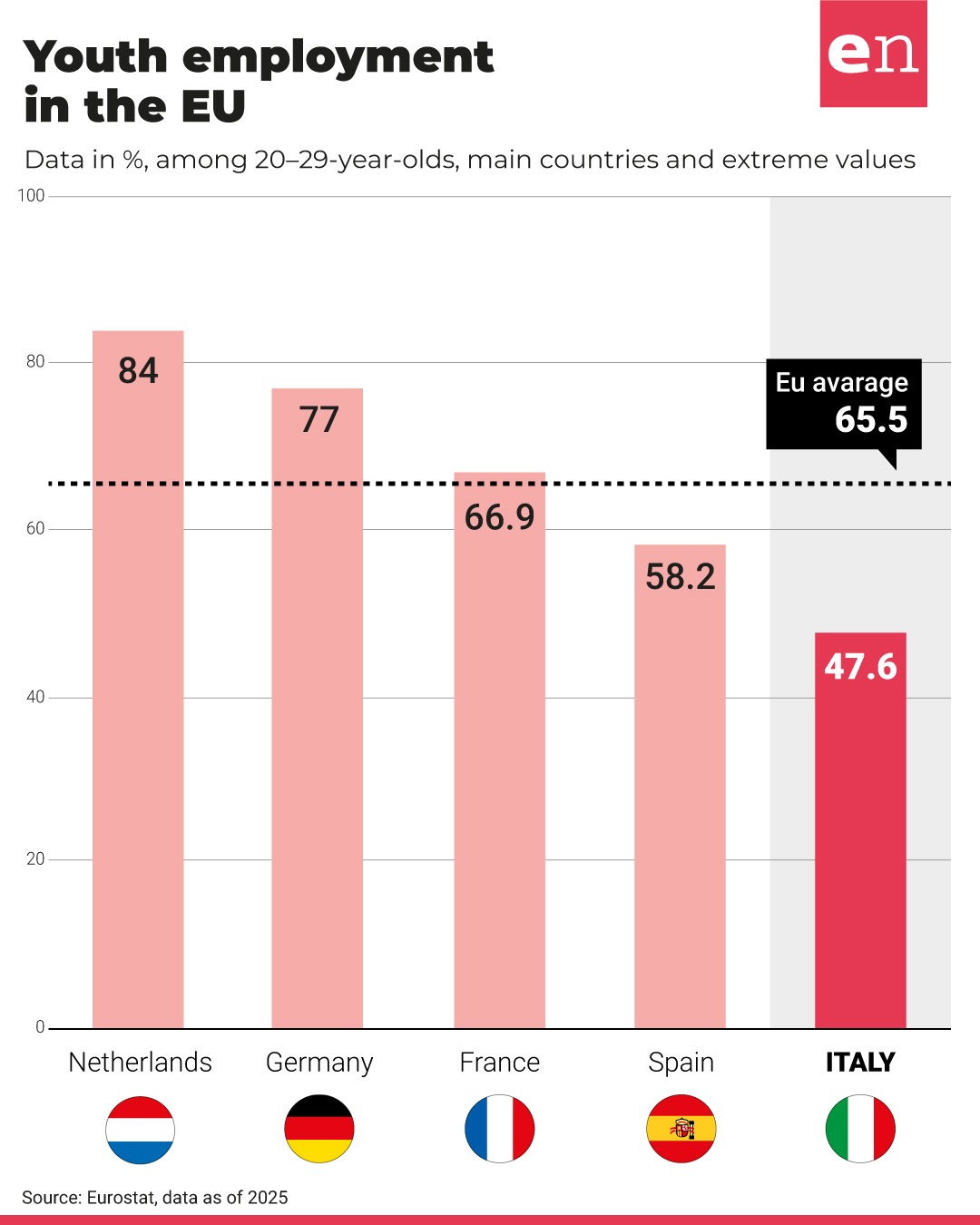
However, this figure must – without exception – be considered alongside the employment data. According to Eurostat, in 2025, the employment rate in the EU among young people aged 20 to 29 stood at 65.5 per cent. In most countries where young people leave their parents’ home at an age lower than the EU average – i.e., before the age of 26.3 – the employment rate for the 20–29 age group is higher than the EU average (i.e., above 65.5 per cent). This is the case in the Netherlands (employment rate of 84 per cent; young people leave their parents’ home on average at 23.4 years of age), Denmark (rate of 74.8 per cent; they leave their parents’ home at an average age of 21.8 years), Germany (77 per cent; they leave their parents’ home at an average age of 24.1 years) and Sweden (69.9 per cent; they leave their parents’ home at an average age of 23.1 years). Conversely, in countries where young people leave their parents’ home later, the employment rate is below the EU average. This is the case for Greece (employment rate at 56.2 per cent), Croatia (60.8 per cent), Spain (58.2 per cent), and Italy, which, at 47.6 per cent, records the lowest employment rate among 20–29‑year‑olds in the entire EU.