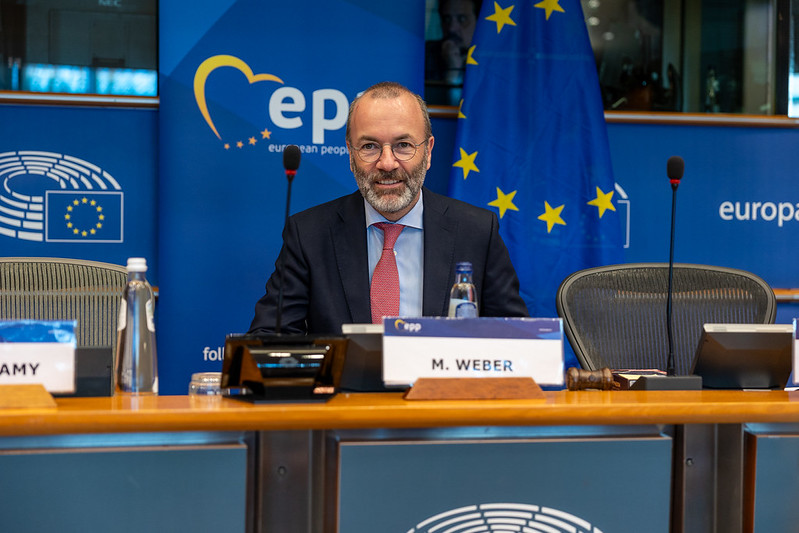
Brussels – The proposal for the EU’s Multiannual Financial Framework (MFF 2028–2034) drawn up by the Irish Presidency of the Council of the EU is a political manifesto of the European People’s Party (EPP). Amid the uncertainty of the inter-institutional negotiations with the European Parliament, much could still happen, but what has emerged so far is a backwards-looking EPP which, having built Europe, is now choosing to dismantle it.
There is a clear, recognised and indeed understandable need for sustainable public finances, for expenditure control and for a reduction in the deficit and debt, which have certainly reached high levels. A need that had already emerged and been agreed upon during the previous parliamentary term. However, some challenges can no longer be postponed, and these require a courage that the Irish negotiated compromise failed to demonstrate. Micheal Martin, a Liberal, leads the government in Dublin. The fact that he is not a member of the EPP certainly makes it more difficult to overcome the EPP’s resistance to budgetary constraints, and, understandably, the proposal should be directed towards those within the Council who hold the most heads of state and government.
It is here that the EPP – with so many leaders but so little leadership – takes a step backwards. Twelve of the 27 governments have popularly elected leaders (Austria, Cyprus, Croatia, Germany, Greece, Finland, Luxembourg, Poland, Portugal, Slovenia, Sweden, Hungary), which should be sufficient to provide a pro-European impetus, which, in financial terms, translates into more resources.
The underlying principle is not difficult to understand: the more resources Member States contribute to the common budget, the better the EU can function and fund what is needed to remain competitive and influential on the international stage. Conversely, the less they contribute, the weaker the EU becomes and the less able it is to make an impact.
The EPP’s decisions in favour of a more austere budget reveal a lack of vision, a lack of foresight and a lack of pro-European sentiment, which – regardless of its nature, whether it be a conscious political choice, fears about budgetary sustainability, unstable governments in some cases and upcoming election campaigns in others – results in alignment with the positions of Eurosceptic and sovereigntist forces who are calling for more powers for national parliaments and less centralisation in Brussels.
In essence, the EPP is making a choice that breaks with its past and tears its own family apart. Because its uncompromising stance on the budget has already led to the divergence between the EPP party and the EPP group, with the European People’s Party in the European Parliament pitted against the European People’s Party in the Council. A sort of civil war is raging entirely within the EU’s leading political force, which risks bringing the Union’s functioning to a head. At a time when it should be revitalised and strengthened, today’s EPP, whether consciously or not, is helping to destroy it.
English version by the Translation Service of Withub