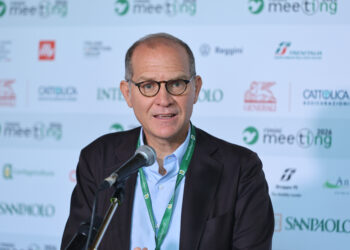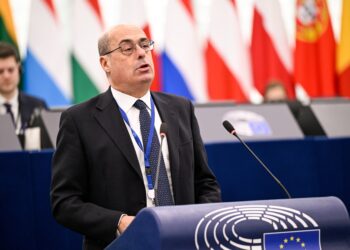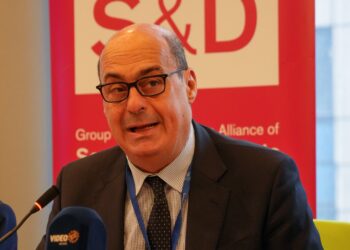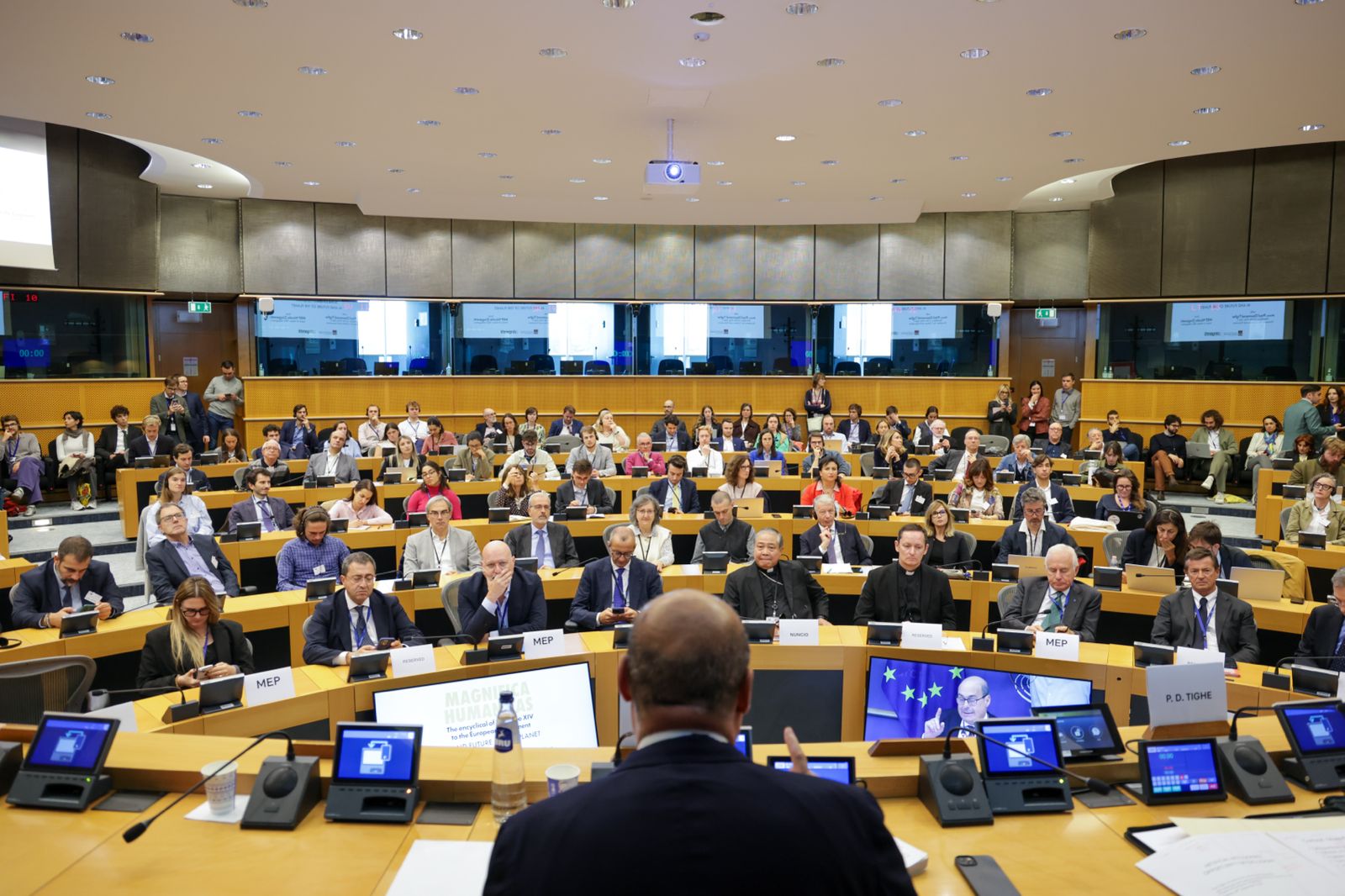
Brussels – A discussion on Pope Leo XIV’s encyclical on artificial intelligence has been brought before the European Parliament, on the initiative of the Democratic Party delegation. The meeting was attended by Monsignor Paul Desmond Tighe, Secretary of the Dicastery for Culture and Education.
During the meeting, Nicola Zingaretti, head of the PD delegation in Strasbourg and rapporteur for the S&D group on the Cloud and AI Development Act (CADA), argued that the papal document is “an extremely useful ethical compass, not only for those of faith, but for anyone who believes that innovation must serve human dignity and not become a tool for domination over humankind.” Addressing the political sphere, he added that, in the face of the Pope’s message, institutions “cannot turn a blind eye or look the other way.”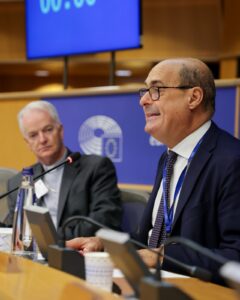
Nicola Zingaretti and Monsignor Desmond Tighe (Photo: PD Delegation)
The MEP also highlights the symbolic significance of the date: the encyclical marks the 135th anniversary of “Rerum Novarum” by Leo XIII, which situated the Church within the context of the Industrial Revolution. Today, he explains, artificial intelligence and major digital platforms “do not represent a mere technical evolution, but a genuine industrial and anthropological revolution.” Quoting the words of Monsignor Tighe, Zingaretti observes that “the extraordinary perfection of the means risks being matched by a profound confusion of objectives,” and that the measure of progress cannot be efficiency alone, but “the contribution that innovation makes to human well-being.”
Hence the call for Europe to take action. “Technology is not neutral,” states the head of delegation, pointing out that the data and algorithms that drive societies “cannot be the exclusive property of large private transnational corporations.” In his view, there is a need for “public oversight, governance, and shared ethical principles regarding strategic digital infrastructure,” so that innovations are used for the common good, social justice, development, and the protection of the most vulnerable workers.
The conclusion is a call not to limit ourselves to market regulation: “We cannot confine ourselves to cold market regulations,” says Zingaretti, calling for a European framework that promotes “a new technological humanism.” Because, he concludes, “we are not just discussing the future of artificial intelligence, but the future of humanity.”
English version by the Translation Service of Withub