Brussels – Some see her at the helm of the World Economic Forum as early as next month. Others believe that her decision to step down as head of the European Central Bank in February rather than October is intended to give the current French President, Emmanuel Macron, the opportunity to influence the choice of successor before the presidential elections, thereby averting the risk that the anti-European Marine Le Pen might take the post. Christine Lagarde herself offers no details and expresses no preference amongst the scenarios put forward, but, after stating that her candidacy for the Élysée “would not be a good idea at all,” today (29 October), she makes it clear: the decision “stems from my desire to have freedom of speech, freedom of expression and the opportunity to speak out on issues that go beyond monetary policy.”
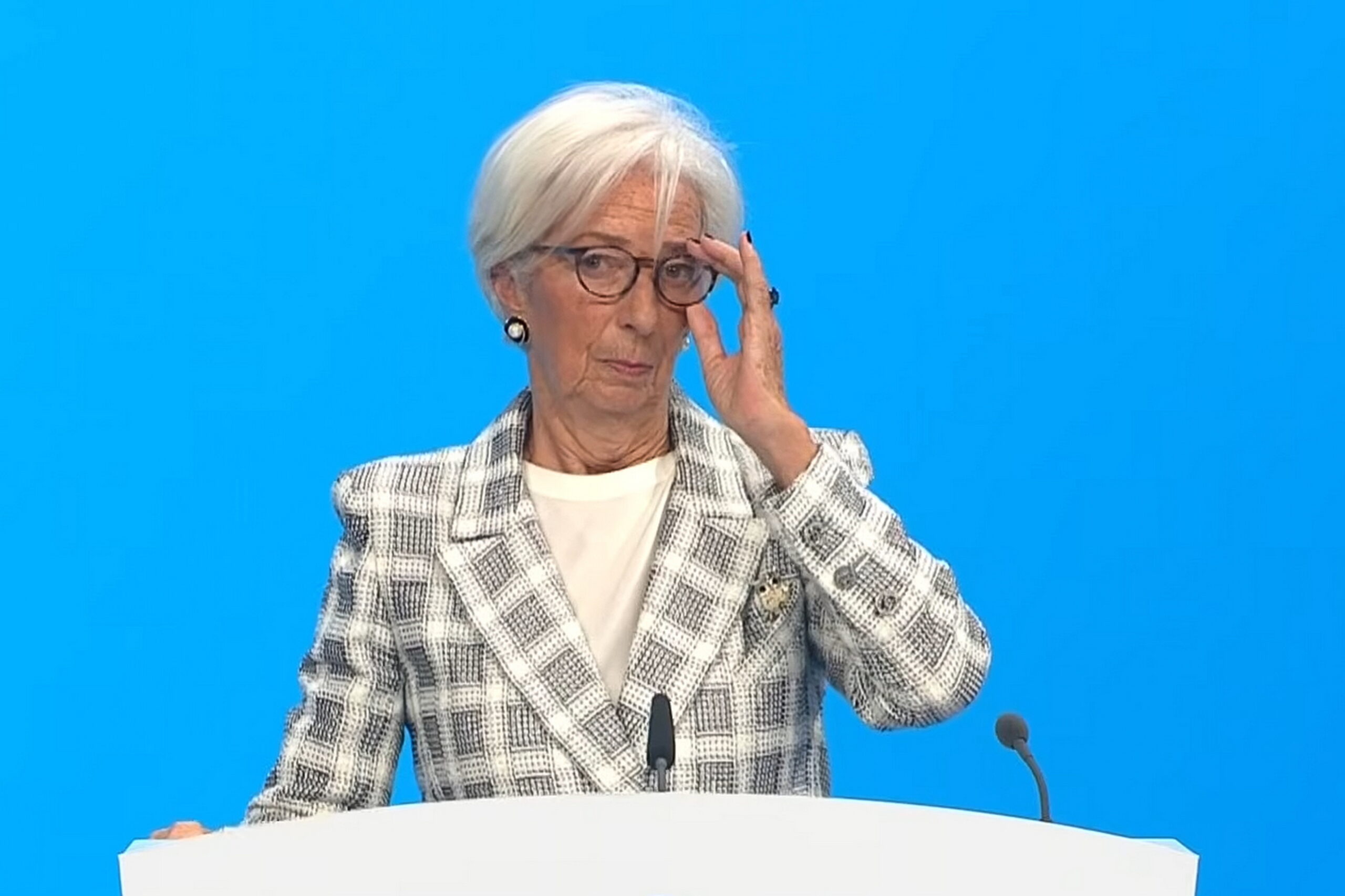
At the press conference following the Governing Council meeting, which decided to leave interest rates unchanged, Lagarde answered the more political questions concerning her decision and the future that lies ahead for her and the ECB. First of all, she reiterated the rules of engagement. “As President of the European Central Bank – and the same applies to my colleagues on the Executive Board and the Governing Council – we are subject to specific constraints: we have a duty to remain neutral. Our comments on the current situation focus exclusively on monetary policy. We are guided by a single mandate, from which we cannot deviate: this is the price we pay for our independence,” she explains.
A position she can no longer uphold. “Today, looking at various parts of the world, not just in Europe, I believe that my voice and my actions can help to uphold principles that are very close to my heart” and “one of these principles is that I do not believe I can remain neutral. At this moment, I cannot feel comfortable with such neutrality,” she admits. Claiming to have “the truth at heart,” the outgoing president points out that she often sees “the truth compromised or contradicted by distorted representations.” Therefore, “from the position I have held over the last twenty years or more, dealing with economic and financial issues at an international level, first as Managing Director of the International Monetary Fund and then as President of the ECB, there are things I can say. Whether or not they are listened to is another matter. But I feel I must express them, something I cannot do in my current role,” she observes.
Meanwhile, Lagarde insists she is “fully in charge and focused” and will continue to “work wholeheartedly and without excuses” until 7 February. “As for operational continuity, a process to identify my successor has already been set in motion” and “there are many excellent candidates – indeed, far better than me,” she comments. So, “do not worry about the continuity of operations” and “do not fear that the decision-making process might remain in a sort of limbo. Absolutely not. The institution is strong and solid as a rock, and will remain so.
As for the succession, among the names being mentioned are the Spaniard Pablo Hernández de Cos, former Governor of the Bank of Spain and former member of the ECB’s Governing Council, who now heads the Bank for International Settlements; the Dutchman Klaas Knot, former governor of the Dutch Central Bank; and the president of the German Bundesbank, Joachim Nagel. But it will be the leaders of the eurozone countries who will have to focus on the name and reach an agreement. In any case, however, “the ECB takes monetary policy decisions on the basis of a consensus,” Andrzej Szczepaniak, an economist at Nomura, told Reuters. Therefore, “it is unlikely that whoever replaces Lagarde will alter or radically change the way the ECB operates, particularly if her successor were to be one of the figures mentioned in the media,” he explains.
English version by the Translation Service of Withub