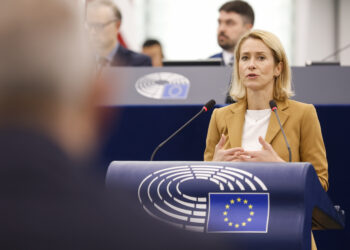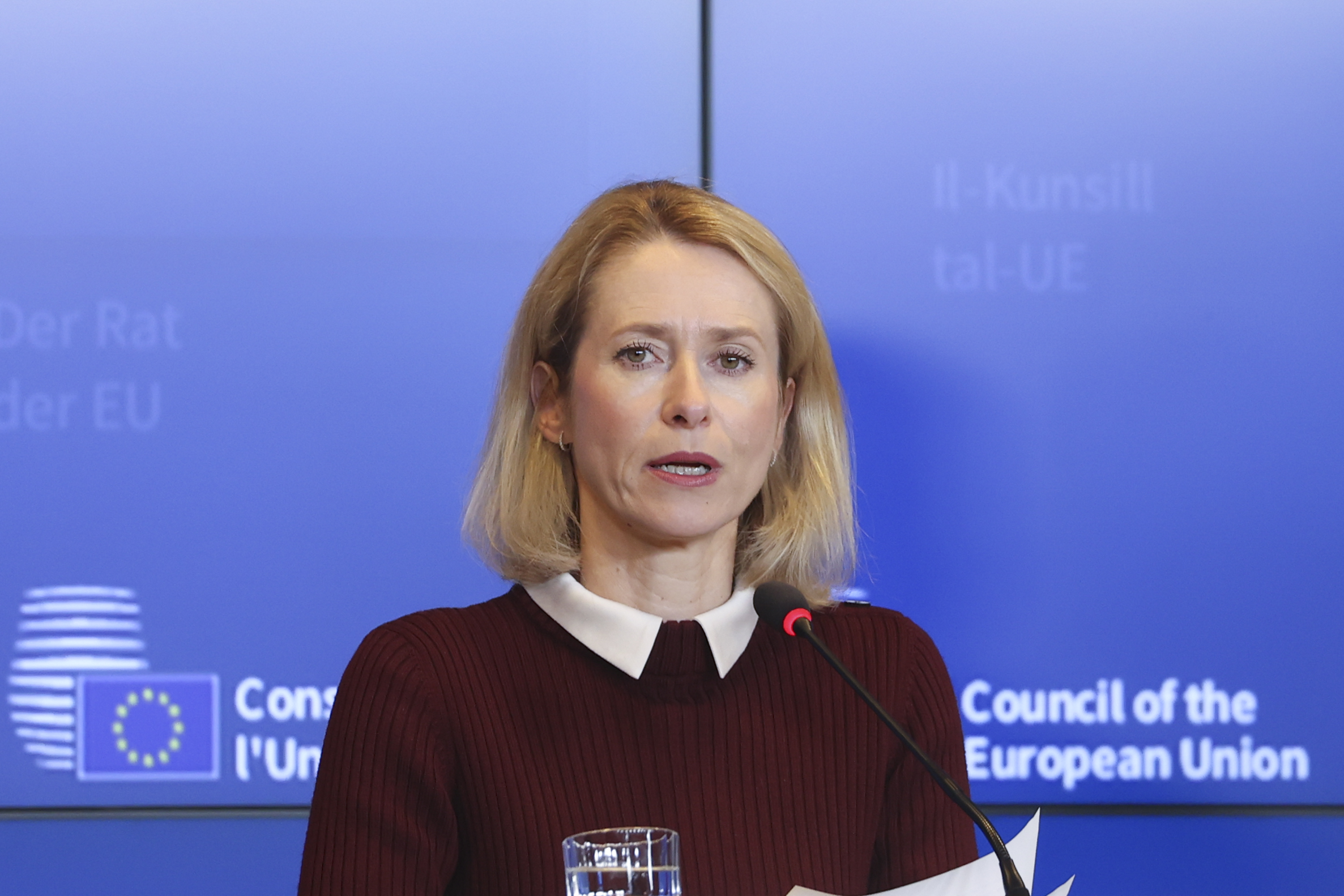
Brussels – “I don’t have high expectations for these talks.” On the eve of the new round of negotiations between Russia and Ukraine in Abu Dhabi, the European Union’s High Representative for Foreign Affairs and Security Policy, Kaja Kallas, makes no secret of her scepticism regarding the chances of reaching an agreement. “We have seen no concrete signs from Russia indicating a willingness to negotiate in good faith,” she said today (9 November) at a press briefing in Paris, where she is attending the G7 foreign ministers’ meeting. The governments at the table will discuss Ukraine tomorrow, alongside the debate on the Middle East.
The trilateral talks between Moscow, Kyiv, and Washington, scheduled for Tuesday (10 November) and Wednesday (11 November) in the capital of the United Arab Emirates, will, in fact, be mediated by the United States. This is not the first attempt at rapprochement to be hosted in the region: two rounds of talks were already held in Abu Dhabi last January and February, followed by a third meeting in Geneva, without leading to a breakthrough. This time, alongside the Russian, Ukrainian, and US delegations, representatives from Europe and NATO will also be present, while Kyiv has announced separate coordination meetings with its European partners.
For Kallas, however, concrete signals from the Kremlin are needed before any agreement can be reached. The High Representative pointed out that Moscow has already signed over thirty agreements in which it has committed to respecting the sovereignty and territorial integrity of states, only to fail to honour them. “We would like to see a ceasefire so that we can truly sit down at the negotiating table, and we would also like to see a sign of goodwill from Russia, for example by stopping the killing of civilians every single day and the attacks on civilian infrastructure. So far, they have not done so,” she added.
Hence the call for Washington to step up the pressure on Moscow. “What we hope is that the US will put pressure on Russia too,” explained Kallas, emphasising that the introduction of further US sanctions, in coordination with European ones, would have a “significantly greater” impact. “Wars end when the aggressors run out of money,” she observed, pointing to economic pressure as one of the means of bringing the conflict to an end.
Also on the agenda in Paris is the future of the International Criminal Court (ICC), after the United States extended its sanctions to the institution, in addition to the measures already adopted against judges and officials. This measure risks undermining the Court’s operations in The Hague, including by restricting its access to the financial services and resources necessary to carry out its activities.
Among the possible European countermeasures is the activation of the blocking statute, the instrument that prevents European operators from complying with certain extraterritorial sanctions imposed by third countries. “It is one of the possible options,” confirmed Kallas, while pointing out, however, that it would be “a last resort.” Brussels is seeking alternative solutions to ensure the continuity of the Court’s activities. “We have six months, or slightly less, to identify alternative solutions that will enable the Court to continue operating. It is of fundamental importance to us that the International Criminal Court continues its work,” she concluded.
English version by the Translation Service of Withub