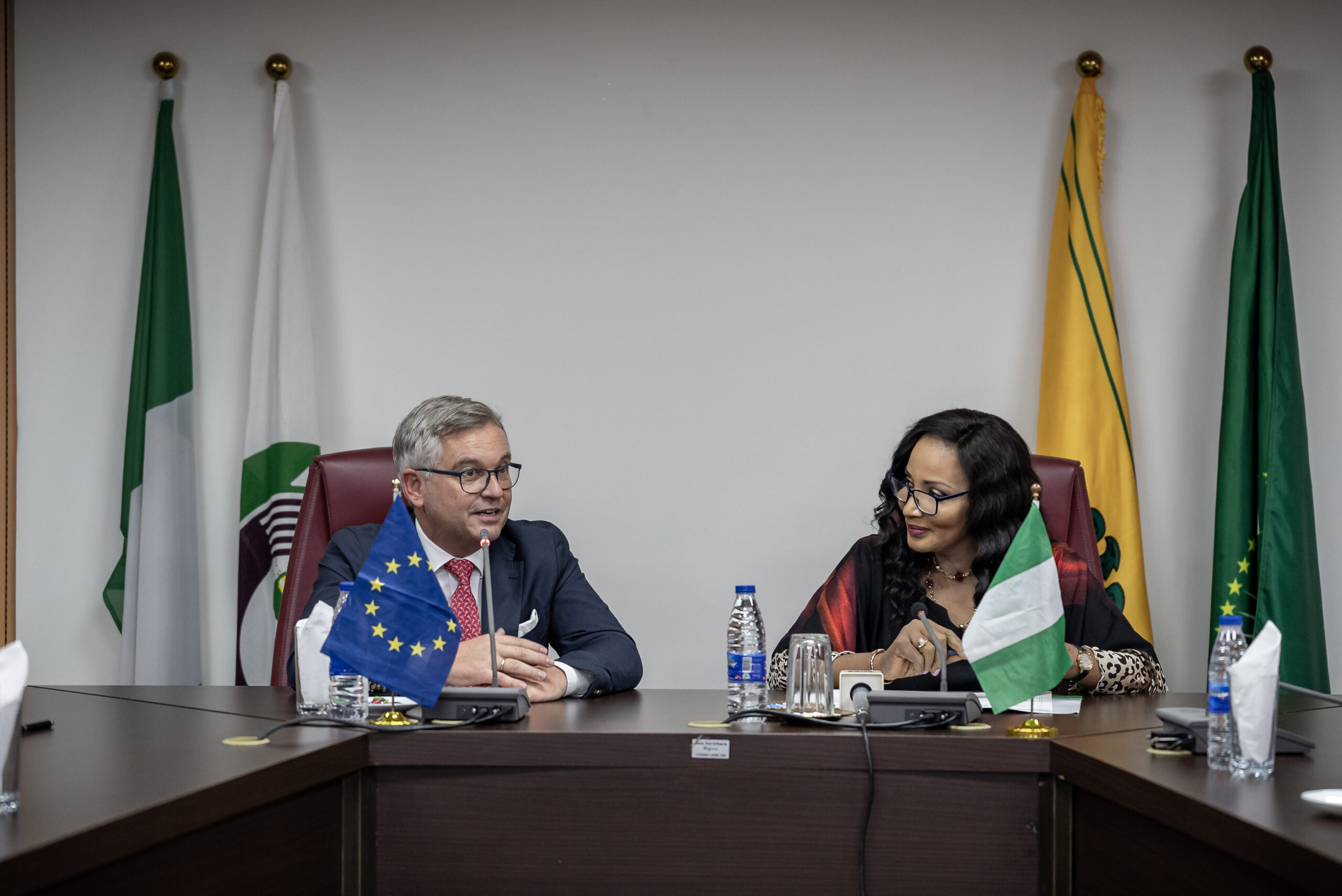
Brussels – The keywords are always the same: returns and, more generally, pushback of migrants. Yesterday (10 November), the European Commissioner for Home Affairs and Migration, Magnus Brunner, and Nigeria’s Minister for Foreign Affairs, Bianca Odumegwu-Ojukwu, signed the first readmission agreement between the EU and Nigeria. The agreement was signed during Brunner’s visit to Abuja, where the Commissioner met with government representatives and other stakeholders to discuss migration management, including repatriation and readmission.
According to a press release issued by the Commission, the text inked yesterday will establish swift and effective procedures for the identification and return of persons without the legal right to reside in Nigeria or in any EU Member State. With this agreement, the European Commission stresses that “the EU and Nigeria are building a stronger comprehensive partnership on migration and security.” During the visit, a “Senior Officials Dialogue on Migration and Security” was also launched to enhance EU-Nigeria cooperation in these policy areas.
Brunner stated that the African country “is a key partner for Europe, and our ties are steadily growing stronger”. According to the Commissioner, “Together we are turning dialogue into action: more security, better migration management, joining forces to bring results,” stressing that “we are turning the huge potential of our partnership into mutual benefit”.
The European Parliament must now approve the agreement, which the Council of the EU will subsequently ratify. It will enter into force on the first day of the second month following notification by both parties of its conclusion. The EU has concluded readmission agreements and arrangements on return and readmission with 24 countries. These include 18 legally binding agreements – with Hong Kong, Macao, Sri Lanka, Albania, Russia, Ukraine, North Macedonia, Bosnia and Herzegovina, Montenegro, Serbia, Moldova, Pakistan, Georgia, Armenia, and Azerbaijan. Turkey, Cape Verde and Belarus – and 6 non-binding arrangements with Afghanistan, Guinea, Bangladesh, Ethiopia, Gambia and the Ivory Coast.
During his visit to Nigeria, Brunner also met with representatives of the International Organisation for Migration (IOM), the United Nations High Commissioner for Refugees (UNHCR) and the United Nations Office on Drugs and Crime (UNODC). The meeting was also attended by members of the Nigerian network of non-governmental organisations NACTAL and the Nigerian Civil Society Network on Migration and Development (CSOnetMADE). The aim is to “work together to protect trafficking victims and displaced people in Nigeria. The EU is supporting them with €66 million for migration management,” the Commissioner announced on his social media channels.
English version by the Translation Service of Withub