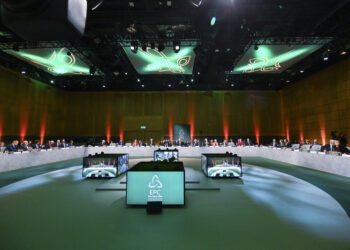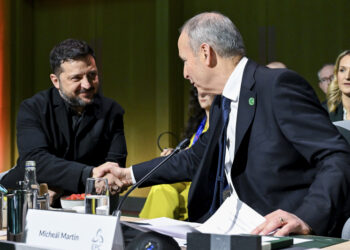
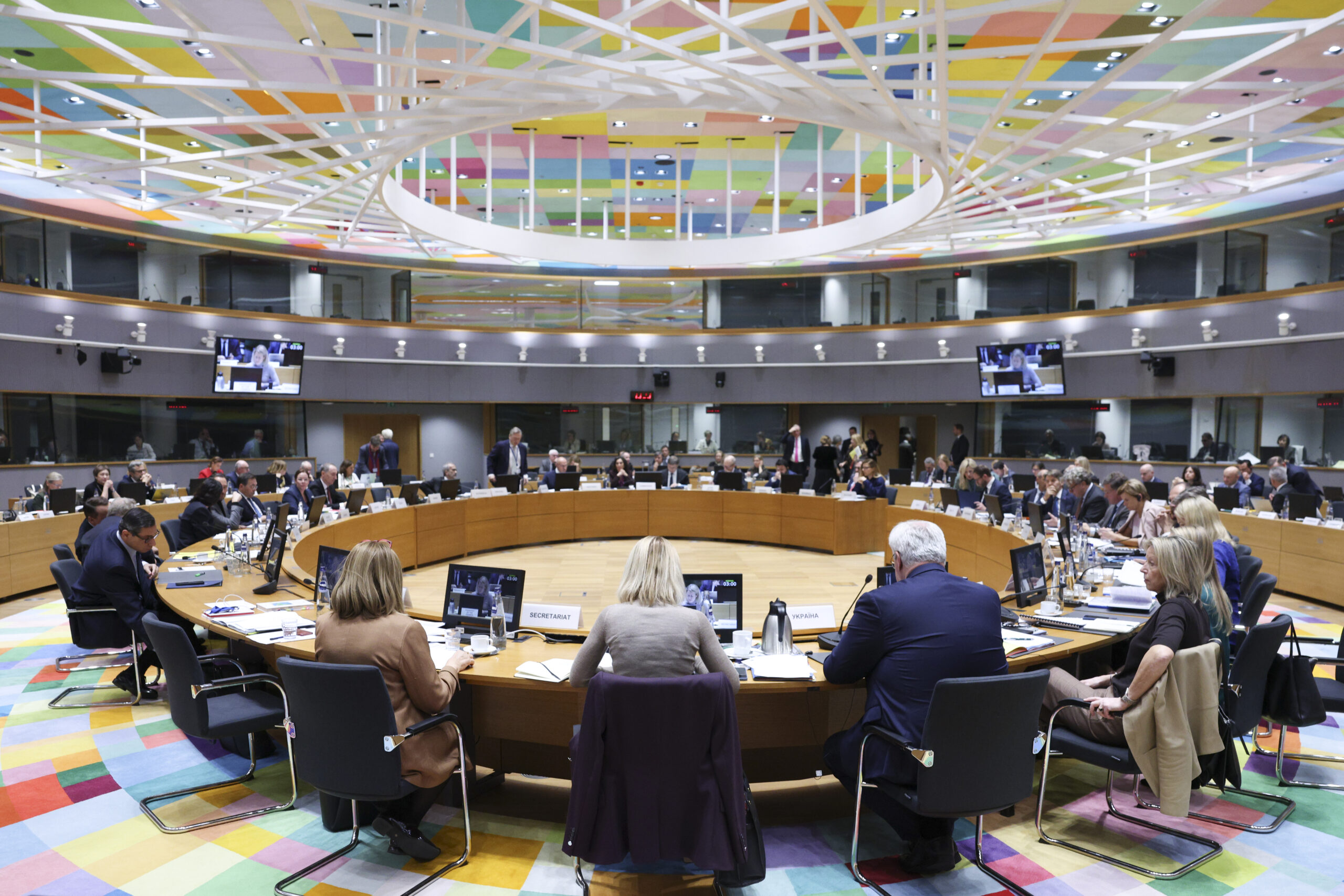
Brussels –Now that a format has been found for representing Europe at the negotiating table between Russia and Ukraine, “the most important thing is to continue discussing the substance of the matter and to insist on a ceasefire and future talks to maintain peace truly, so that Russia cannot attack again”. This is the point stressed by the High Representative of the European Union for Foreign Affairs and Security Policy, Kaja Kallas, after the heads of state and government of the EU countries began to agree on who should represent the European Union in the peace negotiations between Russia and Ukraine at the informal European Council in Dublin on Friday (13 November).
On her arrival at today’s Foreign Affairs Council (16 November), Kallas said that “anyone on the negotiating team should always be asked: ‘Have you demanded anything in return?’ If they (the Russians) make extreme demands, we must do the same.” However, the High Representative is sceptical about the Kremlin’s true intentions. “I do not believe the Russian demands are serious; the ones they have put forward are absurd. So, I repeat, if this is a pretext to keep the war going, to cause as much destruction as possible, then we must be resolute and urge everyone on the negotiating team to insist on a ceasefire. Enough of the killing of Ukrainians. Enough of the attacks on civilian infrastructure. If all this comes to an end, we will be able to sit down at the table and negotiate a peace agreement,” she stressed.
As in the past, Kallas noted that no negotiations can proceed without a ceasefire in Ukraine. “What we need is clear: a ceasefire so that we can actually begin discussions on any other issue. At the moment, however, there is no sign of one,” she noted. According to the High Representative, what Russia is promoting is “the usual script: they put forward a long list of demands, gradually adding more, so that, should they then have to back down, they might appear reasonable”. The Russians “claim to be waiting for a proposal from the European side. They have offered us nothing; this is exactly how they usually operate. Suddenly, it is up to us to put forward a proposal, even though they were the ones who started the war”, she warned. “They are the aggressors, and there is only one victim. We must secure concessions from them so that a just and lasting peace can be achieved in Ukraine and throughout Europe,” she urged.
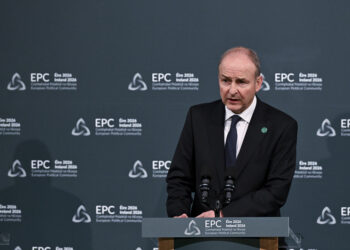
Helene McEntee, Minister for Foreign Affairs and Defence of Ireland – the country currently holding the six-month presidency of the Council of the EU – also noted the same behaviour by Moscow. “Despite this positive momentum, Russia has not changed its position in the slightest” given that “it continues its attacks on civilians and civilian infrastructure.” For this reason, she announced that “today we will adopt a further package of sanctions targeting 113 individuals and entities, thereby maintaining the pressure and aiming, in particular, to target the financial mechanisms through which Russia is waging this war.”
The Italian Minister for Foreign Affairs, Antonio Tajani, takes a different view, stating that “we are in a new phase, where negotiations are getting underway.” On his arrival in Brussels, Tajani stressed that “it is obvious that Russia is trying to drive up the price, to get the most it can, by applying pressure.” But the key point is to ensure that Europe plays “a leading role in negotiations that must also safeguard our eastern borders and guarantee Ukraine’s independence.” Italy will be able to play its part in these negotiations: “Italy will be part of the European delegation, and this allows us to play a positive role in building peace, which is everyone’s objective.” In particular, Tajani stressed Italy’s position, specifying that the E5 format (France, Germany, Italy, Poland and the United Kingdom), together with the Council and the Commission, “is not a format that represents only the participating countries”, but “all the countries of Europe”. An approach “which Italy had requested: to speak with one voice in this delicate phase, to safeguard Europe’s security, protect our borders and promote a peace agreement which must then also lead – given that Europe has imposed sanctions – to active participation in all sanctions.”
As the Europeans have repeatedly stressed, peace in Ukraine is also a matter of European security because “once a peace agreement has been concluded, we must ensure that this peace is not disrupted in the future by potential threats in Europe”, continued Tajani. However, he downplayed expectations for the trilateral meeting between the President of the Russian Federation, Vladimir Putin, the President of the United States, Donald Trump, and the President of the People’s Republic of China, Xi Jinping, scheduled for 19 November in Shenzhen. The Deputy Prime Minister, who said that he did not expect “concrete results”, noted that this involves “three major countries that will discuss” the current geopolitical situation, with two wars “on Europe’s borders”. “I believe we must ensure that the global economy can enjoy a respite with the reopening of the Strait, which guarantees the supply of oil and fertilisers – another issue of no small importance,” Tajani said. So, “let’s hope that another step is taken toward achieving peace both in the Middle East and between Russia and Ukraine.”
In addition to discussions on the negotiations, one item on the agenda for today’s meeting of foreign ministers is support for Kyiv: “The agenda includes a discussion on how to continue providing financial support to Ukraine and how to keep the pressure on through sanctions,” clarified Irish Minister McEntee. In addition to adding new entities to the sanctions list, “further discussions on an additional package of sanctions will take place this week, which we will certainly press ahead with”, she added. On this front, however, some are calling for a more assertive stance. Today, the Finnish government sent a letter to the European Commission calling for more decisive action to block the flow of money financing Russia’s war. On her social media channels, the Minister for Foreign Affairs, Elina Valtonen, said: “Our sanctions against Russia must not have any loopholes when money finds new ways to circulate,” clarifying that the letter calls for action at the EU level “to tackle the cryptocurrencies that support the Russian war machine.” The aim is “to stop the flow of cryptocurrencies financing the war and to weaken Russia’s ability to fund its war of aggression”, she said.
English version by the Translation Service of Withub