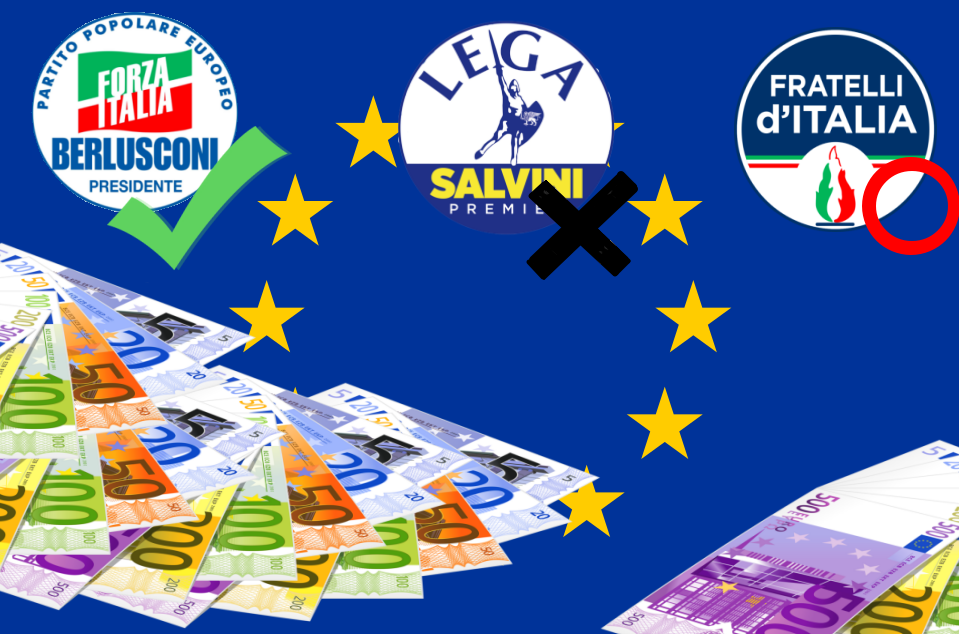
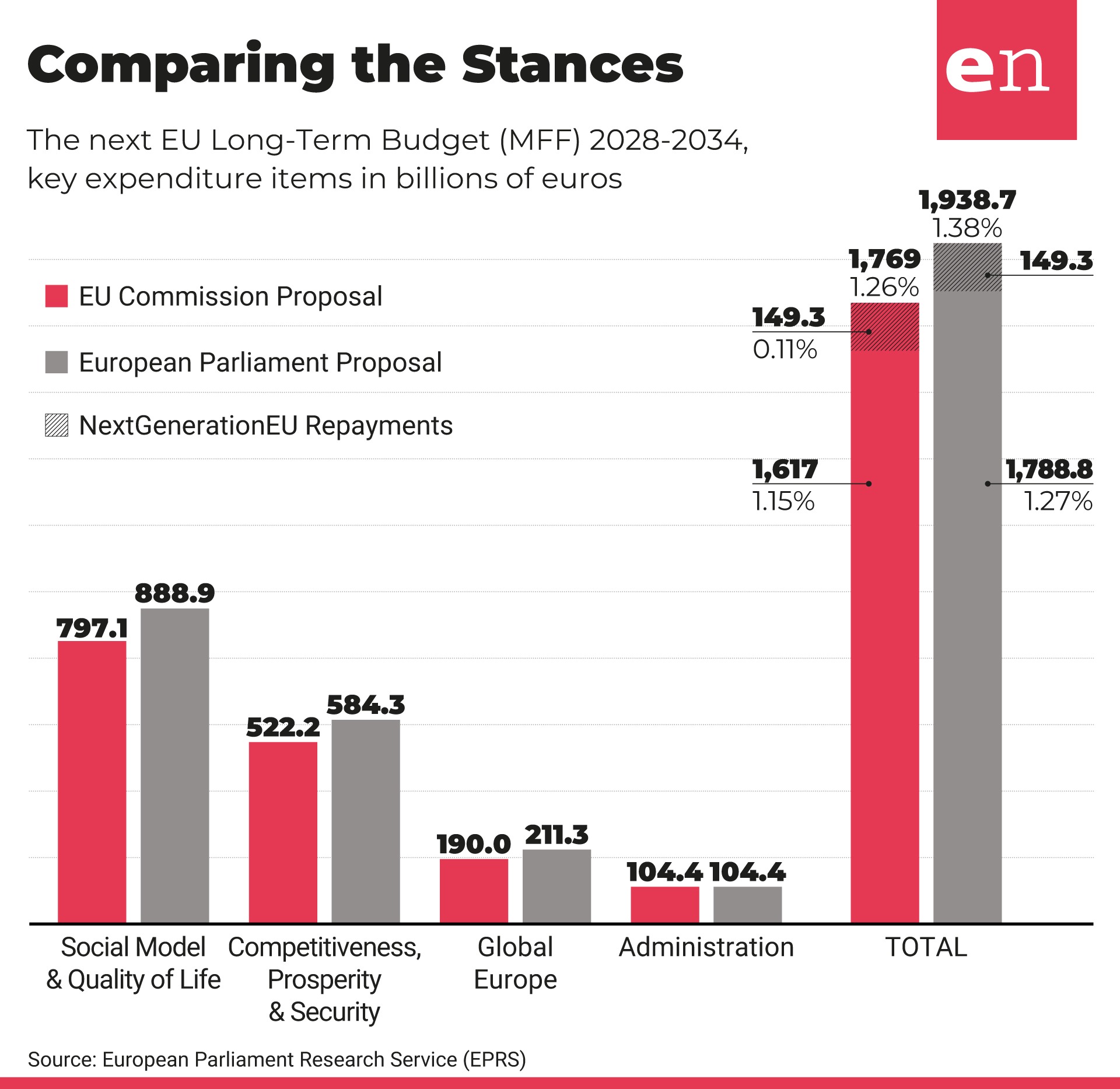
Brussels – Budget yes, budget no, budget maybe. On the next multiannual financial framework (MFF 2028–2034), the Italian governing parties are as divided as they could possibly be: Forza Italia supports the proposal for adding €200 billion to the EU Commission’s original proposal, the Lega opposes it, whilst the delegation from Fratelli d’Italia abstains. It is not unusual to have slightly differing views on specific issues, but the divergent positions of the three governing parties stand out, given the sensitivity of the matter and the European Union’s vision underlying the budgetary framework.
The vote by the Lega had been foreshadowed by a statement from the entire delegation in which its MEPs argued that “talking today of a more ambitious budget is pure madness.” The opposition to the 10 per cent increase proposed by the European Commission was therefore clear and had been announced. For the Lega members, “what is needed, instead, is a pragmatic approach involving urgent rationalisation of EU resources, cutting the numerous unproductive and unnecessary expenses.”
Giorgia Meloni’s party’s position can be summarised and explained as a multiannual budget that contains some positive elements but also areas that still require further work. This document is still at the very beginning of the negotiation process. “We will, however, continue to work in these negotiations towards a more targeted, more disciplined budget that is better aligned with the EU’s real priorities,” explains Nicola Procaccini, co-chair of the European Conservatives and Reformists (ECR) group, to which FdI belongs. In short, the abstention is certainly temporary, but it is not out of the question that they might change their minds as things progress.
What appears to be bringing the Lega and Fratelli d’Italia closer together is the suspension of the Stability Pact, a proposal put forward by the Prime Minister herself, and which now Claudio Borghi pushes, and with a certain vehemence, insisting on pursuing it alone, as further evidence of a government characterised by differing speeds and differing visions, especially as far as Europe is concerned. In any case, there is a clear rift over the budget, with Forza Italia choosing a different path. It was Herbert Dorfmann, speaking in the chamber, who defended the decision to allocate more resources: “If we want food security in Europe, we must have at least the same resources we have had so far, not fewer.”


![[Copyright: European Union]](https://www.eunews.it/wp-content/uploads/2026/10/euco-261015-120x86.png)