Brussels – War in Iran: agreement reached on the cessation of hostilities and the reopening of the Strait of Hormuz. Washington and Tehran have reached an agreement, which is expected to be signed on 19 June in Switzerland. At the same time, the two sides are working towards a normalisation of bilateral relations. Meanwhile, the EU is jubilant and hopeful of a return to economic normality, while the markets celebrate, driving down oil prices. The question mark remains over the agreement’s durability, which also includes the end of all military operations in Lebanon and directly involves Israel.
What does the agreement reached and announced entail?
The text of the agreement, including its terms, has not yet been made public, and we will have to wait to examine it in detail. At the heart of the deal is a 60-day peace period, intended to help shape the future. Almost everything revolves around Iran’s nuclear programme and US sanctions against the Islamic Republic. Tehran would commit to reversing the uranium enrichment process carried out to date, bringing it back to levels suitable for civilian, rather than military, purposes. The United States would commit to easing its sanctions against Tehran, but rejects demands to return and unfreeze frozen funds. Washington has, however, hinted at a willingness to lift certain restrictions and remove its maritime blockades. Traffic through the Strait of Hormuz would be managed with Qatar’s mediation.
Europeans in high spirits
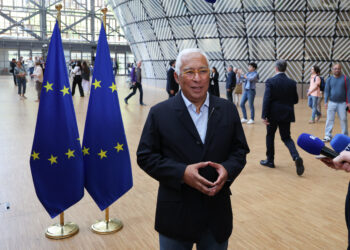
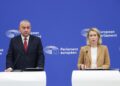
The announcement has sparked a wave of jubilant reactions across the European Union, starting with the President of the European Council, Antonio Costa, who expressed his hope for “the end of this costly war and the full reopening of the Strait of Hormuz.” He announced that the EU “is ready to contribute to a strategy for lasting peace in the Middle East,” while for the President of the European Commission, Ursula von der Leyen, “the priority now is the rapid and full implementation of the agreement by all parties.”
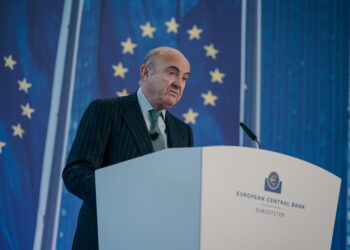
The words of the two EU leaders already betray unease about a situation deemed difficult to manage, one that has become too unsustainable for the twelve-star growth model. The surge in energy prices and its repercussions on global trade flows have led to a loss of competitiveness and prompted the European Central Bank to raise interest rates, with all the consequences that entail for mortgages, loans, and consumer spending. The announcement of the agreement is therefore a cause for satisfaction, albeit with the necessary caution.
Italy, France, Germany, and the United Kingdom have issued a joint statement to mark the agreement between the United States and Iran, which represents “a moment of opportunity to restore regional stability and stabilise the global economy.” In what is seen as an opportunity not to be missed, the leaders of the four countries—Giorgia Meloni, Emmanuel Macron, Friedrich Merz, and Keir Starmer—say they are “ready to support this effort” towards peace, but on one essential condition: “Iran must never acquire a nuclear weapon.” In this regard, “we are ready to cooperate with the United States, Iran, and the International Atomic Energy Agency (IAEA)” and “to lift the relevant sanctions in response to clear and verifiable steps by Iran regarding its nuclear programme.”
EU welcomes Iran truce after international efforts to end the conflict
For the Prime Minister, the idea of making concessions is far from taboo: “This is an opportunity for peace that must be seized,” Meloni states. “Italy, as in the past, is ready to support the diplomatic process towards a comprehensive agreement.” The government is therefore sending an implicit message to Israel: “It is necessary that hostilities cease in Lebanon as well, where Italy will continue to work to support Lebanese sovereignty.
The Foreign Minister, Antonio Tajani, has expressed his satisfaction, stating that “it is important for our economy that shipping resumes through the Strait of Hormuz,” and, with this in mind, he is already beginning to consider the economic and commercial implications of this agreement. “I have called a meeting for Wednesday with all the relevant parties,” he announced on his arrival in Luxembourg to take part in the Foreign Affairs Council. He then reiterated “Italy’s commitment to participating in mine-clearing missions in the Strait of Hormuz, subject, of course, to parliamentary approval.”
Pakistan thanks the Arab states, Trump, Russia and China
The general euphoria among Europeans is, however, tempered by Europe’s lack of involvement in this diplomatic achievement, which sees US President Donald Trump once again reaching out to players who do not feature on Europe’s list of partners. Pakistan’s Prime Minister, Shehbaz Sharif, first and foremost praises the United States and Iran, and openly thanks Qatar, Saudi Arabia, and Turkey for their contribution to the difficult negotiations. Trump, on the other hand, speaking to the New York Times, praises Chinese President Xi Jinping and Russian President Vladimir Putin for facilitating the agreement. Statements that highlight the differing foreign policy orientations on either side of the Atlantic.
Oil prices fall, stock markets rise
Meanwhile, the news is driving crude oil prices down: WTI is down 4.8 per cent to $80.80 a barrel, while Brent is down 3.9 per cent to $83.89. European stock markets open higher: gains for Frankfurt (+1.76 per cent), London (+0.83 per cent), Paris (+1.66 per cent), and Milan (+1.33 per cent).
English version by the Translation Service of Withub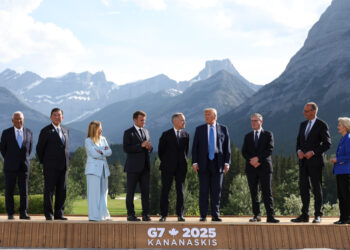
![Parlamento europeo di Strasburgo, lavori in corso [Foto: Imagoeconomica]](https://www.eunews.it/wp-content/uploads/2026/06/Imagoeconomica_1277744-350x250.jpg)