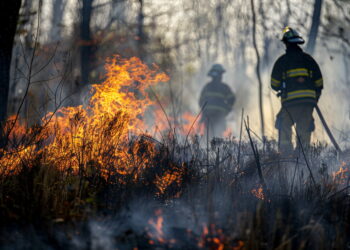
Brussels – Greater coordination, prevention and better preparedness against forest fires. Following the record set in 2025, with over one million hectares burnt across the European Union and an unprecedented number of activations of the Civil Protection Mechanism, the Council of the European Union adopted today (29 June) a recommendation on integrated wildfire risk management, with the aim of establishing a comprehensive framework to help Member States better prevent, prepare for, respond to and recover from forest fires.
This is a non-legally binding document; however, Member States are encouraged to follow it in accordance with their own national circumstances, risk profiles, and governance systems. According to Constantinos Ioannou, Cyprus’s Minister of the Interior (the country currently holding the six-month presidency of the Council of the EU), “the devastating seasons of forest fires that have struck Europe in recent years have shown that the risk of forest fires is no longer a challenge for just a few countries, but a European challenge.” In this context, “these recommendations promote a comprehensive approach that brings together land management, climate change adaptation, civil protection, and cross-border cooperation” because “investing today in prevention and preparedness is essential to protect lives, communities and ecosystems tomorrow.”
The recommendation is based on the principle that the risk of forest fires continues to rise across Europe due to climate change, changes in land-use practices, and other factors. To this end, the document “encourages Member States to strengthen prevention through sustainable land and forest management, to improve preparedness by making the best possible use of data, risk assessments, and early warning systems, and to strengthen cooperation and interoperability in responding to forest fires,” the Council explains.
Furthermore, the recommendation emphasises “the importance of raising public awareness, supporting local communities, improving post-fire recovery and strengthening governance and long-term funding for forest fire risk management.” Above all, given that the risk of forest fires affects “ever-wider areas of Europe and often has cross-border implications,” the recommendation highlights the value of closer cooperation between Member States and with international partners to improve forest fire risk management.
The Council’s recommendation is based on the statement by the European Commission adopted on 25 March, which aims to set out a comprehensive EU strategy to tackle the threat of forest fires. To this end, the Berlaymont communication promotes an integrated approach encompassing prevention, preparedness, response, and recovery, and emphasises the need for greater cooperation among public authorities, land managers, civil society and local communities. “It also identifies climate change, changes in land use and human activities as key factors in the increased risk of forest fires across Europe,” the Council notes.
English version by the Translation Service of Withub
![[Foto: Unsplash]](https://www.eunews.it/wp-content/uploads/2026/06/immo-wegmann-V2AMRkAUCnA-unsplash-350x250.jpg)