



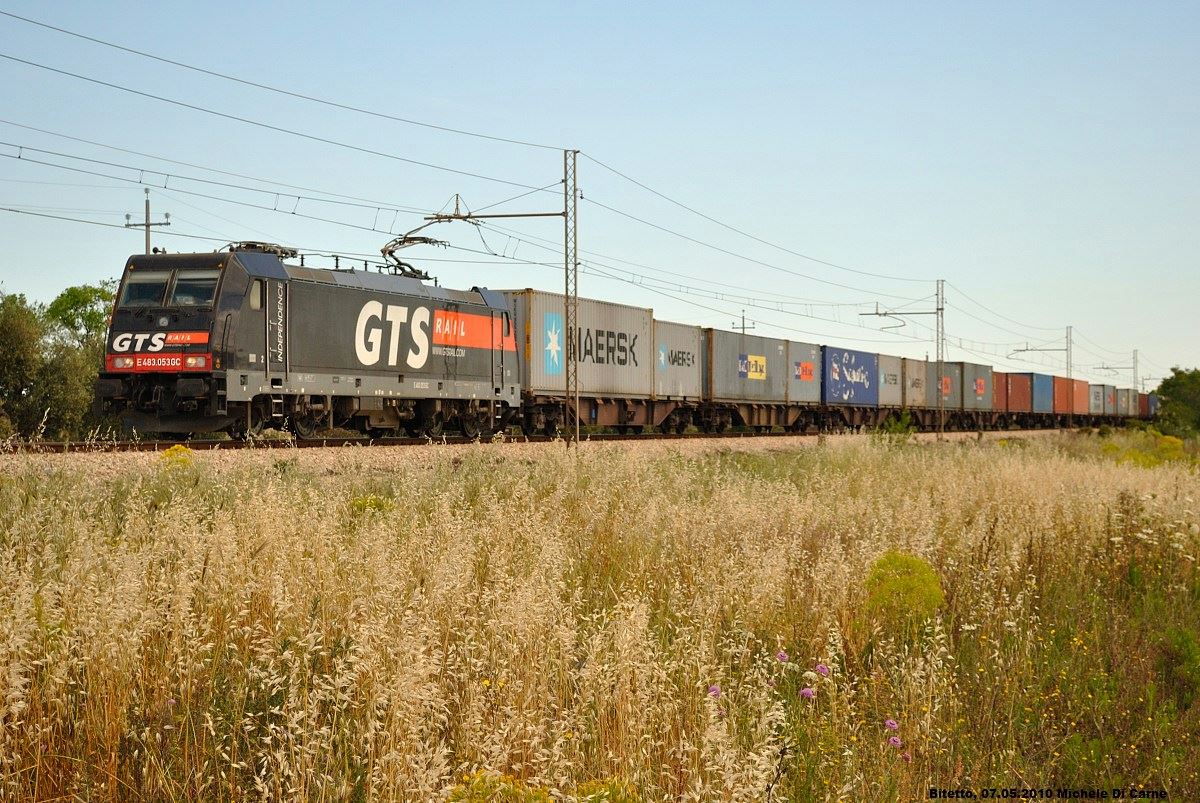
Brussels – Rail transport shows little progress for freight: shipments still move by road. The EU continues to grapple with a trend in which the twelve‑star economic and production model rewards the delivery method that is most unsustainable in terms of CO₂ emissions and pollutant release. A well-known problem, which, a year later, does not appear to have improved, as the Czech MEP Ondřej Krutílek (ECR) complained: “Rail freight transport in the European Union has been steadily losing market share for a long time,” to the extent that “in many Member States, road transport is now the dominant mode of transport.”
The EU is doing what it can: it is introducing measures and waiting, in the hope of a boost to rail freight traffic. This, in a nutshell, is the response given by the Commissioner for Transport, Apostolos Tzitzikostas, who acknowledges that rail transport continues to face difficult times. Block trains – those used for journeys without intermediate stops to carry large consignments and specific goods (coal, metals, chemicals) – “are declining due to economic change,” Tzitzikostas explains. At the same time, intermodal transport (containers and semi-trailers) “is growing, but not yet enough to compensate for block train losses.” Meanwhile, transport of individual freight wagons “faces structurally high costs, fragmentation, and empty runs, making it less competitive than road haulage.”
In short, despite all the efforts and initiatives undertaken, rail freight continues to lose ground to the more polluting articulated trucks. In response to this situation, the European Commission has made a political commitment, first and foremost through the Green Deal and the initiatives under the sector’s sustainability agenda. The latest measure is the amendment to the Regulation on the use of railway networks in the single market, preceded by the new rules on state aid for transport. This should help shift freight currently transported by road onto rail, thereby avoiding a waste of public money.
Tzitzikostas points out that over 90 billion euros have already been allocated to support rail freight transport. These are ‘substantial EU contributions to rail projects,’ the Transport Commissioner insists — contributions that have nonetheless delivered little. This comes despite the 32 billion euros allocated through the Connecting Europe Facility for major networks, 18.5 billion euros in cohesion funds, and roughly 40 billion euros via the Recovery Fund. The EU, founded on the free movement of goods, thus appears to be losing the mobility challenge, and, with it, the sustainability one.
Tzitzikostas tries to reassure, saying the EU has begun deploying the new digital automatic‑coupling system, a technology that, he argued, “could make the transport of individual wagons more efficient and cost‑effective.” The system is meant to speed up operations and make them safer and less labour‑intensive, since wagons would no longer need to be coupled manually. But that “could” underscores how tentative the outlook remains, as the EU continues to struggle with freight that, instead of moving by rail, still travels by road.
English version by the Translation Service of Withub






![Ilze Brands Kehris [foto: European Council]](https://www.eunews.it/wp-content/uploads/2026/10/ilze-120x86.png)
