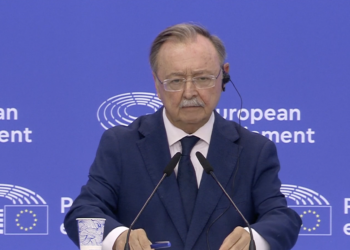
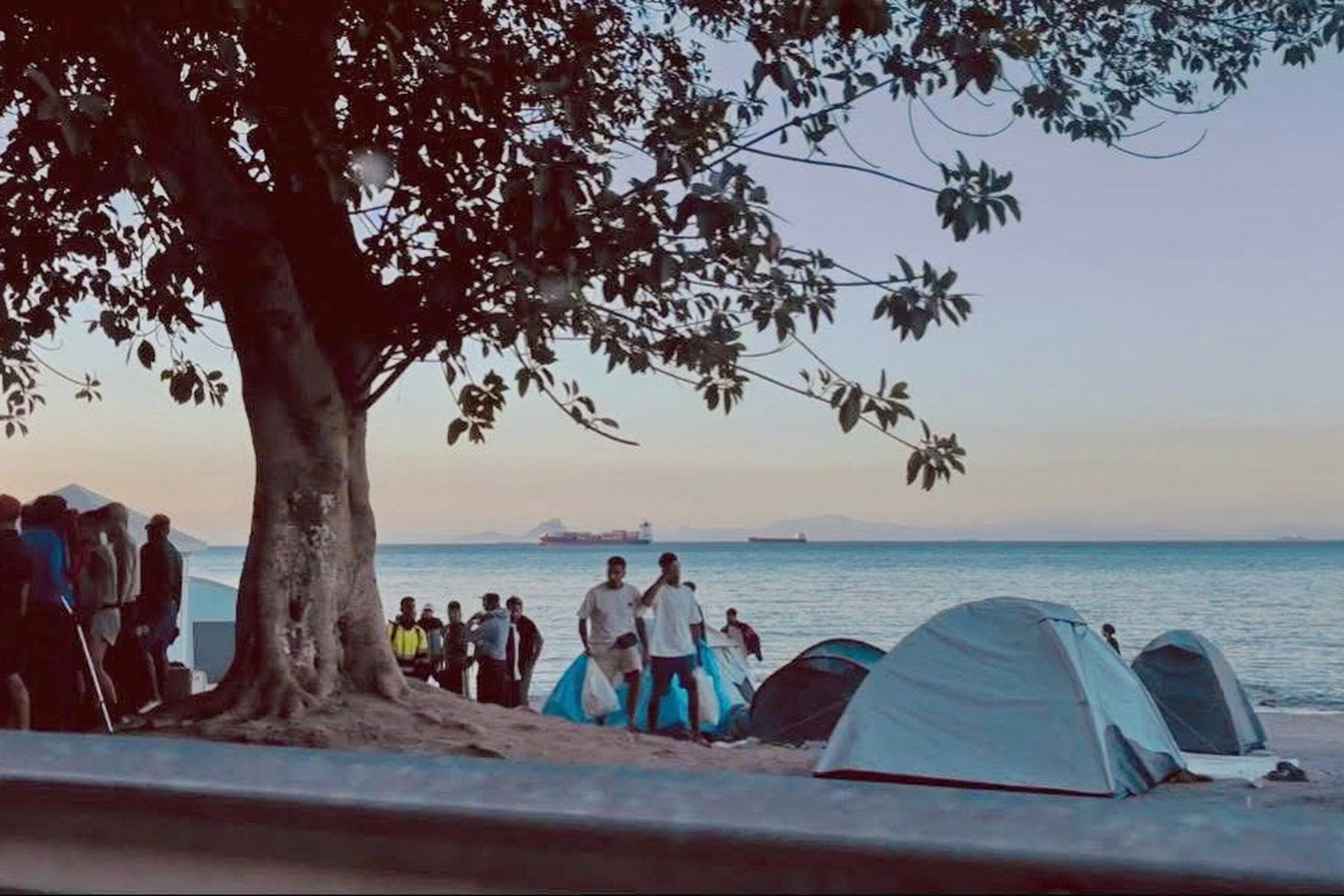

Brussels – “No one has entered the Schengen area, thanks in part to cooperation with Morocco.” For the European Commissioner for Home Affairs and Migration, Magnus Brunner, this sums up the migration crisis in Ceuta. This key statement in the European Parliament serves to set the record straight: there are no issues with the Moroccan authorities, nor was there or is there any reason to close the borders. A veiled reference to Italy, its government, and its Foreign Secretary, Antonio Tajani, good at creating a diplomatic crisis with Madrid, for electoral purposes, a reference that lingers even on a day when attention should be focused elsewhere.
“What lessons can Meloni teach us about managing external borders, and about what happened in Lampedusa?” asks Iratxe García Peres, the leader of the Socialists and Democrats (S&D), in a critical and accusatory tone. It is here, during the second speech following the European Commission’s statements, that the debate on the exploitation of the Ceuta migration crisis and the need for a coordinated response ceases to be a fertile ground for European harmony and unity and turns into an open confrontation. “I want to be clear with Vox and the Spanish People’s Party: when you call for returns, you are not taking children and rights into account,” insists the S&D group leader, who goes on to say: “It is a violation of the rule of law. And when you talk of an invasion, you are fuelling xenophobia and disinformation.”
https://www.eunews.it/en/2026/08/06/ceuta-the-extraordinary-meeting-of-the-european-parliament-on-immigration-ends-in-a-brawl-between-the-right-and-the-left/
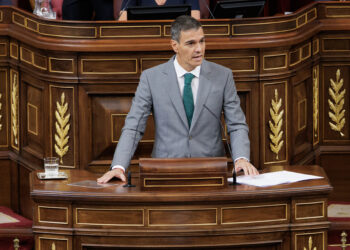
The item on the agenda proceeds as announced, with the list of speakers revealing the large number of Spanish MEPs due to speak, who live up to expectations and turn the European Parliament debate into a discussion of domestic politics, with the entire right wing accusing Pedro Sánchez’s Socialist government—as is the case with Dolors Montserrat (EPP), Jorge Buxadé Villalba (PfE) and Diego Solier (ECR)—of failing to act, while the left responds in kind. García Pérez is joined by Estrella Galán (The Left), who accuses the government of deliberately failing to show solidarity for electoral reasons: “Crises such as these are invaluable to those who wish to exploit them to make progressive Spain pay the price.”
The debate, which was supposed to put a stop to the exploitation of migration flows in Ceuta and find a European solution, has instead resulted in the exact opposite, partly due to the anti-everything far right: “Spain must be temporarily expelled from Schengen,” thunders the uncompromising nationalist Mary Khan (AfD/ESN). Meanwhile, in an EU of nostalgia and nostalgics, Kinga Gàl even finds the time and means to pay tribute to the former Hungarian prime minister: “The Orbán government erected a barrier to protect Europe and, instead of thanks, received thousands of euros a day.”
The changing line-up of speakers does not alter the substance; at most, it shifts the focus of the attacks and widens the rifts and clashes. Sandro Ruotolo (PD/S&D) is once again taking the Meloni government to task: “What are we doing? Do we call for European solidarity when the emergency concerns Lampedusa and deny it when it concerns Ceuta? That’s a bit too convenient.” The Spanish liberal Oihane Agirregoitia Martínez, on the other hand, reopens the anti-Rabat front: “Morocco has committed to taking back everyone who has no right to stay, but the images show the opposite.”
English version by the Translation Service of Withub