
- Europe, like you've never read before -
Monday, 21 September 2026
No Result
View All Result
  • it ITA
  • en ENG
Eunews
  • Politics
  • World
  • Business
  • News
  • Defence
  • Health
  • Agrifood
  • Other sections
    • Culture
    • Rights
    • Energy
    • Green Economy
    • Finance & Insurance
    • Industry & Markets
    • Media
    • Mobility & Logistics
    • Net & Tech
    • Sports
  • European 2024
    Eunews
    • Politics
    • World
    • Business
    • News
    • Defence
    • Health
    • Agrifood
    • Other sections
      • Culture
      • Rights
      • Energy
      • Green Economy
      • Finance & Insurance
      • Industry & Markets
      • Media
      • Mobility & Logistics
      • Net & Tech
      • Sports
    No Result
    View All Result
    Eunews
    No Result
    View All Result

    Home » Ambiente » The EU launches a common framework for classifying data centres’ energy consumption

    The EU launches a common framework for classifying data centres’ energy consumption

    The aim is to increase the transparency of information by quantifying how much water and natural resources are used by the hubs

    Iolanda Cuomo by Iolanda Cuomo
    21 September 2026
    in Ambiente, Energy, Net & Tech
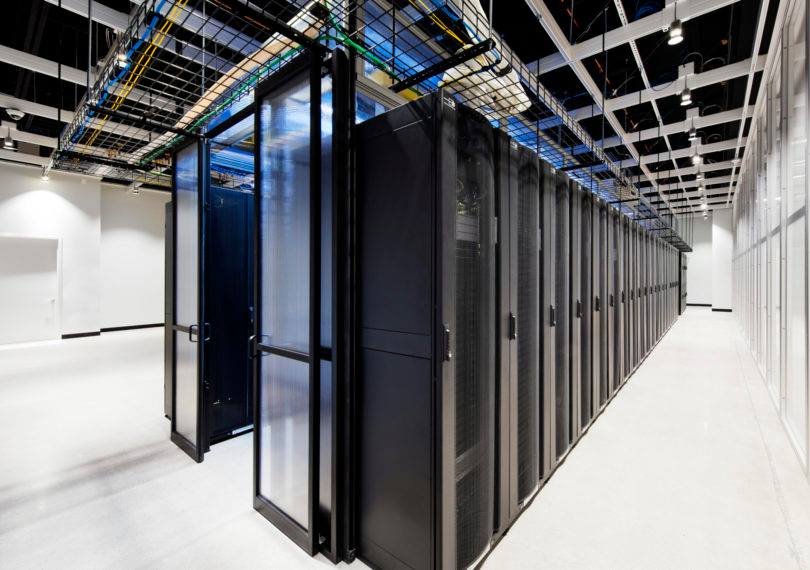
    Data center via Imagoeconomica

    ALIGNED DATA CENTERS AZIENDA INDUSTRIA INFORMATICA SALE SALA SERVER DATA CENTER

    Powered by powered by evolution group

    Brussels – How much energy, water, and other natural resources does a data centre actually use? This question prompted the European Commission, which today (21 September) launched a proposal to create a common classification scheme for data centres, with the aim of increasing transparency regarding their consumption and supporting their sustainable integration into the European energy system. 

    The key point is that Brussels aims to triple its data centre capacity because it regards them as vital to Europe’s digital future and to strengthening Europe’s technological independence and digital sovereignty. The other side of the coin, however, is that increasing the scale of data centres entails a demand for “more energy”, “further pressure on electricity grids and the use of natural resources, such as water, while also contributing to an increase in carbon emissions.” To put this into perspective: in 2024 alone, data centres consumed around 68 TWh of electricity in the EU and, driven by artificial intelligence, this figure is expected to almost double, reaching 114 TWh by 2030, equivalent to over 3 per cent of the EU’s total electricity demand, according to the International Energy Agency (IEA). 

    So, Brussels wants to limit the damage. “Tripling the capacity of our data centres cannot mean tripling the strain on networks, water resources, and energy bills. Above all, this requires transparency, classifying large data centres according to their impact on the energy system,” explained the European Commission’s Executive Vice-President for Competition, Teresa Ribera. 

    The framework will apply only to individual centres with a capacity exceeding 500 kW (kilowatts). It will also take into account the contribution of data centres to the grid, for example through the reuse of waste heat, the addition of clean energy generation capacity and flexibility. To give an example: reusing around half of the waste heat produced by European data centres would be equivalent to the total heating requirements of 4 million households in Europe. The aim, however, is broader, as the Berlaymont’s intention is to eventually introduce minimum energy performance standards for data centres operating in the EU; on this issue, it has launched a public consultation open until mid-December. 

    In practical terms, this involves the creation of an electronic label for data centres that focuses on three parameters: energy efficiency (PUE), water efficiency (WUE) and low-emission energy supply. Furthermore, to establish reference markets for sustainable digital assets and services across Europe and to further support the integration of sustainable data centres into the energy system, the Commission has launched a call for contributions and a public consultation on minimum performance standards for data centres operating in Europe, which will close on 14 December. 

    The European Parliament and the Council will now have two months to examine the regulation establishing the common classification system. It will then enter into force. In this context, the two co-legislators have the right to raise objections to the delegated act adopted by the Commission (for example, by challenging the delegated power or the procedure), but they cannot propose amendments to the text. According to estimates, therefore, the first sustainability labels for individual data centres will be displayed in 2027, and an initial review of the system is planned by the end of 2028 to assess its effectiveness and identify any improvements. Furthermore, “the Commission is following up on the declaration of intent signed in June 2026, working with data centre operators, network operators, energy suppliers and public authorities to reach a tripartite agreement on data centres in the second half of the year,”  explains the EU executive. 

    The Greens in the European Parliament are applauding the move. “Data centres can be real energy and water guzzlers” and “just one minute of AI-generated video can consume as much electricity as an average household uses in two days and up to seven litres of clean water,” commented Jutta Paulus, MEP and shadow rapporteur for the Greens/EFA group on the Energy Efficiency Regulation. “The fact that the data explosion, driven by tech companies in Ireland, is driving up electricity prices and is already costing households hundreds of euros in additional expenses is a wake-up call for the whole of Europe. This makes the European Commission’s new efficiency label all the more important,” she added. For the MEP, “this is a step in the right direction” because “tech companies must no longer be allowed to treat their electricity and water consumption as a trade secret.” In summary, “transparency and binding efficiency standards are long-awaited measures,” she concluded.

    English version by the Translation Service of Withub

    Tags: consumo energiadata centerenvironmentPaulusribera

    Eunews Newsletter

    Related Posts

    Aerei via Unsplash
    Business

    Eurostat: over 2 million commercial flights in the EU between June and August 2026

    21 September 2026
    Energy

    Barents Sea gas would arrive too late to ensure the EU’s energy security

    21 September 2026
    Carburanti
    Energy

    EU: diesel prices exceed €2 per litre, petrol rises to €1.9 per litre

    18 September 2026
    Il ministro dell'Economia, Giancarlo Giorgetti. Crediti: Sara Minelli via Imagoeconomica
    Business

    Cars, EU: we will assess Italy’s road tax suspension in the context of the European Semester

    18 September 2026
    Rinnovabili energia elettrica Eurostat
    Energy

    Renewables make up 54.1 per cent of electricity generation in the EU

    18 September 2026
    Auto trasporti UE - Eurostat
    In Brief

    Eurostat: cars dominate EU transport as trains overtake buses

    18 September 2026
    map visualization
    La ministra per le Riforme istituzionali e la semplificazione normativa, Maria Elisabetta Alberti Casellati. Crediti: Alessia Mastropietro. via Imagoeconomica

    Competitiveness, Casellati: “European regulations should place less of a burden on Member States; things need to be simplified”

    by Iolanda Cuomo
    21 September 2026

    The minister is in Brussels to urge the European Commission to reduce the administrative burden on businesses

    Hantavirus - Tzitzikostas

    Fuel, Tzitzikostas: “The situation is unstable; if it worsens, I will call an extraordinary meeting”

    by Redazione eunewsit
    21 September 2026

    Brussels – Should the crisis over oil and aviation fuel supplies worsen, an extraordinary meeting of transport ministers from European...

    Resilienza Idrica - ACEA - Water Academy

    The European Water Academy is launched, with Italy’s ACEA among the project’s key players

    by Annachiara Magenta annacmag
    21 September 2026

    This is one of the initiatives under the Commission’s water resilience strategy. The aim is to bridge the skills gap...

    Data center via Imagoeconomica

    The EU launches a common framework for classifying data centres’ energy consumption

    by Iolanda Cuomo
    21 September 2026

    The aim is to increase the transparency of information by quantifying how much water and natural resources are used by...

    • Director’s Point of View
    • Opinions
    • About us
    • Contacts
    • Privacy Policy
    • Cookie policy

    Eunews is a registered newspaper
    Press Register of the Court of Turin n° 27

    Copyright © 2025 - WITHUB S.p.a., Via Savona 127/B, 20144 Milano
    VAT number: 10067080969 - ROC registration number n.30628
    Fully paid-up share capital 50.000,00€


    No Result
    View All Result
    • it ITA
    • en ENG
    • Politics
    • Newsletter
    • World politics
    • Business
    • General News
    • Defence & Security
    • Health
    • Agrifood
    • Altre sezioni
      • Culture
      • Rights
      • Energy
      • Green Economy
      • Gallery
      • Finance & Insurance
      • Industry & Markets
      • Media
      • Mobility & Logistics
      • Net & Tech
      • News
      • Opinions
      • Sports
    • Director’s Point of View
    • Draghi Report
    • Eunews Newsletter

    No Result
    View All Result
    • it ITA
    • en ENG
    • Politics
    • Newsletter
    • World politics
    • Business
    • General News
    • Defence & Security
    • Health
    • Agrifood
    • Altre sezioni
      • Culture
      • Rights
      • Energy
      • Green Economy
      • Gallery
      • Finance & Insurance
      • Industry & Markets
      • Media
      • Mobility & Logistics
      • Net & Tech
      • News
      • Opinions
      • Sports
    • Director’s Point of View
    • Draghi Report
    • Eunews Newsletter

    Attention