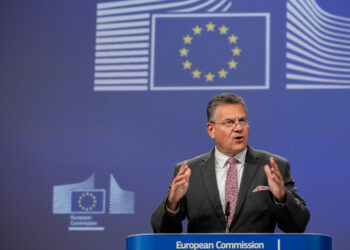

Brussels – More job opportunities, more investment and more trade. These are the objectives of the free trade agreement between the European Union and the Philippines, according to a “substantial” agreement reached today (22 September), after a video call, by the Commissioner for Trade, Maroš Šefčovič, and the Philippine Secretary of Trade and Industry, Maria Cristina Aldeguer-Roque. The way forward has been mapped out; negotiators will now have to finalise the work to reach a formal conclusion to the deal in the coming months. An agreement that, according to Commissioner Šefčovič, will deepen “economic ties between the EU and one of the most dynamic economies in Southeast Asia” while at the same time strengthening Europe’s presence in the region.
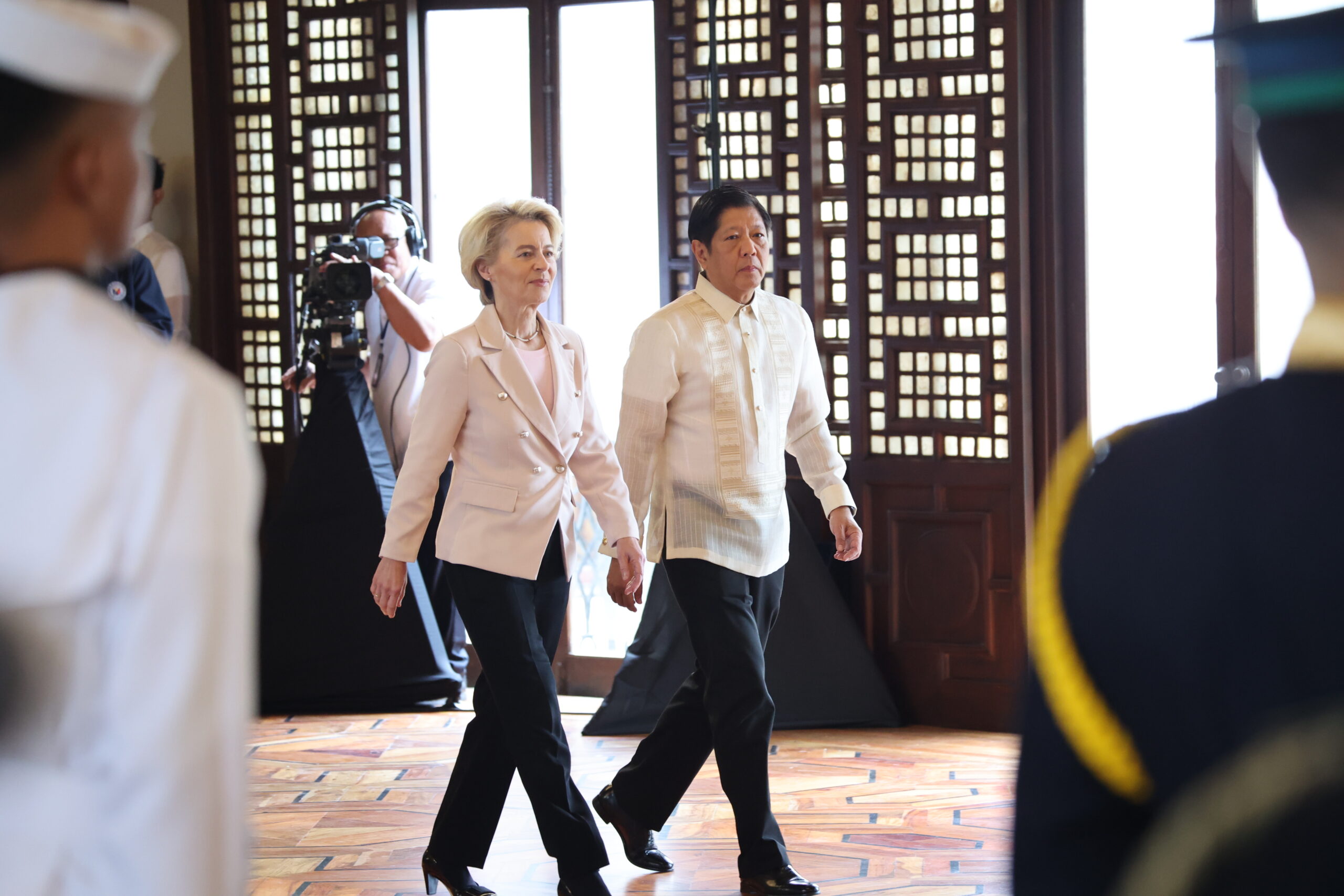
Relations with Manila have taken several twists and turns over the past ten years. The EU and the Philippines began negotiations in 2015 but suspended them after two rounds. Talks resumed in March 2024 to establish a modern agreement that also focuses on sustainability. In 2025, the EU was the Philippines’ fourth-largest trading partner, accounting for 8.3 per cent of the country’s total trade in goods. In 2023, the President of the European Commission, Ursula von der Leyen, visited Manila specifically to revive the negotiations. Yesterday, the telephone call between the head of the Commission and the Philippine President, Ferdinand R. Marcos Jr., laid the groundwork for today’s announcement.
The new agreement provides for the liberalisation of over 94 per cent of tariff lines, which cover more than 97 per cent of the goods traded between the two countries, Šefčovič said. For Europe, this means new opportunities for businesses, but also for farmers: “We already have an agricultural surplus with the Philippines,” he stressed, with exports worth over 2 billion euros against imports of 1.4 billion euros.
Investment and supply chain resilience are also key. The deal delivers “stronger, more diversified supply chains, at a moment when resilience has become a strategic priority,” said the Commissioner, citing semiconductors as one example. The deal also aims to create new opportunities in the renewable energy sector, in which Manila seeks to expand its capacity.
The growth potential lies “well beyond current levels”, which are already substantial: in 2025, bilateral trade in goods totalled 17.6 billion euros, while in 2024, trade in services reached 10.3 billion euros. The stock of EU foreign direct investment in the Philippines stood at 15.4 billion euros, compared with 2.4 billion euros of Philippine investment in the EU. “I am convinced that our bilateral trade with the Philippines has room to grow well beyond current levels,” Šefčovič said. But beyond the figures, there is a strategic dimension because “this agreement sends a clear signal that the EU is reinforcing its engagement with the Indo-Pacific.”
And Brussels’ ambitions do not stop at Manila. “Southeast Asia is the region to be in,” said the Commissioner, highlighting progress with Indonesia and now with the Philippines, as well as ongoing negotiations with Thailand and Malaysia. The broader aim is to “gradually strengthen the network of European trade relations in the region”. “The focus now shifts to finalising the agreement,” Šefčovič concluded. Negotiators will need to formalise the deal in the coming months so that businesses and citizens on both sides can begin to benefit from it as soon as possible.
English version by the Translation Service of Withub