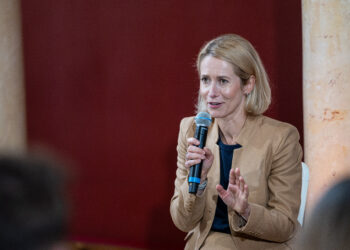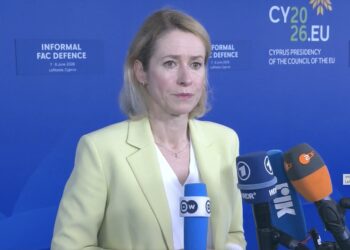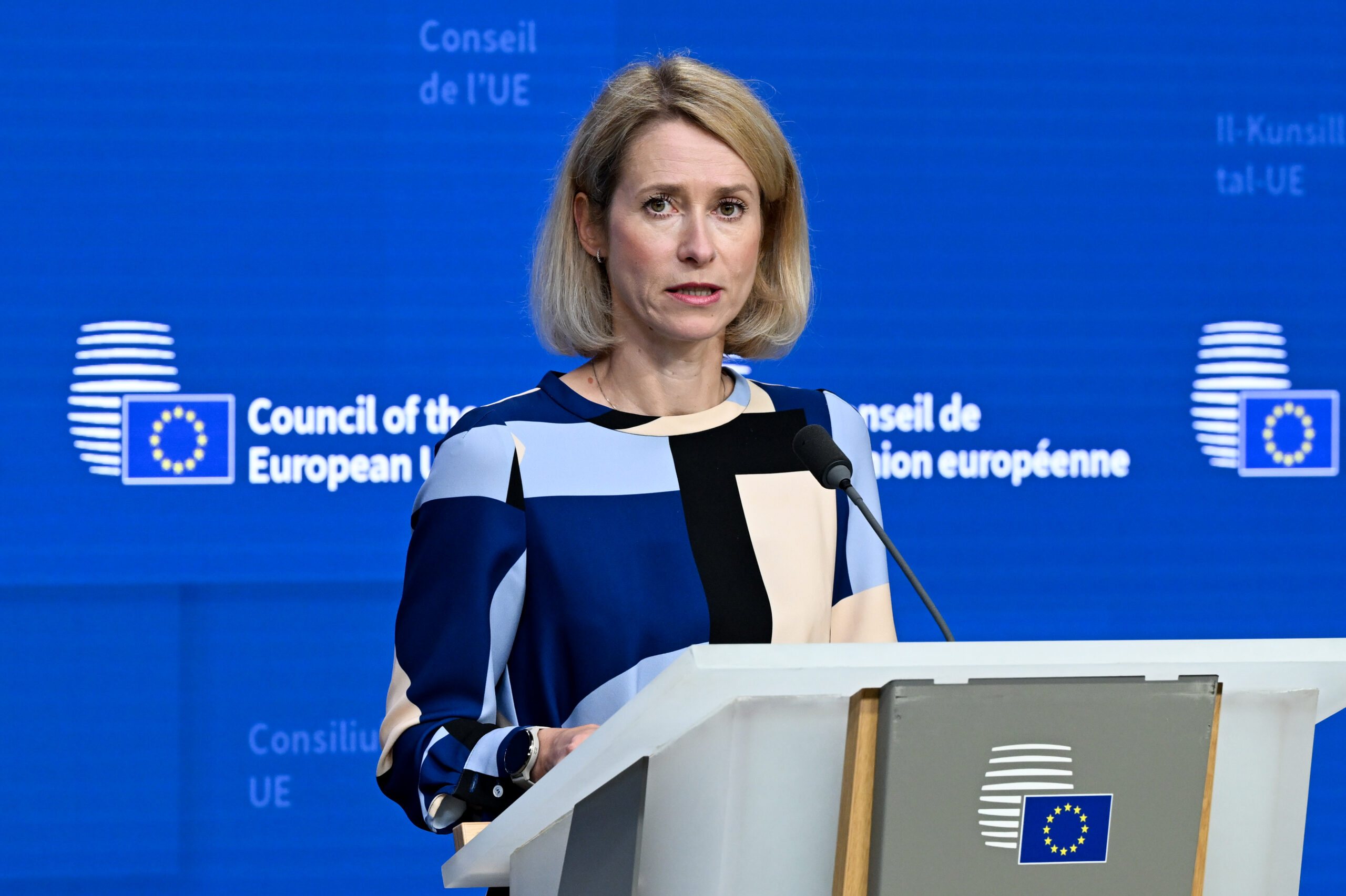

Brussels – In the face of persistent Russian threats, Europe needs to boost its defence capabilities. So says Kaja Kallas, the European Union’s High Representative for Foreign Affairs and Security Policy, who, on her arrival this morning (28 September) at the meeting with the defence ministers of the 27 Member States, warned: “We must remain vigilant because our intelligence suggests that Russia is planning further acts of sabotage and attacks.”
Moscow has set its sights on “our democracies, with the aim of dividing our societies, intimidating them and dissuading them from continuing to help Ukraine.” We “must take all this into account in order to be ready to face these threats” and, “when we have intelligence information, we must already be in a position to react even before these attacks take place,” she emphasised. Following this introductory remark, her comments at the press conference following the Defence Council meeting sought to summarise the key points. Together with the ministers, “we discussed the first annual report on defence readiness, which provides a comprehensive overview of Europe’s defence readiness. Without giving away its contents, I would just like to say that Europe must rearm more quickly and more effectively to achieve our 2030 target.” What Europe needs, in Kallas’s view, is “a decisive shift in the scale and pace of investment in defence, capability development, innovation, and industrial capacity.”
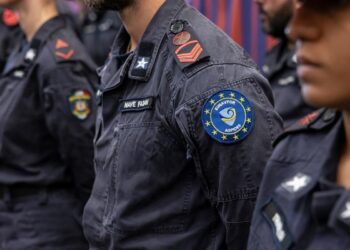
But at the ministers’ meeting, the pressing and contentious issue was the Strait of Hormuz and the strengthening of the EU’s ASPIDES military mission, which, by escorting ships (particularly merchant and commercial vessels) and protecting them from potential attacks at sea, helps to safeguard freedom of navigation and ensure maritime security in the Red Sea, the Indian Ocean and the Gulf, as part of the EU’s Common Security and Defence Policy (CSDP). “Freedom of navigation has once again been on the agenda: the Strait of Hormuz, Bab el-Mandeb, but also the Black Sea, are crucial maritime chokepoints, the disruption of which has consequences far beyond these regions,” said the High Representative. In the Red Sea, “the Houthis’ activities are increasingly jeopardising trade routes, and Operation ASPIDES is helping to keep this vital waterway open.” However, the EU mission – which is European but relies on ships provided by member states at their discretion and subject to availability – has few resources given the scale of the task at hand, and this is where Kallas takes a dig at the member states. “We must increase its strength to make it more effective: if we entrust a mission with a task, we must also give it the means to carry it out.”
This is a point that the former Estonian Prime Minister, now at the helm of the 12-star diplomatic corps, had made clear again this morning as she entered the meeting, because ASPIDES was originally envisaged as having a capacity of ten ships, but “does not currently have” that number. Furthermore, “the need is greater than ever” because “we are receiving many requests for naval escorts, but we need naval vessels that are also capable of carrying out this task,” she had clarified. At the end of the proceedings, Kallas noted that two countries “have indicated that they might provide additional ships” because “they are indeed discussing the matter and may reach a decision.”
But the appeal is much broader, and the Greek minister, Nikos Dendias, has acted as a mouthpiece following his bilateral meeting with the Italian minister, Guido Crosetto. As reported on X, Dendias and Crosetto have “agreed on the need for a contribution to the ASPIDES operation from part from all other Member States of the EU, in addition to Greece, Italy, and France.”
The debate over the enhancement of ASPIDES has intensified in recent weeks as Houthi attacks have escalated. In a letter dated 18 September, Crosetto asked Kallas to urge other EU Member States to bolster the mission by deploying new ships from other Member States. Italy has stated its willingness to deploy a second frigate to support the Bergamini, provided, however, that the costs of the operation are shared by the twenty-seven EU countries. The Italian request found an immediate ally in Kallas, who took pen and paper to write to all the capitals, asking them to increase the European presence in the Red Sea “substantially.” A call which, for the time being, seems to have fallen on only two willing ears.
English version by the Translation Service of Withub