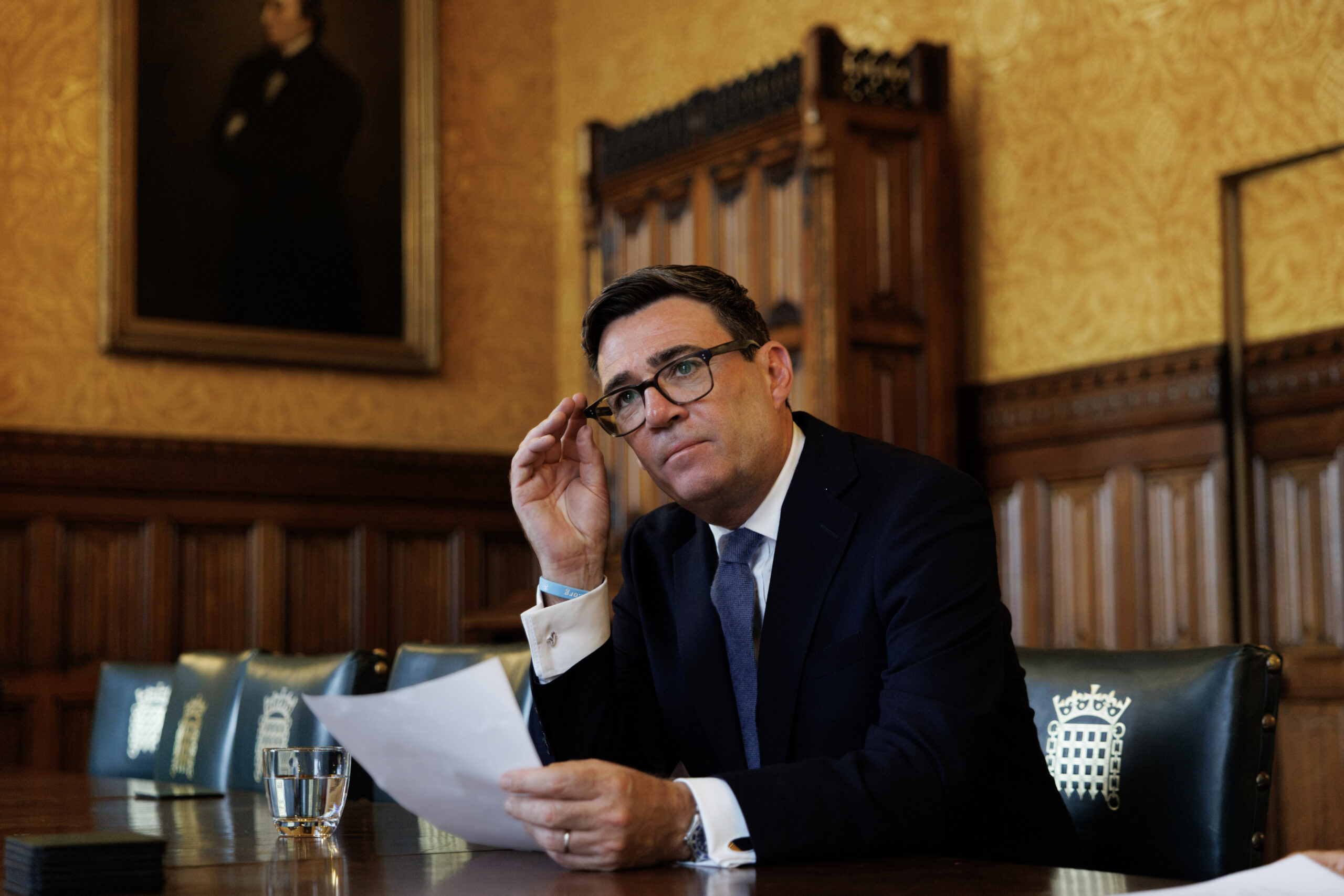

Brussels – What if the issue of the United Kingdom’s membership of the European Union were to be revisited? The British Prime Minister, Andy Burnham, said yesterday (30 September) that it is “possible” that a future Labour Party election manifesto might promise a new referendum on the European Union. In an interview with the state broadcaster the BBC, Burnham made it clear that a referendum “would not be the right thing to do at this moment,” but that when it comes to the UK’s relationship with the European Union, the country must “consider the options” because “where we are now is not positive enough,” he reiterated.
In his speech on Tuesday (29 September) in Liverpool, at the Labour Party conference, the Prime Minister announced that ““This year the United Kingdom will hold a summit with the EU to conclude major agreements aimed at boosting the economy, reducing bureaucracy, supporting business growth and offering young people opportunities that were denied to them after Brexit.” According to the Prime Minister, this “should represent the starting point, not the upper limit, of our ambition” and for this reason, over the course of the year, “he will set out his vision in greater detail on the path to be taken by the UK and the EU, with a view to strengthening our prosperity and our security.”
The move could draw a huge divide ahead of the upcoming elections, with the Conservatives accusing Burnham of trying to “reopen old wounds by reigniting the battles of the Brexit years.” When he stood as a candidate last May, Burnham had promised not to “return” to the subject. When the BBC’s political editor, Chris Mason, pointed out the contradiction, the Prime Minister replied: “No, I’m not actually proposing that, am I? I’m saying that, as we look at a ten-year plan for Britain, the country needs to consider the options for where we’ll be.” On the contrary, “we are well before the stage of putting anything to the public; at the moment, it is simply a matter of examining the broad options for our relationship,” he concluded.
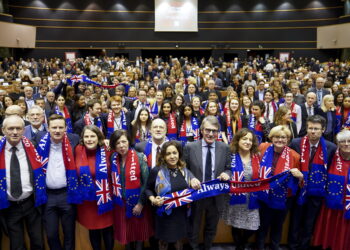
It has been more than ten years since 23 June 2016, when the United Kingdom held a referendum – which has gone down in history as Brexit – on its membership of the European Union. Fifty-two per cent of voters voted in favour of leaving the EU, while 48 per cent voted to remain. On 29 March 2017, the United Kingdom notified the European Council of its intention to leave the European Union, formally invoking Article 50 of the Treaty of the European Union. On 30 January 2020, the EU ratified the Withdrawal Agreement.
![[foto: MPD01605/Wikimedia Commons]](https://www.eunews.it/wp-content/uploads/2026/08/European_flag-350x250.jpg)
![Proteste per la brexit [Foto: Unsplash]](https://www.eunews.it/wp-content/uploads/2026/06/alexander-andrews-qDni9uoarQ-unsplash-350x250.jpg)