One of the hardest problems in Ukraine is no longer just how to break through a defensive line. It is how to exploit that breakthrough without being detected and struck.
Drones watch roads, tree lines and assembly areas. Artillery and strike drones can engage troops and vehicles soon after detection, while minefields and electronic warfare restrict movement. Concentrating enough soldiers and armour for a conventional breakthrough can therefore expose a force before the attack has properly begun.
In July, when Russian forces reportedly concentrated for a breakthrough against Ukraine’s 1st Corps, Ukrainian forces detected the attack while it was still 70 to 120 kilometres from the front. More than 60 vehicles were reportedly destroyed before the assault reached Ukrainian lines.
Around Lyman in northern Donetsk, Ukraine is testing one possible response.
Operation Vivaldi, a Ukrainian counter-offensive conducted largely by the 3rd Army Corps under Brigadier General Andriy Biletsky, has reportedly recovered around 150–250 square kilometres of territory.
But Vivaldi is less significant for the territory recovered than for the tactics being used to recover it. The operation is testing how combined-arms manoeuvre might work when persistent surveillance makes traditional force concentration increasingly dangerous.
It is also a story of command-and-control and organised adaptation: bringing new tactics, technologies and battlefield lessons together within a larger operation.
One might even say it is like putting a Lego set together.
The growing role of unmanned ground vehicles offers one indication of the scale of that adaptation. In August, Ukraine’s Ministry of Defence said its forces had conducted more than 100,000 logistics and evacuation missions using UGVs since the beginning of 2026, with monthly use rising steadily.
Number of UGV missions conducted in 2026

Stabilise before attacking
When the 3rd Corps assumed responsibility for the sector, it faced Russian forces increasingly relying on small-group infiltration. Rather than concentrating large formations, small infantry teams probed gaps in Ukrainian positions and attempted to establish themselves between or behind defensive positions.
Ukraine’s initial response was not a counter-offensive.
The 3rd Corps first worked to stabilise the front, eliminate infiltration zones, reorganise units and establish a more coherent reconnaissance-and-strike system. Only then did it move towards offensive action.
That sequencing is central to Vivaldi. Rather than using drones only to support an infantry assault, Ukrainian forces first tried to change the conditions under which their infantry would fight.
Shape the battlefield first
Russian drone operators were hunted and jammed. Deep-strike drones attacked logistics and supply routes, while Ukrainian forces targeted launch sites, ammunition depots and other infrastructure supporting Russian drone operations.
As 3rd Corps deputy commander Rodion Kudryashov later described it, before soldiers could advance even a few hundred metres, Ukrainian forces first had to reduce Russia’s ability to observe them, attack its logistics and drones, restrict reserves and create the conditions for assault units to move.
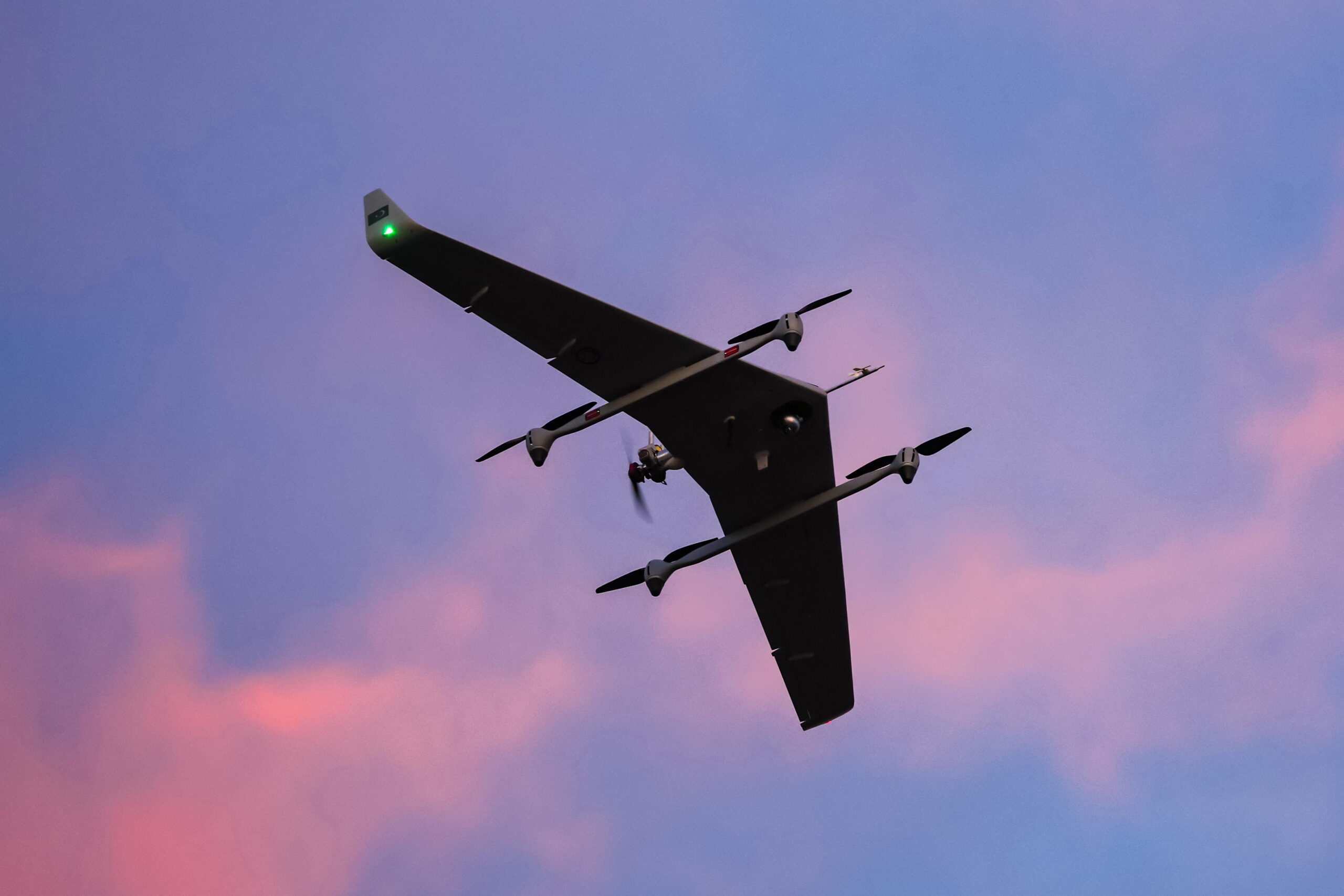
UGVs were also pushed into roles traditionally performed by soldiers and crewed vehicles. They have reportedly helped breach minefields, protect infantry and attack Russian positions. In some cases, heavy drones have transported explosive UGVs forward, allowing robotic systems to reach dangerous areas without exposing soldiers to the same risk.
The technologies themselves are not revolutionary. Their integration is.
Vivaldi follows a sequence: suppress enemy surveillance, disrupt logistics, transfer some of the risks of assault to unmanned systems, then commit infantry to manoeuvre.
For a military facing manpower constraints, the logic is clear: wherever possible, put a machine into the most dangerous part of an operation before putting a soldier there.
Combined arms is changing
This problem predates Vivaldi. In 2025, the Modern War Institute argued that tactical drones and precision strike meant armies would increasingly have to degrade an opponent’s reconnaissance-strike network before massing forces for manoeuvre. Its principle was simple: “massing capability must come before massing manoeuvre.”
Vivaldi offers an early battlefield example of what that might look like. Combined arms is not disappearing. But its components — and the order in which they are employed — are changing.
Drones provide persistent reconnaissance and strike. Electronic warfare contests the enemy’s ability to do the same. UGVs assume some of the most dangerous tasks. Deep-strike systems attack logistics. Infantry manoeuvres once those conditions have been created.
Command structure matters too.
The 3rd Corps has encouraged junior commanders to experiment and incorporate successful approaches into the organisation. Kudryashov describes another critical cycle alongside the military kill chain: “problem — decision — action”. If a commander must move through several layers of approval before responding to a battlefield change, the enemy may already have acted.
A military can acquire thousands of drones without fundamentally changing how it fights. The harder job is connecting reconnaissance, electronic warfare, strike, logistics and manoeuvre — and adapting that system as quickly as the enemy does.
The lesson from Vivaldi may therefore be less about reproducing the operation than reproducing the institutional capacity that made it possible.
A lesson Europe should be testing
Vivaldi has not solved the problem of offensive manoeuvre. Ukraine has achieved tactical success around Lyman, but not an operational breakthrough. Russian forces still had time to reorganise a defensive line behind the Zherebets River, illustrating the difficulty of turning a local opening into exploitation at sufficient depth and tempo.
Nor is Vivaldi necessarily a blueprint. The 3rd Corps is an unusually innovative formation, its methods may prove difficult to reproduce across an entire military, and Russia will adapt.
But Europe does not need to wait for a decisive breakthrough before examining the implications.
European militaries are investing heavily in drones, electronic warfare and autonomous systems. The larger concern is how those capabilities are incorporated into formations largely organised before persistent battlefield surveillance became a defining feature of war.
European forces should be testing how brigades and battalions manoeuvre while continuously observed, how logistics operate when supply routes are persistently targeted, and where unmanned systems can remove soldiers from the highest-risk tasks.
Exercises should integrate drones, electronic warfare, reconnaissance, fires and ground robotics into manoeuvre rather than treating them as specialist capabilities operating alongside it.
Vivaldi may not become a blueprint for future offensives. But it is testing something European militaries increasingly need to understand: how to move, concentrate combat power and protect soldiers on a battlefield where almost everything can be seen.
English version by the Translation Service of Withub