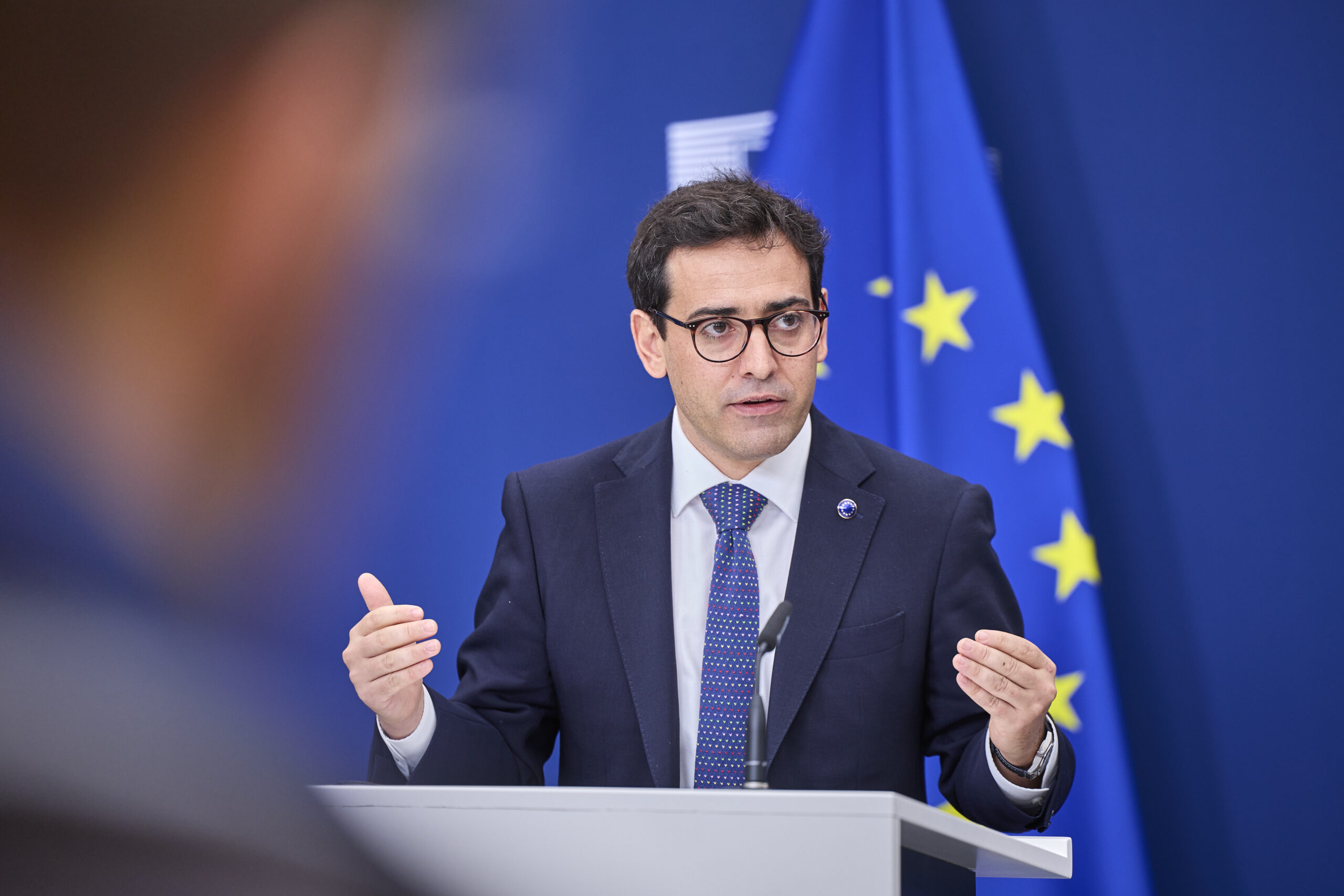
Brussels –From batteries to defence, the European Union wants to reduce its dependence on raw materials sourced from abroad. To this end, the European Commission is focusing on 46 new strategic projects across 16 Member States, unveiled today (9 October) by Stéphane Séjourné, Executive Vice-President for Industrial Strategy. The initiatives aim to strengthen Europe’s capacity to extract, process, and recycle materials essential to industry. “ Our approach is simple: reduce dependency, increase production in Europe,” Séjourné said. “We have the resources, the projects and the funding: now we are picking up the pace.”
Without secure access to these resources, European industry risks being at the mercy of the decisions of the countries on which it depends for its supplies. Lithium, nickel, cobalt and rare earths are essential for batteries, whilst other raw materials are used in the defence and aerospace sectors. Dependence on foreign sources is a vulnerability that Brussels is seeking to address, including by diversifying energy supplies and its trading partners, and by strengthening domestic production capacity.
The 46 projects were selected from 102 applications and also involve Italy, as well as 15 other countries, including France, Germany, Spain, Sweden, and Finland. The initiatives cover 15 of the 17 raw materials considered strategic by the EU: eight relate to extraction, 11 to processing and 19 to recycling. A further eight projects integrate multiple stages of the supply chain, combining extraction and processing or processing and recycling. Italy, in particular, has taken the lead by proposing initiatives for the strategic stockpiling of selected raw materials, the commissioner said, alluding to Porto Marghera’s candidacy to host the EU’s first strategic storage facility and logistics hub for critical raw materials.
A significant proportion of the initiatives concern the materials required to produce batteries. There are plans for seven projects on lithium, 12 on nickel, 10 on cobalt, 5 on manganese, and 4 on graphite. Other investments relate to magnesium and tungsten, which are also used in the defence and aerospace sectors. At the same time, four rare-earth projects aim to support the production of permanent magnets.
The aim is to achieve a more self-sufficient European supply chain by 2030. The Critical Raw Materials Act (CRMA), which came into force in May 2024, stipulates that by that date, the EU will be able to extract at least 10 per cent of its annual consumption of strategic raw materials, process 40 per cent, and recycle 25 per cent. Furthermore, no more than 65 per cent of European consumption of each strategic raw material, at the relevant processing stage, should come from a single third country.
The new projects are in addition to the 47 selected across the EU in 2025 and the 13 in third countries. According to the European Commission, taken together, these could enable meeting the extraction targets for lithium, nickel, rare earths, magnesium and tungsten, as well as the processing targets for lithium and rare earths, and the recycling targets for lithium, cobalt and rare earths.
The challenge now is to turn projects on paper into operational facilities and secure a market for the raw materials produced. “Identifying projects is not enough: we have achieved our first results, and now we must secure economic outlets for these raw materials,” Séjourné said. The Commission is therefore preparing to establish the European Centre for Critical Raw Materials, which is expected to support projects through financial instruments, including guarantees and direct investments, in collaboration with the European Investment Bank (EIB) and private investors. Italy has proposed to host the Centre in Veneto.
Meanwhile, Brussels is aiming to accelerate investments already underway. Of the projects selected in 2025, 25 have completed their environmental impact assessments, and 17 have been granted construction permission. Through the RESourceEU plan, launched in December 2025, Team Europe has also mobilised over two billion euros in financial support. A new selection of strategic projects is expected by the end of 2026.
The Italian projects
Among the 46 projects, five are based in Italy. The first is 9PV-UP, promoted in Italy by 9-Tech, which focuses on recycling end-of-life photovoltaic panels and recovering aluminium, copper, and metallurgical-grade silicon. The second, Alkeemia PureGraph, developed by Alkeemia Spa, aims to process high-purity graphite in Italy for use in battery production. ReSuPLIR, led by Italrecycling & Investment Srl, combines processing and recycling activities to recover platinum group metals, including platinum, iridium and ruthenium. The fourth project, REW-ITA Green Hub, promoted in Italy by OMCD Tek Hub Spa, is dedicated to the recycling and recovery of copper, cobalt and tungsten. Lastly, CRM4Defence, a project led by Leonardo Spa involving Italy, Poland, France and the United Kingdom, focuses on recycling aluminium, magnesium and titanium to meet the needs of the defence industry.
English version by the Translation Service of Withub