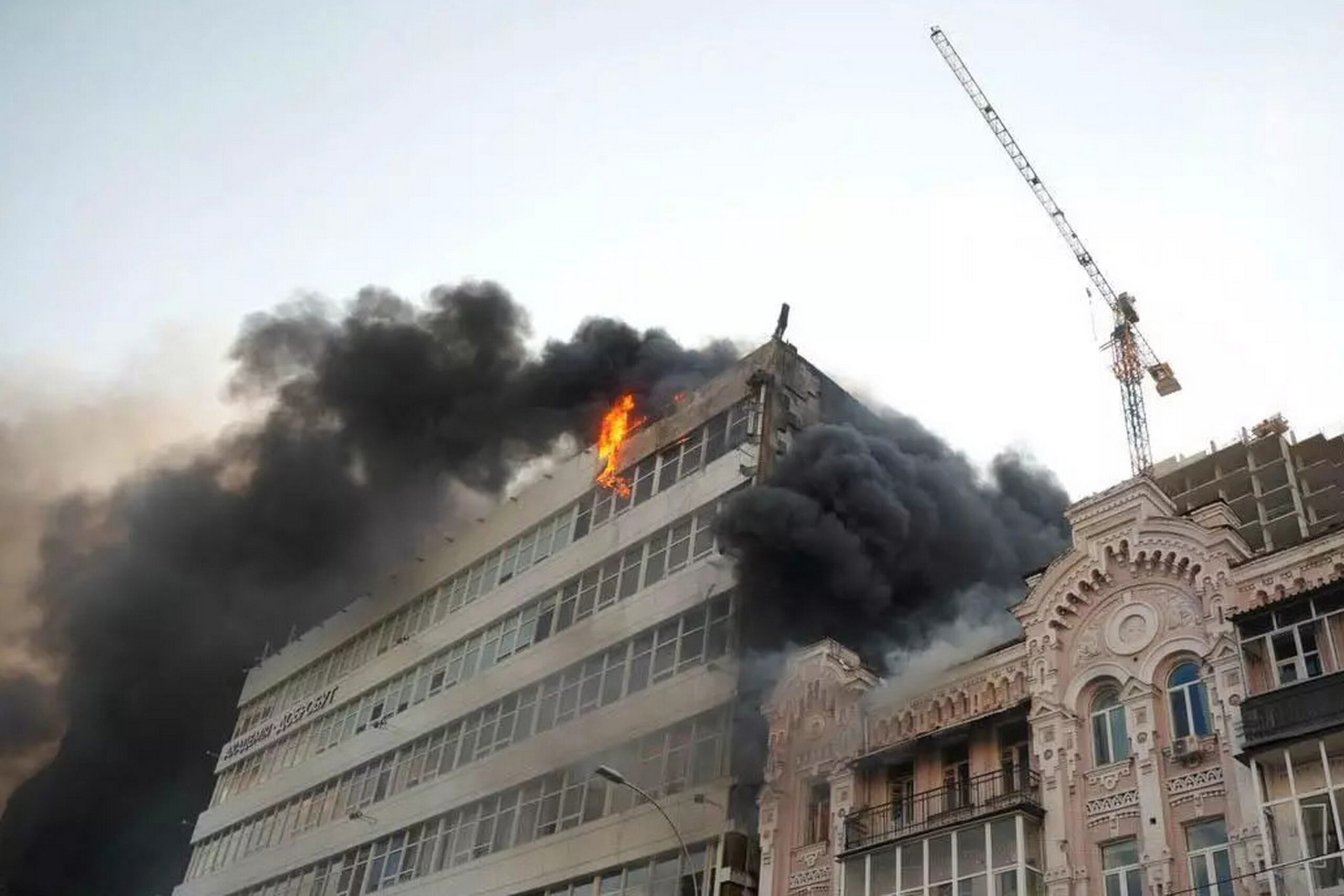
Russia’s continued attacks on Ukrainian energy infrastructure, growing use of faster drones and renewed tensions between Washington and Kyiv have exposed the difficulties Ukraine faces as it approaches another winter of war. Over the weekend, Russian strikes disrupted electricity supplies across several Ukrainian regions, while Kyiv continued targeting industrial facilities inside Russia. The attacks followed reports that the Trump administration had pressed Ukraine to suspend strikes against Russian oil refineries, raising questions about how much freedom Kyiv retains to pursue its long-range campaign.
The developments come as European governments attempt to strengthen their own military capabilities. Missile manufacturers are reporting substantial increases in production, while NATO is expanding maritime surveillance in the Black Sea following attacks on commercial shipping. Yet Ukraine remains heavily dependent on American air-defence systems, intelligence and other military capabilities that Europe cannot readily replace.
For European governments, the immediate challenge is whether they can translate growing defence commitments into the weapons and supporting infrastructure Ukraine needs, particularly as Russia intensifies pressure on its energy network.
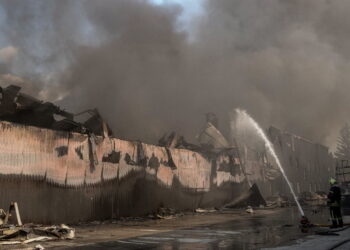
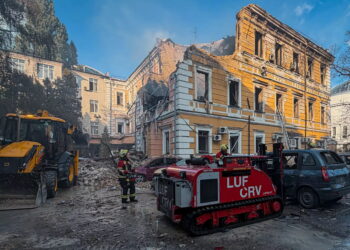
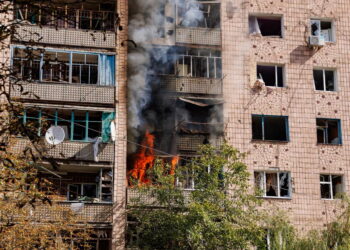
Russia launched another large-scale drone attack against Ukraine over the weekend, targeting electricity infrastructure across four regions and leaving hundreds of thousands of households without power.
According to Ukraine’s Air Force, Russia launched 433 long-range drones between Saturday evening and Sunday, of which 371 were intercepted. The figures have not been independently verified.
President Volodymyr Zelenskyy said Russian forces were exploiting Ukraine’s shortage of ballistic-missile interceptors as attacks against the country’s energy infrastructure continued.
The weekend strikes followed a particularly deadly attack on Thursday, when a jet-powered drone struck a crowded platform at Dnipro’s main railway station. Ukrainian reporting put the death toll at at least 14.
The attack illustrated the growing challenge posed by Russia’s newer Geran drones, which travel considerably faster than the propeller-driven Shahed variants used earlier in the war.
According to the Institute for the Study of War, approximately 40 of the 112 strike and decoy drones Russia launched overnight on 28–29 October were jet-powered.
Their greater speed reduces the time available for Ukrainian forces to detect, track and intercept incoming aircraft. Ukraine’s Air Force reported intercepting three of the four jet-powered drones launched against Dnipro. The fourth struck the railway station.
The development complicates Ukraine’s efforts to counter Russian attacks with relatively inexpensive interceptor drones, many of which were designed primarily to engage slower targets.
Ukraine has invested heavily in developing cheaper methods of countering Russian drones, partly to reduce its reliance on expensive surface-to-air missiles. However, faster variants require interceptors with different performance characteristics, placing additional demands on an already stretched air-defence network.
The problem is particularly serious as Russia continues targeting electricity infrastructure.
Damage to substations, generating facilities and transmission networks can disrupt industrial production, railway operations, communications and the maintenance of military equipment, as well as civilian electricity supplies.
Protecting these facilities requires a sustained supply of interceptors capable of engaging different types of incoming weapons.
Ukraine continues to seek additional American-made Patriot and NASAMS missiles through NATO arrangements. These systems address different categories of aerial threat, but their availability remains important to Ukraine’s wider air-defence network.
The distinction between detection and interception is also becoming increasingly important. American early-warning intelligence can help Ukraine identify incoming ballistic missiles, but it cannot compensate for insufficient interceptor stocks.
The attacks therefore underline a persistent weakness in Ukraine’s defence: its ability to withstand sustained Russian strikes depends partly on weapons and supporting capabilities that remain outside its direct control.
At the same time, Ukraine’s own long-range strike campaign has become a renewed source of tension with Washington.
On Friday, Reuters reported, citing an investigation by the Wall Street Journal, that Ukrainian military units had been instructed to suspend attacks against Russian oil refineries following pressure from President Donald Trump.
The instruction was reportedly issued in mid-October, although missions already under way were permitted to proceed. The pause could continue into November.
Reuters could not independently verify the report, and Ukraine has not publicly confirmed a formal suspension.
The reported decision would be significant because attacks against Russian refineries have become an important part of Ukraine’s strategy to impose economic and logistical costs on Moscow.
Refineries are particularly valuable targets because damage can interrupt fuel production, increase repair costs and force Russia to allocate additional air-defence systems to industrial facilities far from the front line.
However, the military and economic consequences depend on the extent of the damage and how quickly operations can resume.
A temporary disruption may impose costs without substantially affecting Russia’s wider capacity to sustain the war. More prolonged damage, particularly if repeated attacks prevent repairs, could have greater consequences for fuel availability and industrial output.
The reported American intervention therefore raises questions about the balance between Ukraine’s military objectives and Washington’s wider economic and diplomatic priorities.
Trump has previously criticised Ukrainian attacks against Russian oil infrastructure, while Zelenskyy has argued that maintaining pressure on Russia’s war economy is essential to weakening Moscow’s ability to continue fighting.
The disagreement is particularly consequential because Russia continues attacking Ukrainian energy infrastructure, and there has been no confirmed reciprocal suspension of Russian strikes.
For Kyiv, restricting its refinery campaign without a corresponding reduction in attacks against Ukraine would mean limiting one of its principal means of imposing costs on Russia.
Yet developments over the weekend suggest that Ukraine’s campaign against Russian industrial infrastructure remains active.
Russian authorities reported significant damage to an industrial facility in the Nizhny Novgorod region following a large Ukrainian drone attack on Sunday.
The regional governor did not identify the facility, although Ukrainian media reported that the target was the Kstovo oil refinery. Russian investigators subsequently opened a terrorism case over the attack.
Zelenskyy also reported a Ukrainian strike against the Kamensky plant in Russia’s Rostov region, which he described as involved in missile production. Moscow did not immediately comment on the claim.
The latest attacks do not establish whether the reported refinery pause was formally lifted, had expired or applied only to particular targets.
They do, however, suggest that Ukraine has not abandoned its broader campaign against Russian industrial and military infrastructure.
Ukraine’s General Staff has also reported strikes against drone-storage facilities, launch sites, fuel stocks and radar installations in Russia’s Bryansk region. The extent of the damage has not been independently established.
The uncertainty surrounding the reported suspension illustrates a wider problem for Kyiv.
Ukraine can expand its domestic weapons production and develop its own long-range strike capabilities, but its continued reliance on American military assistance gives Washington considerable influence over the conduct of the war.
That dependence is particularly difficult to reduce in air defence, where sophisticated interceptors, early-warning intelligence and supporting systems cannot be replaced quickly.
The battlefield picture remains similarly difficult.
According to the Institute for the Study of War’s assessment of 29 October, Ukrainian forces recently advanced south of Novopavlivka in Dnipropetrovsk Oblast, with geolocated footage indicating that troops had established positions in northeastern Fillya.
Russian forces, meanwhile, advanced southeast of Dobropillya, where they have continued infiltration operations supported by drone reconnaissance and glide-bomb attacks.
Around Kupyansk and Lyman, Russian offensive operations continued without confirmed territorial gains in the assessment.
ISW also reported that Ukrainian operations had disrupted Russia’s previous attempt to approach the Sloviansk–Kramatorsk defensive belt from the northwest.
These developments indicate that Ukrainian counterattacks are complicating Russian operations in several sectors, but Moscow continues applying pressure elsewhere.
There is not yet sufficient evidence to conclude that the overall balance of forces has changed decisively.
For Ukraine, the immediate military challenge remains sustaining defensive operations while preventing Russia from concentrating enough combat power to achieve larger territorial gains.
That requirement extends beyond the battlefield.
European governments are attempting to expand defence production as they confront the difficulty of supplying Ukraine while rebuilding their own military inventories.
Last week, Dutch-headquartered manufacturer Destinus reported that it had produced more than 1,750 Ruta cruise missiles in Europe, with monthly production approaching 300.
According to the company, its current monthly output exceeds Europe’s combined annual cruise-missile production before Russia’s full-scale invasion of Ukraine.
Destinus has also begun manufacturing the larger Ruta Block 2, designed to carry a 250-kilogram payload over distances exceeding 700 kilometres.
The figures and performance specifications are company-reported and have not been independently verified.
The reported expansion is nevertheless significant because European militaries have traditionally maintained relatively small inventories of expensive precision-guided weapons.
Russia’s war against Ukraine has demonstrated how quickly ammunition stocks can be consumed during prolonged operations, particularly when forces depend on repeated long-range strikes.
Increasing missile production could therefore help European governments address one of the weaknesses exposed by the war.
However, manufacturing more missiles does not automatically translate into greater military capability.
Armed forces also require launchers, trained personnel, targeting systems, storage facilities and logistics arrangements capable of supporting larger inventories.
The challenge is not simply whether European companies can manufacture weapons in greater quantities, but whether governments can integrate those weapons into operational forces.
The same issue is influencing European air-defence procurement.
Switzerland has shortlisted the French-Italian SAMP/T NG and Israel’s Barak MX for an additional long-range air-defence requirement following delays to its American Patriot deliveries.
Switzerland intends to retain its existing Patriot purchase, but the search for a second system reflects concerns about delivery schedules and dependence on a single supplier.
For European governments, weapons availability and production capacity are becoming increasingly important considerations alongside technical performance.
The broader question is whether Europe’s defence industry can expand quickly enough to meet the demands of supporting Ukraine while strengthening the continent’s own military readiness.
European security concerns are also extending beyond the battlefield in Ukraine.
Last week, the Liberian-flagged container ship Contship Jet sank following an attack by unmanned surface vessels off Bulgaria. All 18 crew members were rescued.
Responsibility for the attack has not been independently established, although Russian military commentators subsequently claimed that Russian forces were responsible.
The incident raised concerns about the threat posed by unmanned naval weapons to commercial shipping in the Black Sea.
During the war, Ukraine has demonstrated the effectiveness of unmanned surface vessels against Russian naval ships. Their use against commercial vessels presents a different challenge, particularly when attacks occur near the territorial waters of NATO members.
The defence ministers of Bulgaria, Romania and Turkey met in Sofia last week and agreed to strengthen maritime surveillance, intelligence sharing and early-warning arrangements.
France has also temporarily deployed an Atlantique 2 maritime patrol aircraft to Romania’s Mihail Kogălniceanu air base, with operations over the western Black Sea expected to continue until 6 November.
The additional surveillance is intended to improve detection of threats to shipping and critical infrastructure.
However, identifying approaching unmanned vessels does not necessarily provide the means to intercept them.
For NATO’s Black Sea members, the challenge is protecting commercial traffic without becoming directly involved in the conflict.
Further attacks could increase pressure for additional patrol vessels, counter-drone systems or coordinated protective arrangements.
The incidents demonstrate how the war’s military consequences are extending beyond Ukraine’s territory, requiring neighbouring European states to devote more resources to maritime security.
They also reinforce the importance of sustaining military capabilities over time.
Europe’s expanding missile production, Ukraine’s continuing dependence on air-defence interceptors and NATO’s additional maritime surveillance requirements are different aspects of the same problem.
Weapons and equipment must not only be available, but supported by the industrial, logistical and operational capacity required to use them effectively.
The coming days will provide several important indications of how these pressures are developing.
The first is whether Russia continues its concentrated attacks against Ukraine’s electricity infrastructure. The frequency of strikes, availability of interceptors and speed of repairs will determine how much disruption Ukraine faces as winter approaches.
The second is whether Ukraine’s attacks against Russian oil facilities continue following reports of American pressure to restrict them. The scope of any suspension remains unclear, and further strikes may help establish whether Kyiv has changed its approach.
The third is whether European governments can accelerate the delivery and deployment of military equipment, particularly air-defence systems and long-range weapons, while strengthening security in the Black Sea.
For Europe, the central challenge remains converting political and financial commitments into military capabilities that can be sustained.
Ukraine has demonstrated its ability to develop new weapons and conduct operations deep inside Russian territory. But it remains dependent on foreign support for several capabilities essential to its defence.
Expanding European production can reduce some of that dependence over time. It cannot immediately replace American intelligence, missile-warning systems or specialised air-defence interceptors.
As Russia continues attacking Ukrainian infrastructure and Washington’s approach to Kyiv remains uncertain, the question facing European governments is increasingly practical: whether they can deliver the weapons and supporting capabilities Ukraine needs quickly enough to influence the course of the war.