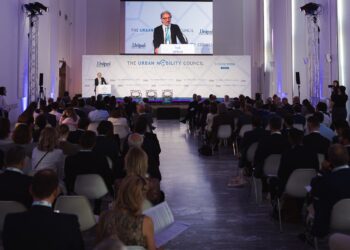
Brussels – Don’t wait for an accident to happen before taking action; instead, use data, artificial intelligence, and new technologies to identify the most dangerous situations in advance and prevent risks. This is the challenge at the heart of “Road Safety, a Global Commitment”, the event organised on 10 November for the European Parliament by The Urban Mobility Council (TUMC), the think tank promoted by Unipol, and hosted by the Vice-Presidents of the European Parliament, Antonella Sberna and Pina Picierno. A dialogue between European institutions, researchers, businesses, and law enforcement agencies to place road safety at the heart of mobility policies.
The figures highlight the scale of the crisis. According to the second TUMC Report, carried out in collaboration with Isfort and presented in Milan last June, in 2024 there were 173,364 accidents resulting in personal injury in Italy, with 3,030 fatalities. Urban areas accounted for 73.2 per cent of accidents and 69.3 per cent of injuries, while the social cost of accidents amounts to around €20 billion a year.
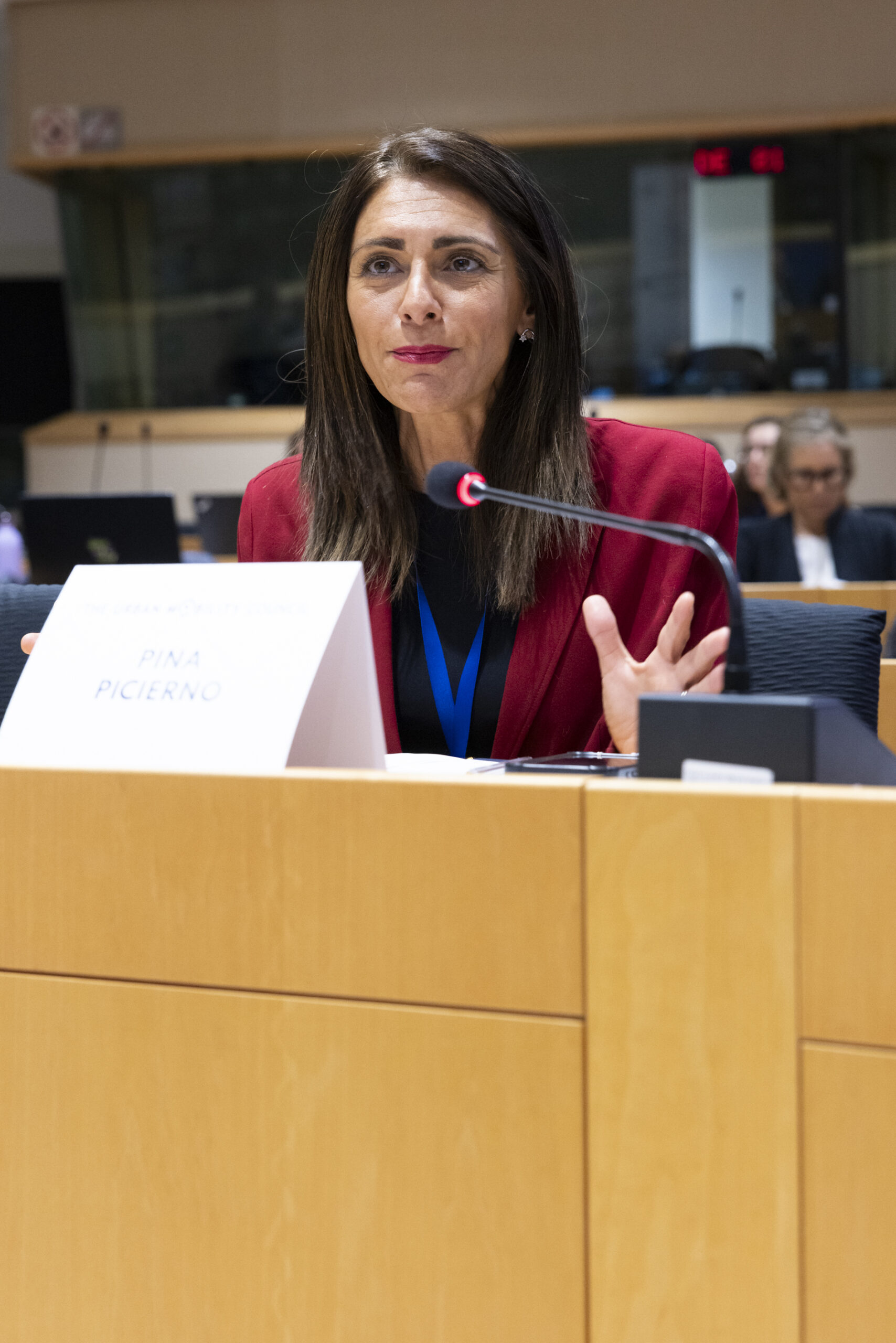
“The figures paint a picture of a massacre unfolding before our very eyes, on the streets of our cities, along the routes we use every day to get to work, socialise, and go about our lives,” emphasised the Vice-President of the European Parliament, Pina Picierno. This is an emergency that particularly affects young people and which, she noted, runs counter to technological progress: “While we are making giant strides in artificial intelligence, space exploration, robotics, and autonomous driving prototypes, we cannot afford to view these figures with indifference without being able to use that very same technology to save lives as well.”
For Picierno, the issue directly concerns the responsibilities of public decision-makers and the way in which cities are planned. “This great technological revolution can save lives. Whether and how it will actually save lives is up to us to decide; it is up to us humans to create the conditions to ensure that this is indeed the case,” she added.
The other Vice-President of the European Parliament, Antonella Sberna, also emphasised the need for a shared commitment.
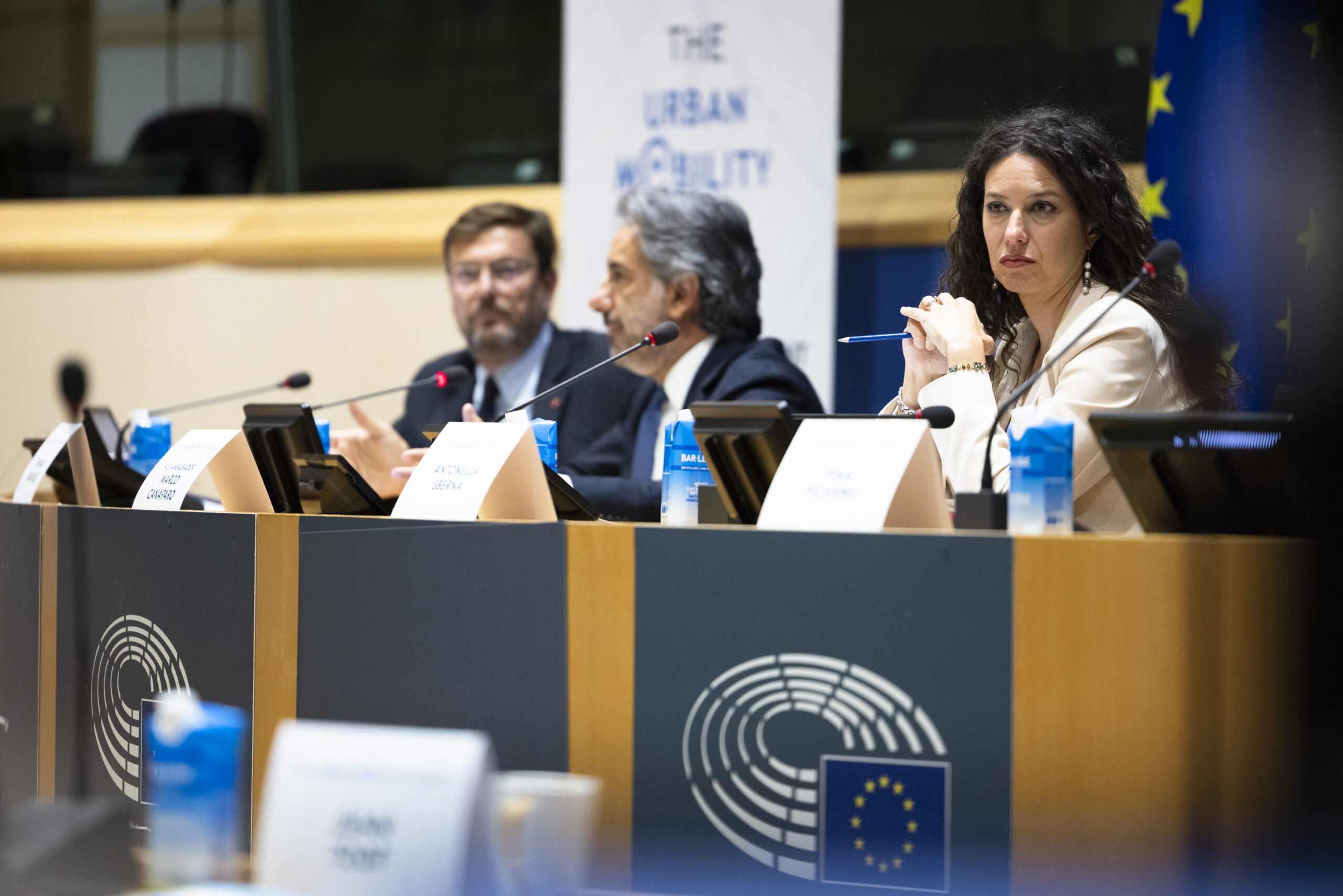
“The social cost of everything that is not anticipated from a prevention perspective is not merely economic, but is also measured in terms of human lives,” she stated, calling on institutions, businesses, and citizens to work together to make urban and road environments safer. Sberna highlighted in particular the potential of new technologies: “Linking data, figures, and assessments to develop prevention strategies is one of the areas where artificial intelligence can truly serve the public.”
The Vice-President also highlighted the role of European investment in the security of local infrastructure, from intermodal links to road junctions. “It is not just the European Parliament, it is not just the Ministry of the Interior, it is not just the insurance companies: we are all involved. From an alliance, with everyone contributing their own expertise and capabilities, serious and constructive work can emerge,” she observed, also highlighting the work of the Committee on Regional Development on the future Connecting Europe Facility (CEF), with particular attention to the possibility of funding the final links and mobility closest to citizens.
On the subject of national and European policies, Ambassador Marco Canaparo, Italy’s Deputy Permanent Representative to the European Union, took the floor. “For those involved in transport policy, safety is a fundamental criterion for assessing decisions on mobility,” he said, emphasising that “progress depends on the ability to take coordinated action on the quality of infrastructure, the condition of vehicles, driving behaviour and the effectiveness of enforcement.”
Canaparo referred to the National Road Safety Plan 2030 and the process of updating Italian regulations, following the 2024 reform and the preliminary approval, on 13 October, of the draft of the new Highway Code by the Council of Ministers. On the European front, he referred to the negotiations on the Roadworthiness package, relating to periodic inspections and technical checks on vehicles, as well as the digitisation of documents and the exchange of information between national authorities. “For Italy, the outcome must combine a high level of safety with proportionate provisions that are fully enforceable by public authorities and operators. The quality of the rules is also measured by their ability to deliver results in practice,” he explained.
This approach has been translated into practical tools by the two studies presented during the event. Sergio Savaresi, Head of the Department of Electronics, Information and Bioengineering at the Politecnico di Milano and a member of the TUMC Steering Committee, presented RoadSafeAI 2.0, a predictive model that uses millions of telematics data points from vehicles, traffic information, and road network characteristics to identify urban areas at greatest risk.
Unlike traditional systems, which analyse accidents that have already occurred, the model generates dynamic maps of road hazards, taking into account varying traffic conditions and times of day. Tested in Milan and Genoa, it was also trialled in Naples without using local telematics data, identifying areas with higher or lower frequencies of sudden braking with a margin of error of 5–6 per cent.
A second study, presented by Carlo Ratti, director of the MIT Senseable City Lab and a member of the TUMC Steering Committee, focused instead on the relationship between urban layout and safety. Through the analysis of millions of harsh events – sudden braking, swerving, and acceleration – recorded in Milan, the research shows that risk does not depend solely on the volume of traffic. Wider, more open roads tend to encourage more aggressive driving behaviour, while denser, more compact urban spaces are associated with lower levels of risk. The study also highlights greater safety where there are physically separated cycle lanes compared to marked lanes.
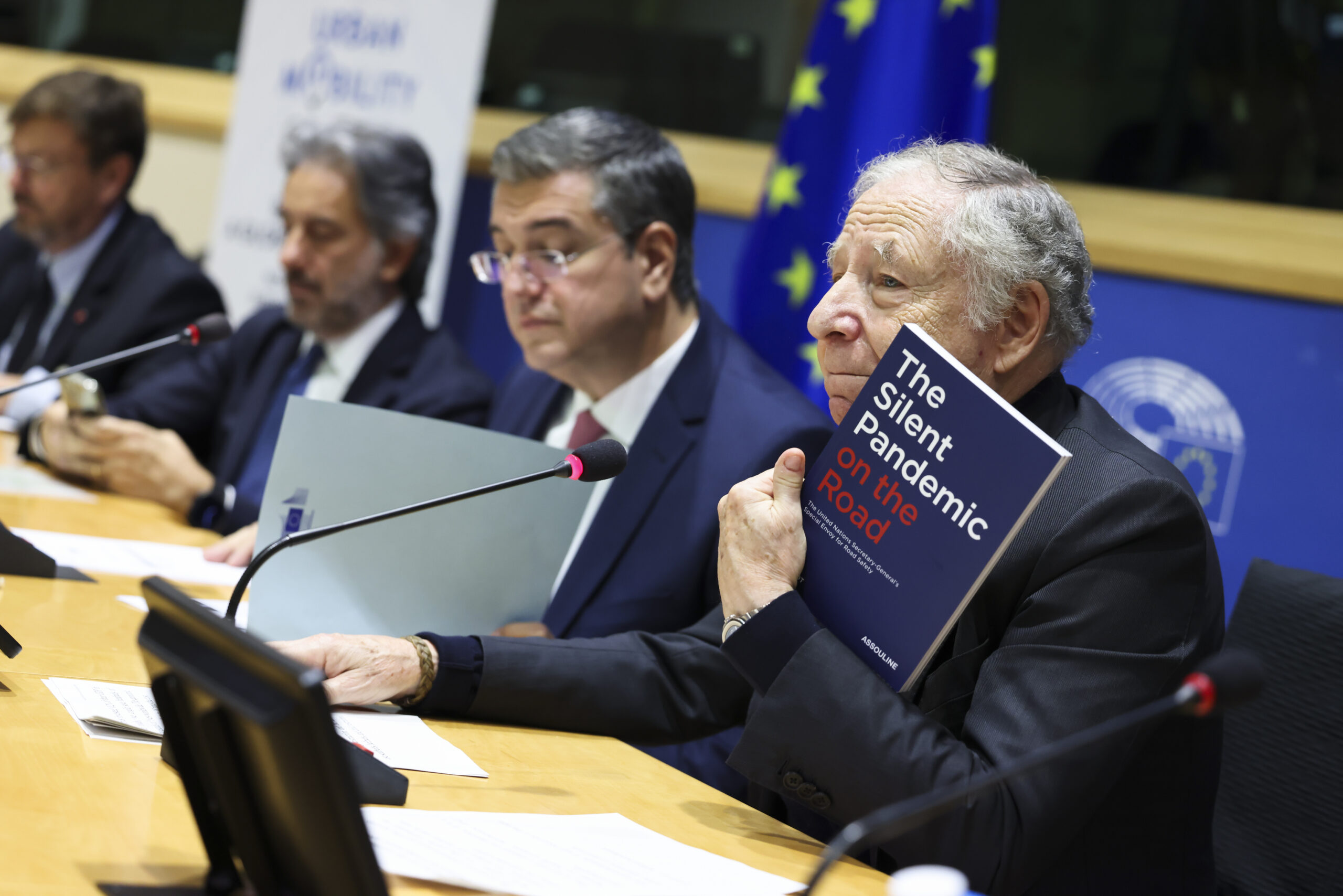
The international scope of the initiative was highlighted by Jean Todt, the United Nations Secretary-General’s Special Envoy for Road Safety, who announced the formalisation of a partnership with Unipol. “There is no single solution to ending the silent pandemic on our roads. We need safer roads and vehicles, greater investment, stricter regulations, and more widespread and consistent enforcement,” he said. Todt also called for stronger European leadership on motorcycle and micromobility safety, arguing that “wearing a helmet must be a non-negotiable requirement for anyone riding e-bikes and electric scooters.”
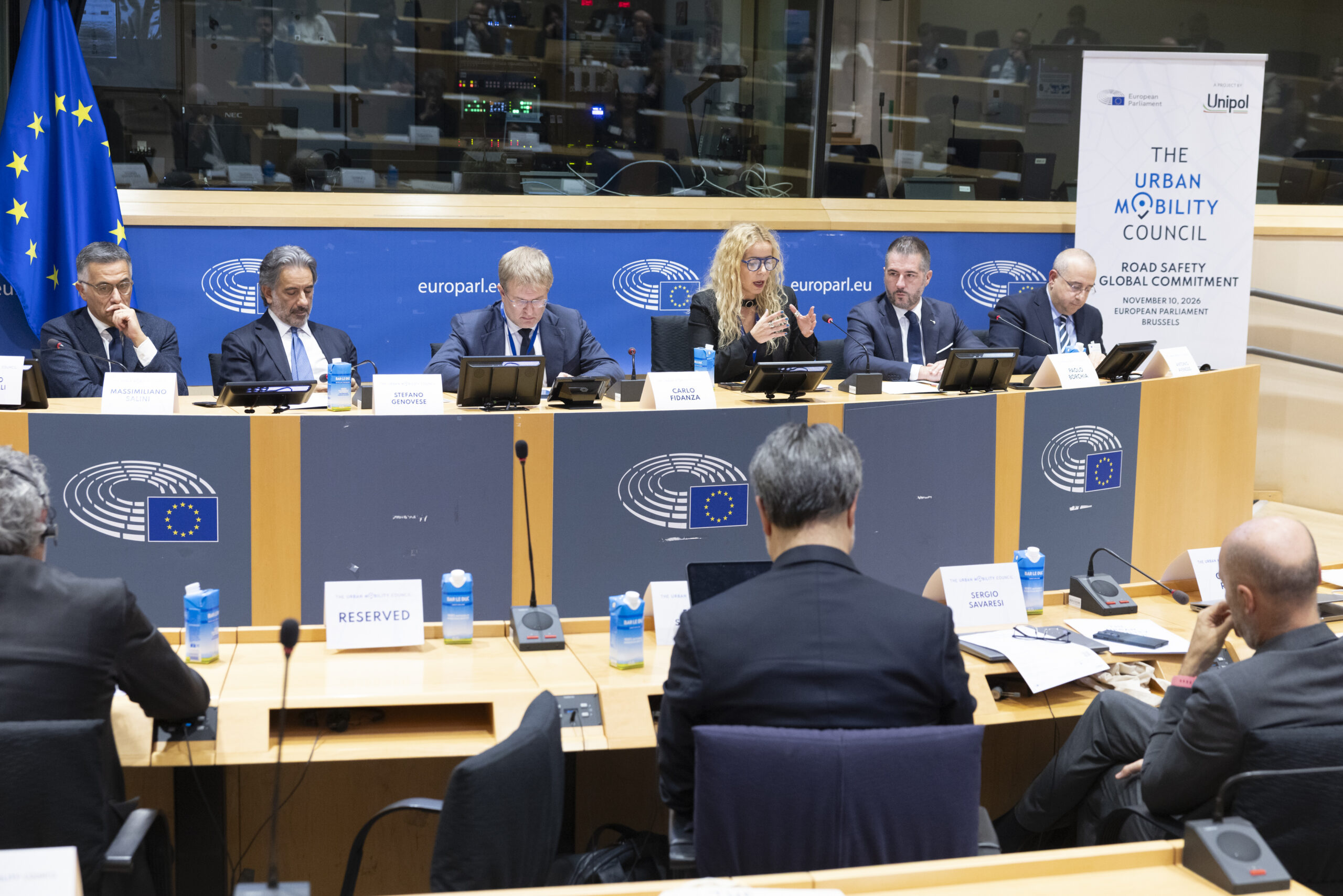
In a video message sent to the event, the Executive Vice-President of the European Commission, Raffaele Fitto, highlighted the contribution of urban planning and new technologies, “including artificial intelligence,” to “identifying risks and improving mobility management.” The European Commissioner for Sustainable Transport and Tourism, Apostolos Tzitzikostas, who was present at the event, described road safety as “a political responsibility and a moral obligation to safeguard human lives,” calling for “strengthened international cooperation, infrastructure and the exchange of effective solutions.”
The event was also attended by Antonio Avenoso, Executive Director of the European Transport Safety Council (ETSC), Paolo Borchia and Carlo Fidanza, MEPs and members of the European Parliament’s Committee on Transport, Forza Italia MP Massimiliano Salini, Renato Cortese, Central Director for the Traffic, Railway and Special Units Police, Stefano Genovese, Head of Institutional Relations at UNIPOL and coordinator of The Urban Mobility Council, and Enrico San Pietro, Group Insurance General Manager at Unipol Assicurazioni, Ana Tomaz, DG MOVE – European Commission. The session was moderated by Lorenzo Robustelli, editorial director of Eunews.
English version by the Translation Service of Withub