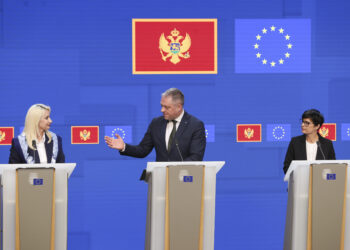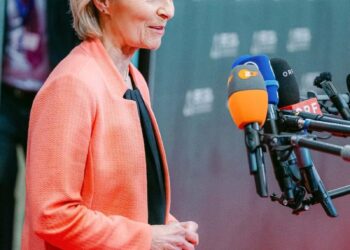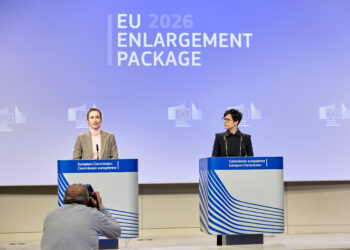

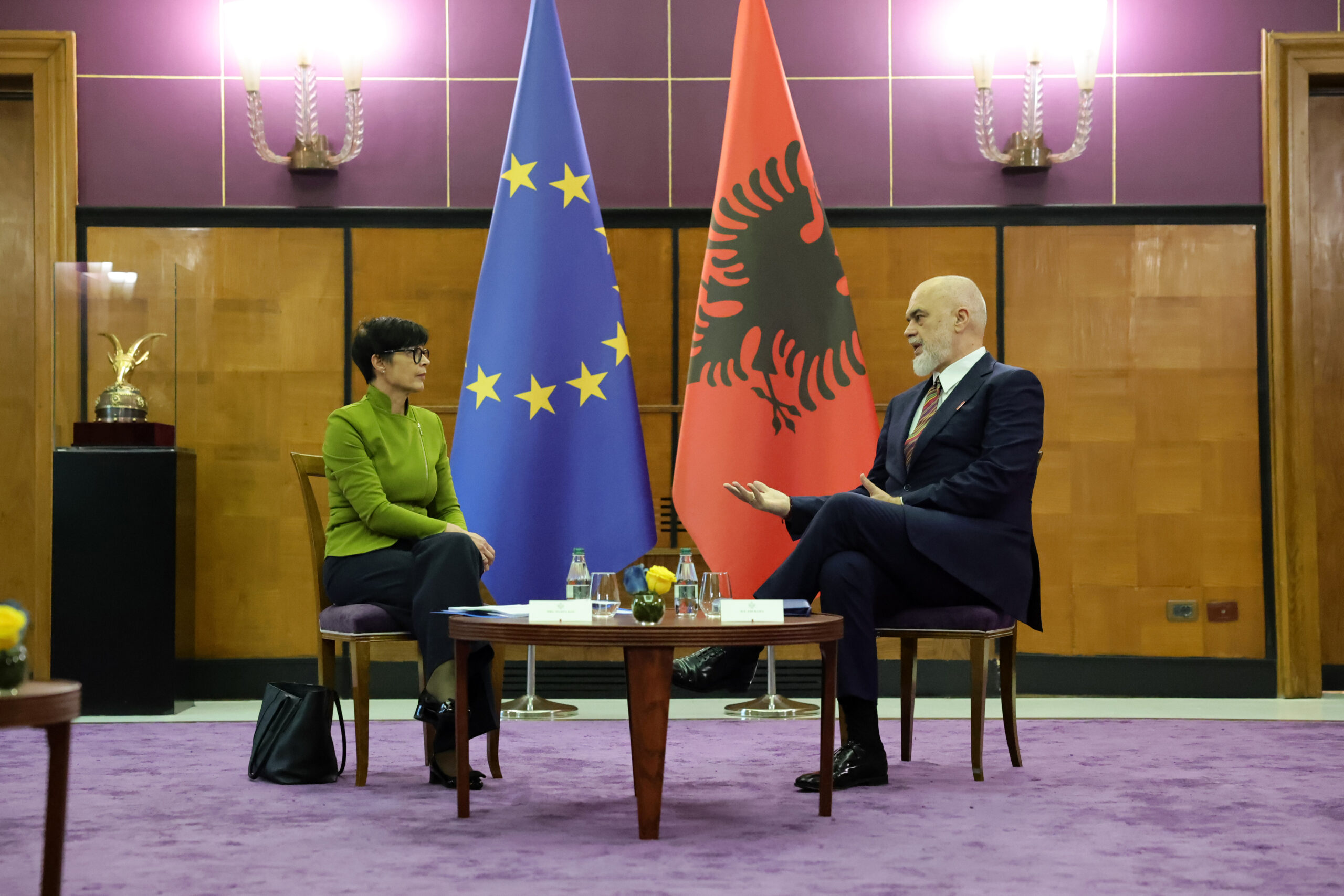
Brussels – Albania could become a member state of the European Union by 2030, provided that the reform process and accession negotiations proceed according to the timetable. This is the outlook outlined by the European Commissioner for Enlargement, Marta Kos, during her visit to Tirana, where she met Prime Minister Edi Rama to discuss an update the country’s progress towards the EU and the implementation of the Growth Plan for the Western Balkans.
“In about a year, we should be very close to concluding the negotiations,” Kos said at a press conference. By then, according to the Commissioner, around a quarter of the negotiating chapters could have been closed. The next step would be for the Member States to set up a working group on the accession treaty, which could be signed in 2028. “Depending on the ratification process and if all goes well, Albania could become a member of the EU by 2030,” she added, noting that this prospect depends on the implementation of reforms and the support of the 27 Member States.
Kos described 2026 as “the most significant year for enlargement in the last 25 years.” The last country to join the EU was Croatia in 2013, while Montenegro could conclude negotiations as early as the end of this year. Albania, he emphasised, is one of the countries that have helped to give fresh impetus to the process. 2027 could therefore be decisive for Tirana, but the priorities remain the strengthening of the rule of law, the independence and effectiveness of the judicial system, and alignment with European legislation, including on environmental matters.
“
The Plan was designed to reward results,” Kos pointed out. According to the figures presented by the Commissioner, Montenegro has implemented 94 per cent of the planned reforms and will receive €81 million in the next round of payments; Albania has reached 80 per cent and will receive 185.6 million, while North Macedonia, at 56 per cent, will receive almost 71 million. Tirana and Podgorica will also benefit from a 15 per cent increase in the Plan’s funding, thanks to the results achieved.
Kos reiterated that this principle will remain in force in the forthcoming 2028–2034 multiannual financial framework: “Whatever the outcome of the budget discussions, EU funding will be linked to the results of the reforms.” The logic of individual progress will increasingly replace a uniform regional approach: “The political choices made by each country and its leaders will determine the pace at which they move towards the EU.”
“We want to open up more parts of our single market and expand cooperation,” explained Kos, reviving the gradual integration of candidate countries project. This process will enable them to gain gradual access to sectors such as energy and transport and to strengthen cooperation on digital technologies, without replacing full membership. “Our call to action is: let’s seize this moment, complete the work, and bring everyone home to the European Union.”
English version by the Translation Service of Withub