- Europe, like you've never read before -
Wednesday, 6 May 2026
No Result
View All Result
  • it ITA
  • en ENG
Eunews
  • Politics
  • World
  • Business
  • News
  • Defence
  • Health
  • Agrifood
  • Other sections
    • Culture
    • Diritti
    • Energy
    • Green Economy
    • Finance & Insurance
    • Industry & Markets
    • Media
    • Mobility & Logistics
    • Net & Tech
    • Sports
  • Newsletter
  • European 2024
    Eunews
    • Politics
    • World
    • Business
    • News
    • Defence
    • Health
    • Agrifood
    • Other sections
      • Culture
      • Diritti
      • Energy
      • Green Economy
      • Finance & Insurance
      • Industry & Markets
      • Media
      • Mobility & Logistics
      • Net & Tech
      • Sports
    No Result
    View All Result
    Eunews
    No Result
    View All Result

    Home » Green Economy » Once again the threat of a snowless winter. Alpine resorts cornered in the face of climate crisis

    Once again the threat of a snowless winter. Alpine resorts cornered in the face of climate crisis

    If emissions are not reduced—even at ski resorts—the natural snowpack on Europe's mountains "could shrink by up to 70 percent by the end of the century," and artificial snow cannot be the solution, because of the heavy consumption of water

    Simone De La Feld</a> <a class="social twitter" href="https://twitter.com/@SimoneDeLaFeld1" target="_blank">@SimoneDeLaFeld1</a> by Simone De La Feld @SimoneDeLaFeld1
    29 December 2023
    in Green Economy
    sci neve

    A man sits on a chairlift in the winter area of Artesina, a small ski resort in Frabosa Sottana near Cuneo, northwestern Italy, on December 15, 2023. Artesina is 1.400 meters elevated above the sea level and people are skiing on artificial snow. (Photo by MARCO BERTORELLO / AFP)

    Brussels – With a global temperature increase of 2 degrees above pre-industrial levels, more than 50 percent of European ski resorts are at “very high risk of snow shortages.” That’s according to a study published by the scientific Nature Climate Change journal, a scenario that, considering the first glimpses of the winter season, is now no longer far from today’s reality.

    After one of the worst years in memory in the Alpine region, the lifts opened the season with some timid snowfall. But the far above-average temperatures extinguished the initial optimism and renewed the threat to an industry worth nearly 30 billion euros. Not least because climate change is acting faster on the Alps than elsewhere: according to the Alpine Convention and the European Environment Agency, temperatures in the Alps have already risen by nearly 2°C, twice as fast as the average for the northern hemisphere.
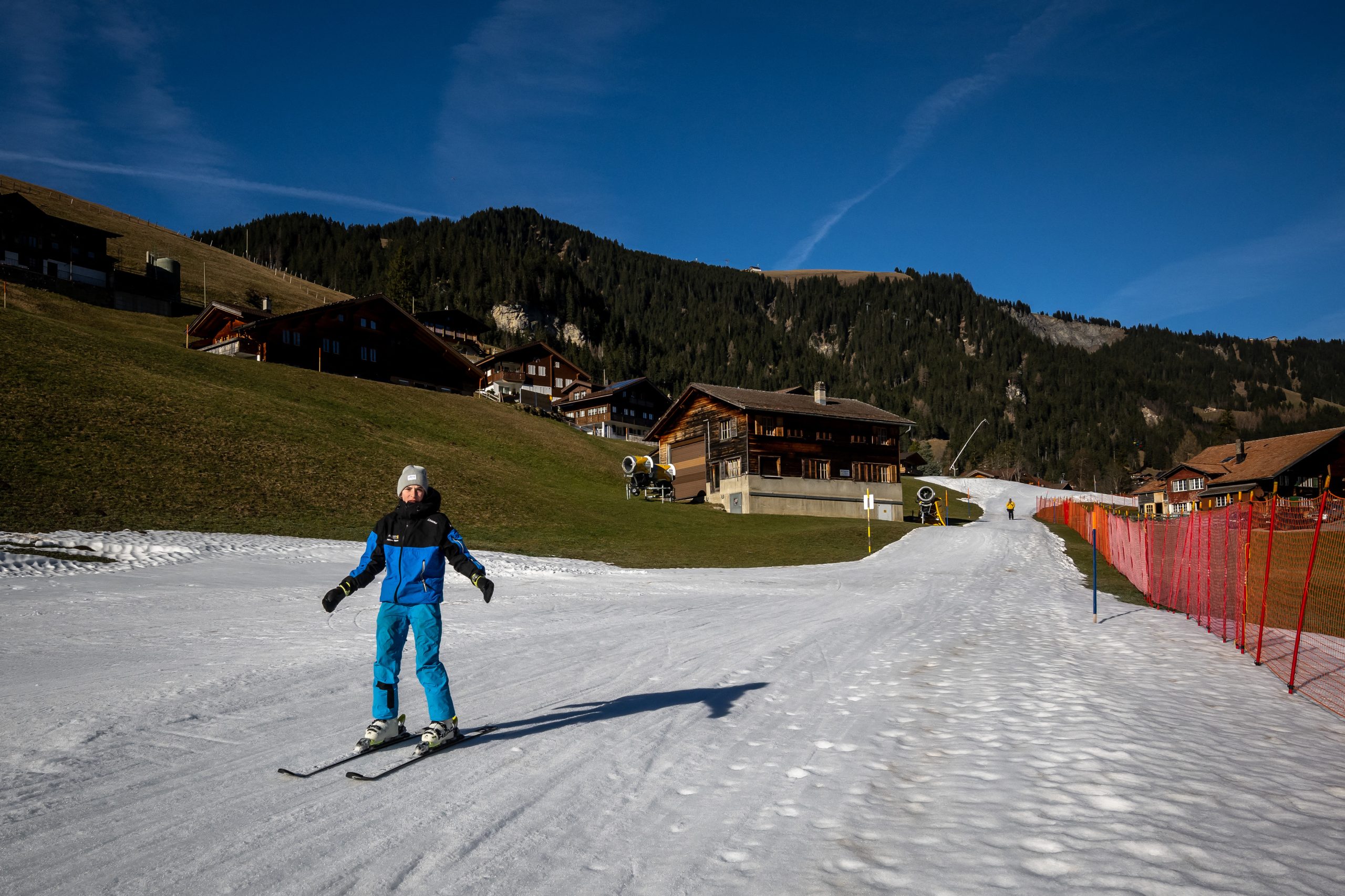
    (Photo by Fabrice COFFRINI / AFP)

    “If climate-damaging emissions are not reduced, the natural snowpack could shrink by up to 70 percent by the end of the century, and enough natural snow for profitable ski resorts will only be found above 2,500 metres,” the European Commission wrote down back in 2016, preparing the EU strategy for the Alpine region.

    Emissions also need to be reduced at ski resorts: not only indirect emissions related to ski lift consumption but also tourist flights and travel by car as well as the energy used in accommodation facilities. The Alps attract about 120 million tourists each year and, according to the European Commission, 84 percent of vacation travel to the Alps is by car: mountains are bearing the brunt.

    Also in the eye of it is the International Ski Federation (FIS), which has been accused of lacking commitment to ensure the survival of the sport and its environment. Back in February, 500 professional winter sports athletes signed a letter asking FIS for more climate action. Moving the competition calendar by at least a month to adapt to climate change, publishing their environmental impact with greater transparency, and reducing athletes’ air travel were some of the requests.

    The point is that the future of winter sports increasingly depends on their ability to reduce their impact on the environment in the coming decades. Artificial snow cannot be a solution, because it keeps ski resorts below 1,800 to 2,000 metres afloat but it consumes many resources, first and foremost water. The study by Nature Climate Change claims that emissions from snowmaking are only 2 percent of the total emissions related to ski resorts, but points out that—taking the example of the French Alps—water consumption could increase ninefold by 2100 due to dependence on artificial snow.
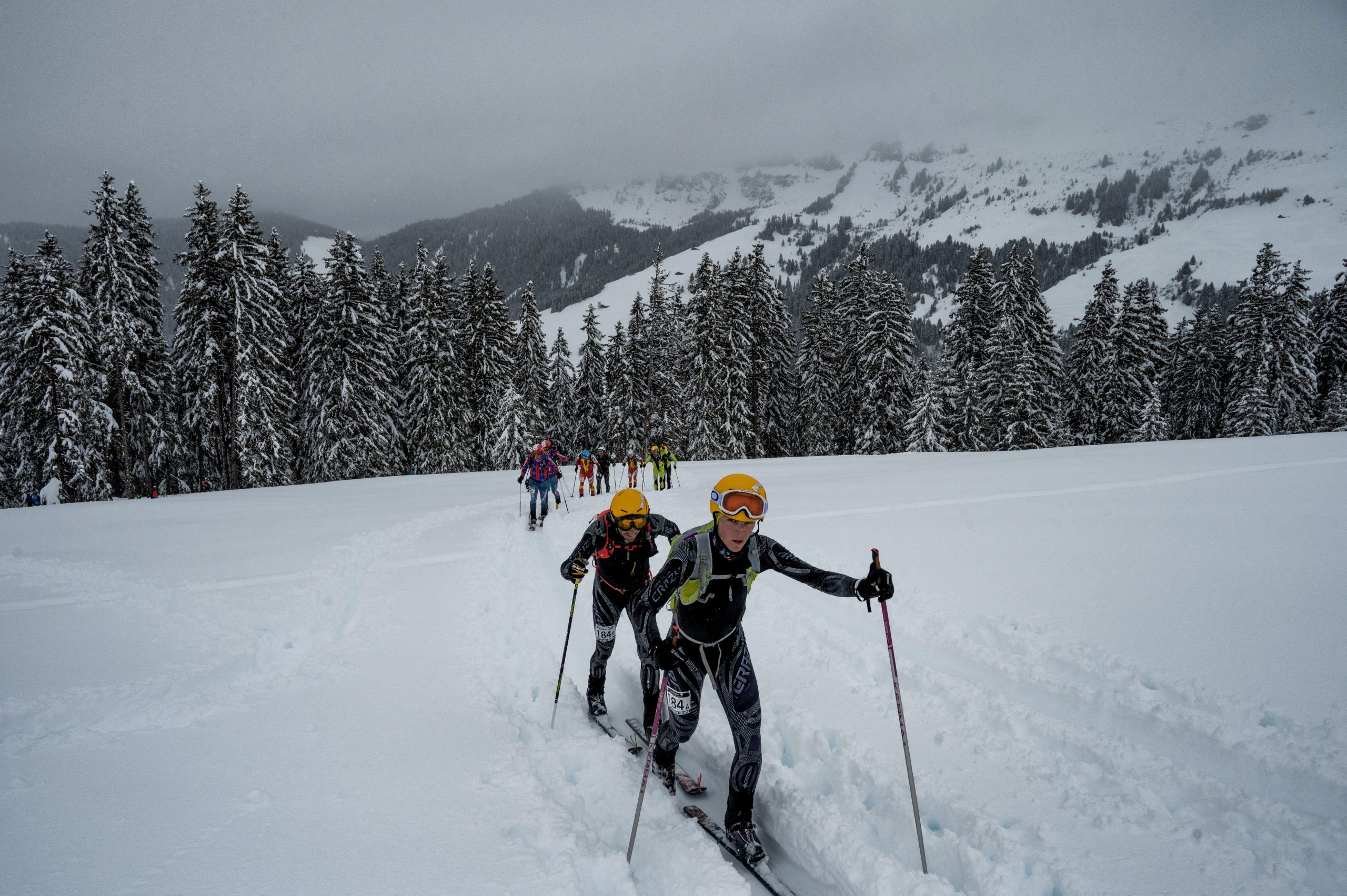
    Alpine skiing in the French Alps (Photo by JEFF PACHOUD /AFP)

    If, at the same time, the decline of Alpine glaciers continues, the cocktail will be lethal. The most dramatic scenarios speak of a span of less than 100 years for the eastern and much of the western Alps to remain completely ice-free. And there are always those worse off: just think of Emilia-Romagna, which on Dec. 20 allocated more than 4 million euros in relief to companies and ski resorts “in crisis”, reads the Region’s statement, “due to the abnormal last winter’s weather.”

    But “abnormal weather” is increasingly the norm, and there is a need to reinvent winter skiing sports with the least possible impact: such as the Homeland initiative, at Montespluga in Lombardy, where Europe’s first ski resort without lifts opened last winter.

    English version by the Translation Service of Withub
    Tags: climate changemountainnevesci

    Related Posts

    Business

    Climate, EU Advisory Committee: “Impacts are becoming increasingly serious, urgent and coordinated action needed”

    17 February 2026
    Business

    The Winter Olympics are underway, but EU ski and snowboard production is slowing: Austria leads the sector

    6 February 2026
    Cop30 Brasile
    Green Economy

    Climate: COP30 begins in Brazil. UN warns: ‘Impossible to meet Paris targets’

    6 November 2025
    Milena Angelova
    Green Economy

    INTERVIEW / Angelova (EESC): “EU must strentghen ‘blue diplomacy’ and water cooperation in the world”

    4 November 2025
    Energy

    Where Europe stands on replacing fossil energy with renewables

    2 July 2025
    IL PRESIDENTE DEL CONSIGLIO GIORGIA MELONI
    Politics

    Italians reject the Meloni government on climate change, saying it has not done enough

    30 June 2025
    map visualization
    Secondo la Bce il caro-energia continuerà a pesare sui consumi reali nei prossimi trimestri [foto: imagoeconomica]

    International Monetary Fund warns EU energy‑price measures benefit the wealthiest

    by Giulia Torbidoni
    6 May 2026

    The recommendation is not to repeat the mistakes of 2022, but to implement targeted, temporary measures for the most vulnerable....

    Mandatory Credit: Photo by Shutterstock (15557186p)
A wall painting pictured during a visit to Le Bois du Cazier industrial heritage site and former coal mine, in Marcinelle, on the second day of the official state visit of the Italian President, on Tuesday 21 October 2025, in Brussels. The Italian President and his daughter are on an official state visit to Belgium from 20 to 22 October 2025.
Belgium Italy State Visit Tuesday, Marcinelle, Belgium - 21 Oct 2025

    European Parliament proposes making Marcinelle a symbol for victims of workplace accidents

    by Valeria Schröter
    6 May 2026

    Members of the European Parliament’s Committee on Employment and Social Affairs have approved a motion for a resolution to establish...

    Source: Imagoeconomica EURO DIGITALE ECONOMIA FINANZA SOLDI 50 EURO GENARATE AI IA BANCONOTA

    Digital euro: Sovereignty, public service, and economic interests at the heart of the EU debate

    by Caterina Mazzantini
    6 May 2026

    A debate at the European Parliament between institutions, political parties, and business groups on the future of the single currency

    Gli effetti del ciclone Harry in Sicilia [foto: Wikimedia Commons - Jeanne Griffin - Own work, CC BY-SA 4.0, https://commons.wikimedia.org/w/index.php?curid=183289612]

    Cyclone Harry: EU tells Italy to use structural funds

    by Emanuele Bonini emanuelebonini
    6 May 2026

    Executive Vice President Fitto: "There are 156 million euros left over from the ERDF, and they are available. As for...

    • Director’s Point of View
    • Opinions
    • About us
    • Contacts
    • Privacy Policy
    • Cookie policy

    Eunews is a registered newspaper
    Press Register of the Court of Turin n° 27


    Copyright © 2025 - WITHUB S.p.a., Via Rubens 19 - 20148 Milan
    VAT number: 10067080969 - ROC registration number n.30628
    Fully paid-up share capital 50.000,00€


    No Result
    View All Result
    • it ITA
    • en ENG
    • Politics
    • Newsletter
    • World politics
    • Business
    • General News
    • Defence & Security
    • Health
    • Agrifood
    • Altre sezioni
      • Culture
      • Diritti
      • Energy
      • Green Economy
      • Gallery
      • Finance & Insurance
      • Industry & Markets
      • Media
      • Mobility & Logistics
      • Net & Tech
      • News
      • Opinions
      • Sports
    • Director’s Point of View
    • Draghi Report
    • Eunews Newsletter

    No Result
    View All Result
    • it ITA
    • en ENG
    • Politics
    • Newsletter
    • World politics
    • Business
    • General News
    • Defence & Security
    • Health
    • Agrifood
    • Altre sezioni
      • Culture
      • Diritti
      • Energy
      • Green Economy
      • Gallery
      • Finance & Insurance
      • Industry & Markets
      • Media
      • Mobility & Logistics
      • Net & Tech
      • News
      • Opinions
      • Sports
    • Director’s Point of View
    • Draghi Report
    • Eunews Newsletter

    Attention