Brussels – Overwhelmed by the anger of citizens at home, authoritarian Serbian President Aleksandar Vučić is finding relief in Brussels, where EU leaders Ursula von der Leyen and Antonio Costa thought it was an opportune time to host him for a dinner that Vučić himself described as “cordial, concrete, open, responsible, and serious.” A spokeswoman for the European Commission had anticipated that the protests that have been ongoing for more than four months would “very well be a subject of discussion.” Still, the message leaking out of the meeting is likely to be a different one: the EU, for strategic and economic reasons, chooses not to dump Vučić, turning its back on the Serbian people’s aspirations for a clean break with the regime that has been in power for twelve years.
“We discussed the need to advance EU-related reforms. Progress is needed in media freedom, the fight against corruption, and electoral reform,” the European Council president said on the sidelines of the dinner with the Serbian nationalist leader. According to Costa, “tangible results are at hand in areas that can benefit the Serbian people directly. Serbia’s future is in the EU.” Von der Leyen, with a post on X, emphasized that the country – which has been a candidate for EU membership for eleven years – must press ahead with reforms “in particular to take decisive steps toward media freedom, the fight against corruption, and electoral reform.”
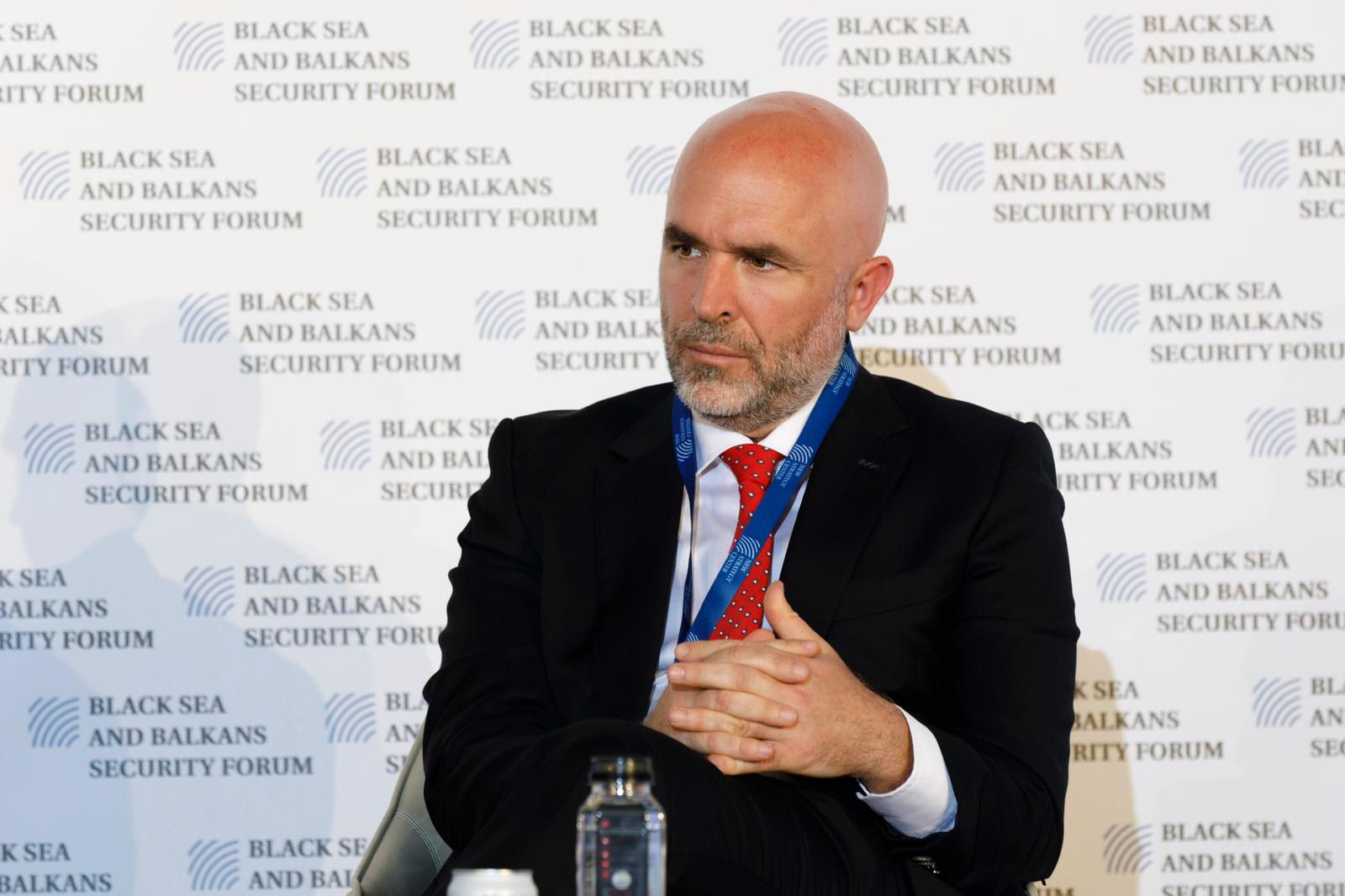
According to Srđan Cvijić, president of the International Advisory Committee of the Belgrade Centre for Security Policy, Serbia’s public perception of the meeting “has been largely negative, as many see it as a sign of the European Union’s continued support for Vučić’s increasingly authoritarian government.” Contacted by Eunews, however, the political analyst suggests that “closer analysis reveals a change in the tone and treatment” of the servant leader compared to previous meetings.
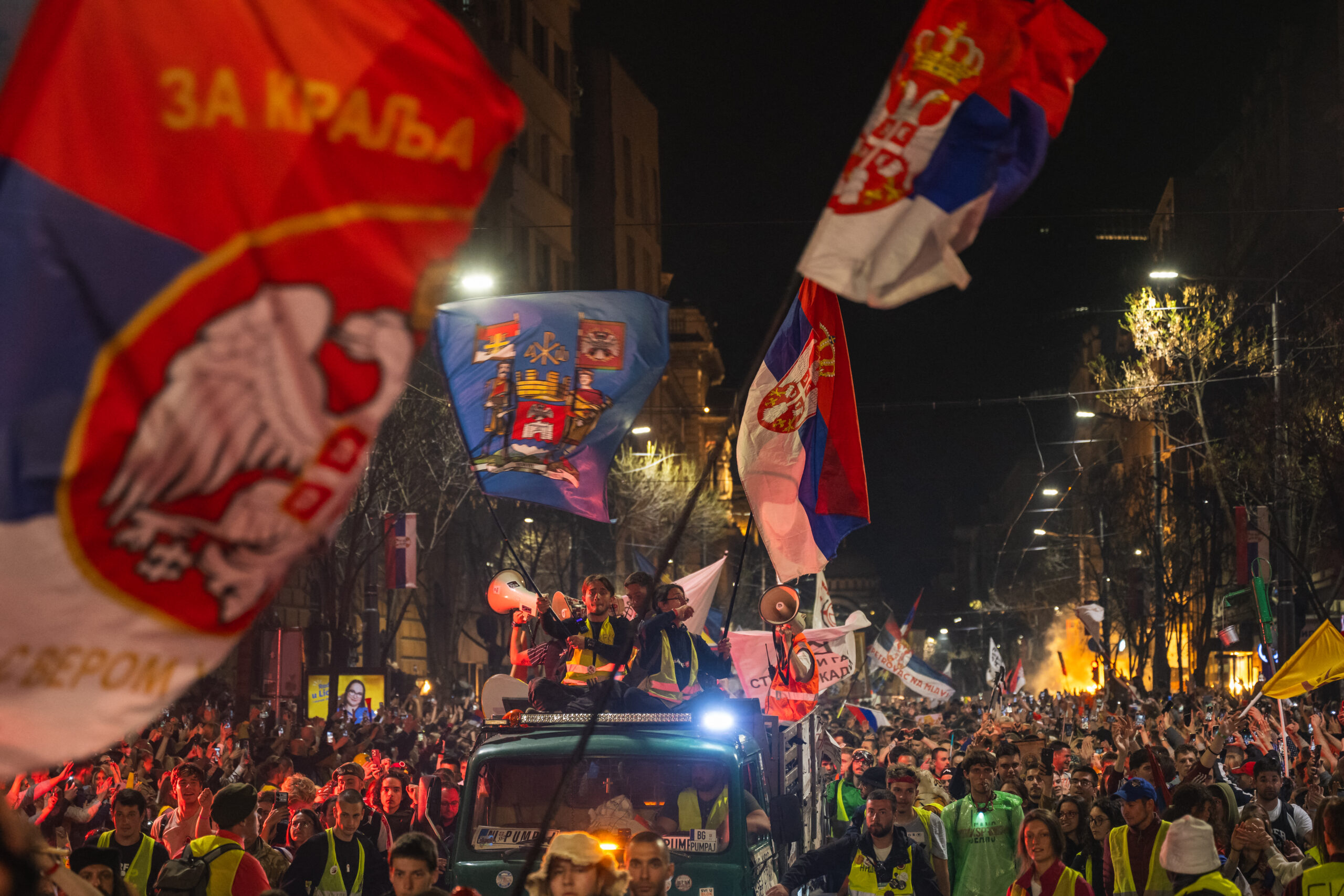
In particular, von der Leyen visited Serbia shortly before the protests began on October 25, 2024, and in a joint press conference with Vučić, had praised Belgrade’s progress in the rule of law and democratic reforms. Statements “in stark contrast to the real political trajectory of the country,” which “provoked strong reactions among Serbian citizens in favor of European integration,” Cvijić stressed. The protocol followed yesterday, in comparison, “was visibly more sober.” No “dear Aleksandar,” no joint press conference, just a brief written statement in which EU leaders emphasized the need for greater efforts on media freedom, anti-corruption, and electoral reform rather than dwelling on progress already made.
However, the account of the meeting provided to the media by Vučić was far more elaborate. Beginning with allegations about law enforcement’s use of a long-range sonic weapon to disperse protesters during the massive protest on March 15. Vučić assured European leaders that “there was no sonic cannon, that we are ready to verify it in every way, and that we will respond to the European Court of Human Rights.” However, he curiously previously specified that “its use is not prohibited anywhere in Europe” and that “in the United States they use it almost every day.”
In a note posted on the Serbian president’s official website, Vučić reportedly reaffirmed Belgrade’s absolute commitment “on the path to the EU, even more than it has been so far.” It is not quite what emerged in the last EU report on Enlargement, published on October 30, 2024, the day before the incident at the Novi Sad station that claimed 15 lives and sparked protests in Serbia. The document mainly highlighted the misalignment with EU foreign policy, the continued flirts with Moscow and Beijing, the slow progress on rule of law reforms, and the normalization of relations with Kosovo. “I believe that by the end of the year, our goal is to open at least two clusters to make rapid progress toward the EU,” Vučić said. Serbia has opened 22 of the 35 negotiating chapters in its accession process, with only two provisionally closed.
“We will soon have a decision to form a new government or new elections,” Vučić reportedly told the two EU leaders. In Belgrade, the government of the resigned Miloš Vučević, one of the heads to roll under the pressure of student protests, is still in place. The premier stepped down on January 28, and thus, the 30-day period under Serbian law to appoint a new executive or call citizens to the polls has broadly expired.
The leaders also reportedly discussed economics, investment, and the EU’s interest in “mineral resources and joint projects with Serbia.” Yesterday, Brussels adopted the first list of 47 strategic projects to supply critical raw materials in member countries. For years, there has been talk of the possible construction of Europe’s largest lithium mining site in Serbia’s Jadar Valley. The EU has had its eye on it for some time, which is one of the reasons why Brussels is ready to make concessions to the Serbian regime. According to Vučić, “within seven or eight days,” Jadar will be listed as a “strategic project of the EU in third countries.”
The nationalist president said he was ultimately convinced the talks “meant a lot for the future of Serbia.” For the EU, however – Srđan Cvijić is sure of this – Vučić is “an increasingly toxic and politically burdensome partner.”
English version by the Translation Service of Withub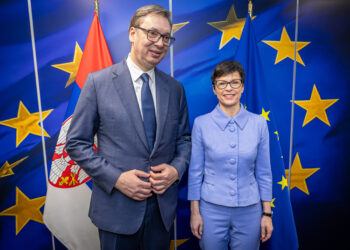



![Da sinistra: il presidente del Consiglio europeo, Antonio Costa; il presidente dell'Ucraina, Volodymir Zelensky: la presidente della Commissione europea, Ursula von der Leyen [Bruxelles, 18 giugno 2024. Foto: European Council]](https://www.eunews.it/wp-content/uploads/2026/06/euco_ua260618-120x86.jpg)
![[foto: Saverio De Giglio/imagoeconomica]](https://www.eunews.it/wp-content/uploads/2026/10/cpt-120x86.png)