Brussels –
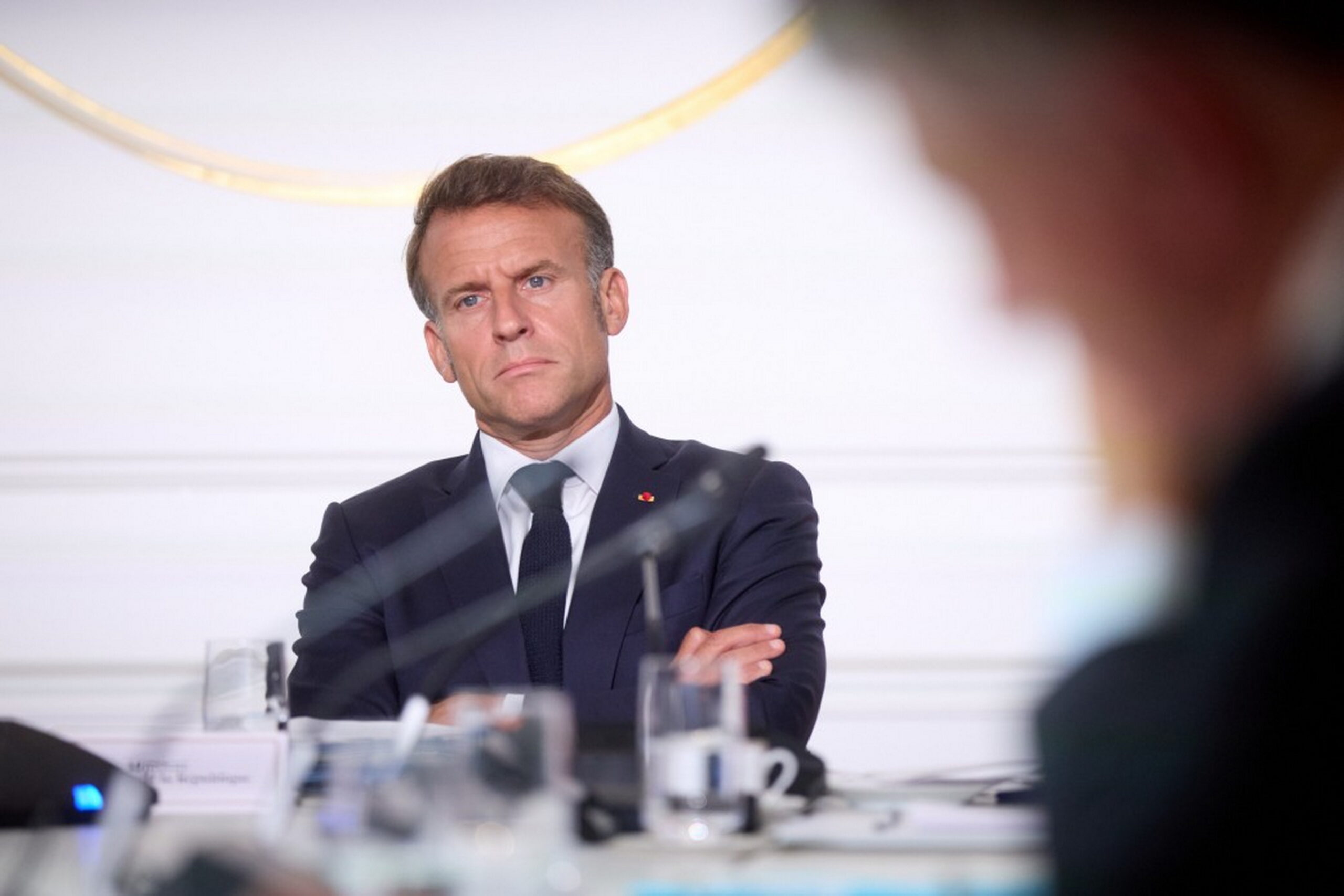
There is no peace for France, once renowned for its political and institutional stability, but now rocked for several months by the deepest crisis in its modern history. Since dissolving Parliament following his resounding defeat in the European elections in June 2024, President Emmanuel Macron has seen three prime ministers fall in quick succession, plunging the country into chaos while his personal approval ratings plummeted.
The first was the former European Commissioner and Brussels negotiator for Brexit, Michel Barnier. Appointed in September and lasting just three months, he was shot down by the Assemblée nationale, more divided than ever, on the crucial issue of the state budget for 2025.
He was succeeded by the liberal-conservative François Bayrou, a staunch Macron ally from the very start. But he too managed only a short spell in office, toppling after nine months, once again over the budget, this time the one for 2026.

At that point, the tenant of the Elysée Palace appointed Premier Ministre Sébastien Lecornu. The former head of the Armed Forces broke yet another record, remaining in office for only 27 days and leading an executive (a photocopy of the previous one) for just 14 hours. Unlike his predecessors, however,
Lecornu did not wait to be unseated by the Assembly and, on 6 October, resigned into the hands of the Head of State, remaining in office to manage current affairs.
How did we get here?
As a consequence of last year’s early vote, the lower chamber of the French legislature is split into three main blocs that have done nothing but put a spoke in each other’s wheels for the past 15 months. On the one hand, there is the extreme right of the Rassemblement national (RN), which holds 123 seats out of the total 577 in the chamber and is led at home by Marine Le Pen (head of delegation to the hemicycle) and in Europe by her probable successor Jordan Bardella (head of the Patriots’ group in Strasbourg).
The 15 deputies of the conservative right (UDR) led by Éric Ciotti vote alongside Le Pen’s supporters.
At the opposite extreme is the electoral cartel of the left known as the Nouveau Front Populaire (NFP), within which coexist—not without friction—the radical left of La France insoumise (LFI), the Parti socialiste (PS), the ecologists, and the communists. The progressive alliance can count a total of 195 elected members. Still, within it, there are frictions mainly between the LFI of the populist leader Jean-Luc Mélenchon and the social democrats of Olivier Faure and Raphaël Glucksmann.

Squeezed in between is the presidential coalition, comprising Macron’s liberal Ensemble pour la République (EPR) party and the centrists of the Mouvement démocrate (MoDem) and Horizons (Hor). Together with the neo-Gaullist Républicains (LR) and the territorial autonomies (LIOT), these forces support the minority executive with 211 seats. In this situation, compromise is as fundamental as it is, in fact, impossible to achieve.
What options for Macron?
Constitution in hand, there are now three different paths open before the head of state. The first is the nomination of yet another premier ministre, the fourth in just over a year. Macron intends to announce a name by tomorrow (10 October), but it is uncertain whether Lecornu’s successor will be able to win the confidence of such a fragmented parliament.
Even if he succeeds, however, he would have to get the hemicycle to approve the budget for next year: a feat that seems impossible for anyone, despite the cautious optimism flaunted by the resigning prime minister on the possibility of finding an agreement by the end of the year. So far, the Elysée tenant has chosen profiles close to him. Now, this trick may no longer succeed for him. In the last few days, many of his main allies—including “his” former prime ministers, Gabriel Attal and Édouard Philippe—have been criticising him openly for his handling of the crisis that he himself triggered over a year ago.
The leader of the Républicains, Bruno Retailleau, has suggested co-opting the next premier from a party outside the Macronian coalition. Such a solution, in which the head of government is an expression of a different political colour than the presidency of the Republic, is called “cohabitation” in the political jargon. Looking at the map of the Assemblée, it should be a socialist. However, progressives demand that the contested pension reform, desired by Macron and strenuously defended by successive governments in the current legislature, be abandoned.

A second option is the dissolution of the chambers and calling new elections. Pushing for a return to the polls is mainly Le Pen’s ultra-right, which has warned that it will censor any new premier until the voters are given their say again. The other parties, says Lecornu, are not currently interested in the prospect of an early vote. Polls give the RN solidly in the lead with 32 per cent of the vote, while the NFP is hovering around 25 per cent (but it is not a foregone conclusion that it will appear united on the ballot). Centrists and neo-leftists stand at 15 and 12 per cent respectively.
The third alternative is the resignation of the president himself, as demanded loudly by the extreme right and the radical left. Currently in his second term (the natural expiration of which is in spring 2027), Macron cannot run again and is therefore stubbornly opposed to taking this route. In France, the President of the Republic has broad executive powers, especially in the area of foreign policy and defence, whereas the prime minister’s authority is mainly manifested in domestic matters.
The perspective from Brussels
The French deepening crisis is followed with anguish from the corridors of power in Brussels. The prospect—now more real than ever before—that the Eurosceptic ultra-right (even more so than the one in government in Italy) will rise to power in one of the founding countries of the EU, definitively undermining the so-called Franco-German engine (already in crisis for some time), is particularly indigestible for Ursula von der Leyen‘s centrist majority.

But in addition to the implications that an RN-led executive could have on EU decision-making tables, it is above all the financial stability of Paris that worries the twelve-star summits. The budget knot will remain the most intricate for whoever replaces Lecornu in government (he, as interim premier, cannot propose a new manoeuvre), with a deficit that is now very close to exceeding the 6% of GDP ceiling set by the treaties. Technically, the deadline to present the manoeuvre for 2026 expires next week. At that point, the Assembly can only approve the revenue part of a possible new budget plan or extend the current year’s budget, as happened last December.
The French economy minister, Roland Lescure, tried to reassure his European partners at today’s Eurogroup: “Political discussions are continuing” to give the country a new premier “by tomorrow,” he said, promising that in any case he would work to ensure “that there is a budget for growth and deficit reduction, in line with France’s commitments to bring the deficit below the 3 per cent threshold in 2029.”
English version by the Translation Service of Withub


![[Copyright: European Union]](https://www.eunews.it/wp-content/uploads/2026/10/euco-261015-120x86.png)