- Europe, like you've never read before -
Wednesday, 4 November 2026
No Result
View All Result
  • en ENG
  • it ITA
Eunews
  • Politics
  • World
  • Business
  • News
  • Defence
  • Health
  • Agrifood
  • Other sections
    • Culture
    • Rights
    • Energy
    • Green Economy
    • Finance & Insurance
    • Industry & Markets
    • Media
    • Mobility & Logistics
    • Net & Tech
    • Sports
  • European 2024
    Eunews
    • Politics
    • World
    • Business
    • News
    • Defence
    • Health
    • Agrifood
    • Other sections
      • Culture
      • Rights
      • Energy
      • Green Economy
      • Finance & Insurance
      • Industry & Markets
      • Media
      • Mobility & Logistics
      • Net & Tech
      • Sports
    No Result
    View All Result
    Eunews
    No Result
    View All Result

    Home » Business » Eurostat: the number of primary school pupils in the European Union falls

    Eurostat: the number of primary school pupils in the European Union falls

    n 2024, there was a 0.2 per cent fall compared with 2023. There were 2.6 million students enrolled in Italy

    Iolanda Cuomo by Iolanda Cuomo
    8 September 2026
    in Business, Rights
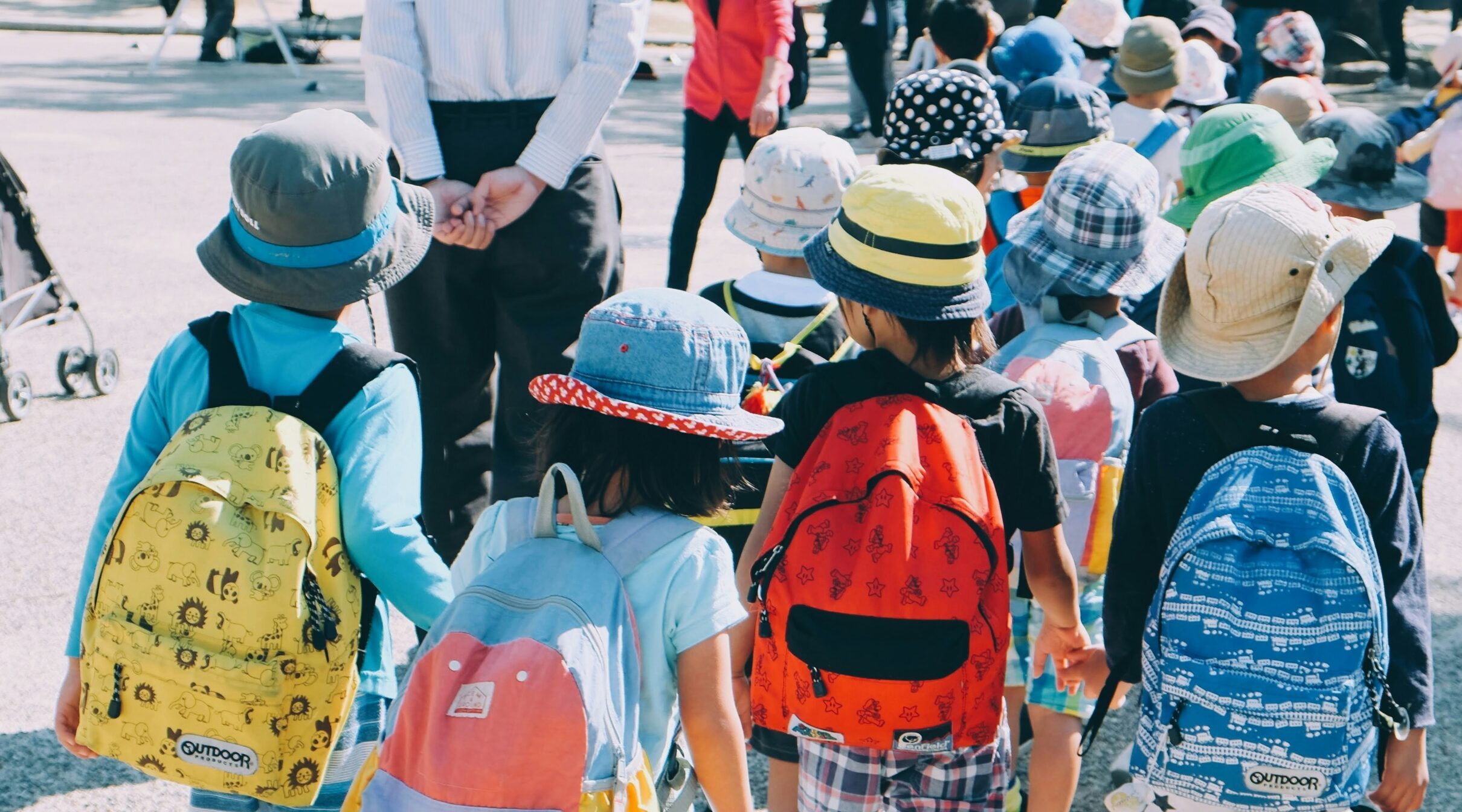
    Bambini che vanno a scuola. Crediti: Note Thanun via Unsplash

    Bambini che vanno a scuola. Crediti: Note Thanun via Unsplash

    Brussels – The number of pupils attending primary schools in the European Union is falling. According to Eurostat, the EU’s statistical office, in 2024, 23.2 million children were enrolled in primary schools, marking a decrease of 0.2 per cent (-35,153 pupils) compared with 2023. Compared with 2014, however, the figure has risen by 2.9 per cent (+659,086).

    Looking at individual Member States, the highest figure was recorded in France (4.1 million), followed by Germany (3.3 million), Spain (2.8 million) and Italy (2.6 million). Malta (27,537), Luxembourg (43,020), and Cyprus (60,596) recorded the lowest figures. According to Eurostat, “the number of pupils in primary education reflects population size, demographic structure, and differences in the typical age at which primary education begins, as well as the age at which children are expected to start compulsory formal education.” Compared with 2014, the number of pupils increased in fifteen EU Member States and decreased in the remaining eleven—taking only those cases where data were available into account. Consequently, relative increases were observed in Luxembourg (+21.4 per cent) and in Slovenia (+18.2 per cent). Hopwever,Poland (-25.7 per cent), Croatia (-10.3 per cent) and Portugal (-10.0 per cent) recorded decreases. Over a ten-year period—from 2014 to 2024—in Italy, the number of pupils fell from 2.8 million to 2.6 million, a reduction of around 267,000 children.

    In 2024, there was an average of 13.3 pupils per teacher across the EU. This figure is defined by the Agency as the  and is calculated by dividing the number of pupils and students at each level of education by the number of full-time teachers. Taking this into account, in 2024, Greece (7.4) and Luxembourg (8.2) stood out for having the lowest figures, being the only EU countries with figures below ten. Germany (15.2), the Netherlands (16.3), the Czech Republic and France (both 17.9), and Romania (18.2) all reported ratios above 15.
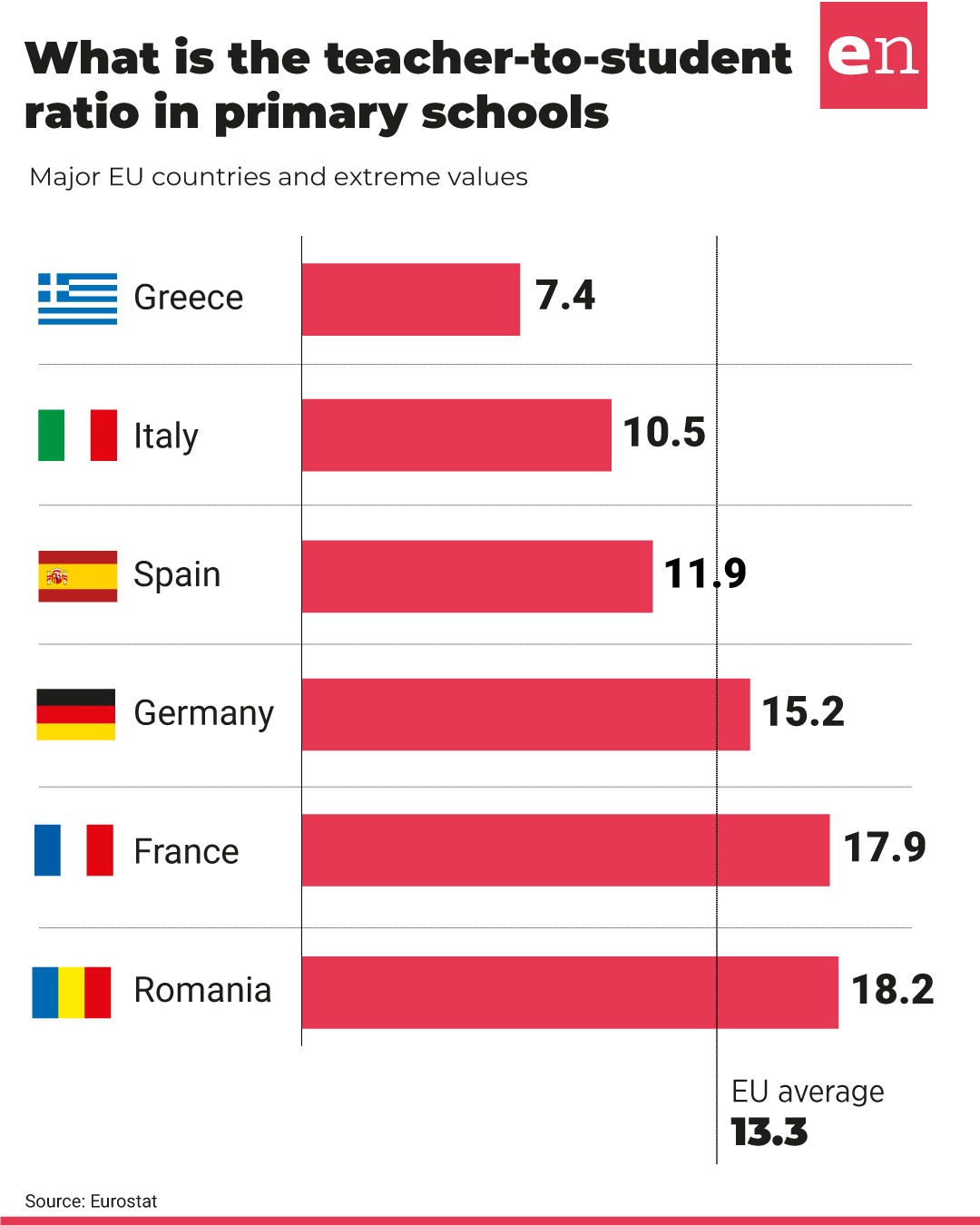
    Compared with 2014, the pupil-teacher ratio at EU level fell from 14.2 to 13.3 in 2024. The same trend was observed in twenty-three EU Member States, with the most significant decreases in Bulgaria (from 17.8 to 10.4) and Slovenia (from 15.9 to 10.8). In Austria, the ratio remained unchanged at 12.0. The other countries recorded increases, particularly Lithuania, which rose from 10.2 to 13.7. In Italy, the figure fell from 12.4 to 10.5. Eurostat published these figures on the occasion of International Literacy Day, recognising the importance of primary school in providing the fundamental skills of reading, writing, and mathematics.

    English version by the Translation Service of Withub

    Tags: austriabulgariacroatiacyprusczech republicdati statisticieurostateurostat dataGreeceLussemburgomaltapolandportugalsloveniaspainstatistica UEUfficio statistico dell'UE

    Related Posts

    Lavoratori. Crediti: Alex Kotliarskyi via Unsplash
    Business

    Eurostat: Eurozone GDP and employment rise in the second quarter of 2026

    7 September 2026
    Produzione Eurostat
    In Brief

    EU June market output down 0.1 per cent, dragged lower by construction and services

    7 September 2026
    Pagamento alla cassa. Crediti: Patrick Tomasso via Unsplash
    Business

    Retail trade falls slightly in the eurozone and the EU in July

    4 September 2026
    Eurostat - 16 per cento è obeso
    Health

    EU obesity rate at 16.3 per cent; Italy last at 7 per cent

    4 September 2026
    Diplomati eurostat superiori
    Culture

    Italy ranks second‑to‑last in the EU for tertiary‑educated young people, 13.7 points below the European average

    3 September 2026
    Source: Imagoeconomica
    Business

    Eurostat: EU industrial producer prices rise in July; Italy up 3 per cent

    3 September 2026
    map visualization
    Laboratorio. Crediti: Julia Koblitz via Unsplash

    EU Council adopts new rules on chemicals used in drugs

    by Iolanda Cuomo
    4 November 2026

    Brussels – Today (4 November), the Council of the European Union agreed its negotiating position on new rules designed to...

    Ucraina UE

    The EU Commission brings together international partners to prepare for Ukraine’s reconstruction

    by Annachiara Magenta annacmag
    4 November 2026

    Brussels – The European Commission hosted a meeting today (4 November) with delegations from Germany, France, the United Kingdom (the...

    Tavola rotonda sul fine-vita al Parlamento europeo. Crediti: Eunews

    The “My Last Right” petition is launched. Zan and Cappato call on the EU to safeguard the right to choose the end of life

    by Iolanda Cuomo
    4 November 2026

    A round-table discussion organised by the PD MEP in collaboration with the Luca Coscioni Association and European activists at the...

    Tra le speranze degli europei dalla sconfitta di Donald Trump alle elezioni di midterm, la revisione dell'accordo sui dazi. Source: Imagoeconomica

    Zero tariffs and increased pressure on Russia: Europeans’ hopes following Trump’s defeat

    by Redazione eunewsit
    4 November 2026

    Initial reactions from the PD and M5S, while Fidanza (FdI) attacks the left. Kallas: “Voters have made their choice clear”

    • Director’s Point of View
    • Opinions
    • About us
    • Contacts
    • Privacy Policy
    • Cookie policy

    Eunews is a registered newspaper
    Press Register of the Court of Turin n° 27

    Copyright © 2025 - WITHUB S.p.a., Via Savona 127/B, 20144 Milano
    VAT number: 10067080969 - ROC registration number n.30628
    Fully paid-up share capital 50.000,00€


    No Result
    View All Result
    • en ENG
    • it ITA
    • Politics
    • Newsletter
    • World politics
    • Business
    • General News
    • Defence & Security
    • Health
    • Agrifood
    • Altre sezioni
      • Culture
      • Rights
      • Energy
      • Green Economy
      • Gallery
      • Finance & Insurance
      • Industry & Markets
      • Media
      • Mobility & Logistics
      • Net & Tech
      • News
      • Opinions
      • Sports
    • Director’s Point of View
    • Draghi Report
    • Eunews Newsletter

    Attention