Brussels – The European Union “continues to strongly support an inclusive political transition in Syria.” The paradox is that the new government in Damascus, on which Brussels has placed its bets, is putting an end to the only real democratic experience in the region. The Kurds of the Autonomous Administration of North-East Syria, allies of the West in the offensive against ISIS a few years ago, have been under siege by government forces for weeks and are gradually retreating. This leaves, among other things, the camps where thousands of Daesh fighters are detained exposed.
The Syrian army’s offensive in Kurdish Rojava has been going on for weeks. It had already begun when, on 9 January, EU leaders Ursula von der Leyen and Antonio Costa visited the self-proclaimed president, Ahmad al-Sharaa, and promised him a 620 million aid package over two years. At that time, government forces had taken control of Aleppo, the main urban centre in the north of the country. To date, Kurdish fighters from the Syrian Democratic Forces (SDF) have lost most of the territory they controlled. Kobane, the city that symbolises the fight against ISIS, is currently under siege.
A few days ago, Damascus and the SDF signed a ceasefire agreement. This surrender provides for the de facto dissolution of the Kurdish forces, their integration into the regular Syrian army and the cession of the Arab-majority provinces of Raqqa and Deir Ezzor, which are the richest in oil wells. In fact, according to the agreement, the Kurds will retain a certain degree of autonomy only in the province of Hasakah, where, however, the governor himself will be appointed by Damascus.
Abandoned by the United States, the SDF surrendered in no time. But according to many, the ceasefire agreed on 18 January is “fake news”. This claim has been reiterated by the European Parliament’s “Friends of the Kurds” group, an intergroup composed of MEPs from different political groups, which promotes discussion and support for the Kurdish cause in the EU Assembly. Among its members is Leoluca Orlando, MEP for the Greens, who stressed that “the European Union cannot remain silent” on the annihilation of an entity, the Autonomous Administration of North-East Syria, which has always placed “great emphasis on human rights, women’s rights, and democracy.”

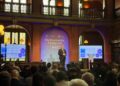
As reconstructed by Evin Incir, a socialist and Kurdish-by-birth MEP, the intergroup had proposed to urgently include a debate and a resolution in the plenary session of the European Parliament, which ended yesterday. But the request was rejected by the majority of the groups. “I was deeply ashamed. If this case is not urgent, I really don’t know what is,” Incir said at a press conference convened by the “friendship group” at the European Parliament in Strasbourg.
The MEP highlighted the poor timing of Costa and von der Leyen’s visit, “while people were being massacred” in Aleppo. She criticised the €620 million package to Damascus, “without saying a word about the situation and without setting any conditions.”
Faik Yağızay, a former political prisoner and representative of the Peoples’ Democratic Party in Strasbourg, was also present. “We call on international powers to intervene immediately to avert disaster. To stop Turkey, because that’s where it all starts,” Yağızay insisted. Andreas Schieder, an Austrian Social Democrat, also urged the head of European diplomacy, Kaja Kallas, and Ursula von der Leyen to “start taking action.”
But the European Commission—and the entire international community in general—has placed its bets on al-Sharaa to rebuild a stable Syria after the collapse of Bashar al-Assad’s bloody regime. Al-Sharaa, former head of HTS, an Islamist militia initially affiliated with ISIS, was a guest of Donald Trump at the White House and Emmanuel Macron at the Élysée Palace, and received the top brass of the European Union in Damascus. The European Commission’s spokesperson for Foreign Affairs, Anouar el Anouni, said today that “the ceasefire is a positive step towards stopping the escalation in north-eastern Syria” and called on “all parties to implement it and reach a comprehensive agreement to ensure de-escalation, access to humanitarian aid, and the protection of civilians.” The spokesperson also highlighted “the crucial issue of the security of detention facilities” for Islamic State fighters.
English version by the Translation Service of Withub