
Brussels – “
In order to ensure effective access to justice for victims, Member States should put
in place free, accessible, user-friendly, safe and readily available channels for
reporting criminal offences.” This is the wording of the revised EU Victims’ Rights Directive, which was finally adopted today (21 May) by the European Parliament in plenary session in Strasbourg (440 votes in favour, 49 against, and 84 abstentions). This is a revision of the 2012 directive and aims to ensure a uniform and up-to-date standard of protection for all victims of crime, introducing a new EU helpline for victims and the use of digital tools; requiring Member States to ensure sufficient human and financial resources to assist victims; and providing for access to sexual and reproductive healthcare for victims of sexual violence.
“Today, around 70 million people in the EU are victims of crime every year. With this reform, we are taking an important step towards ensuring greater protection, support, and 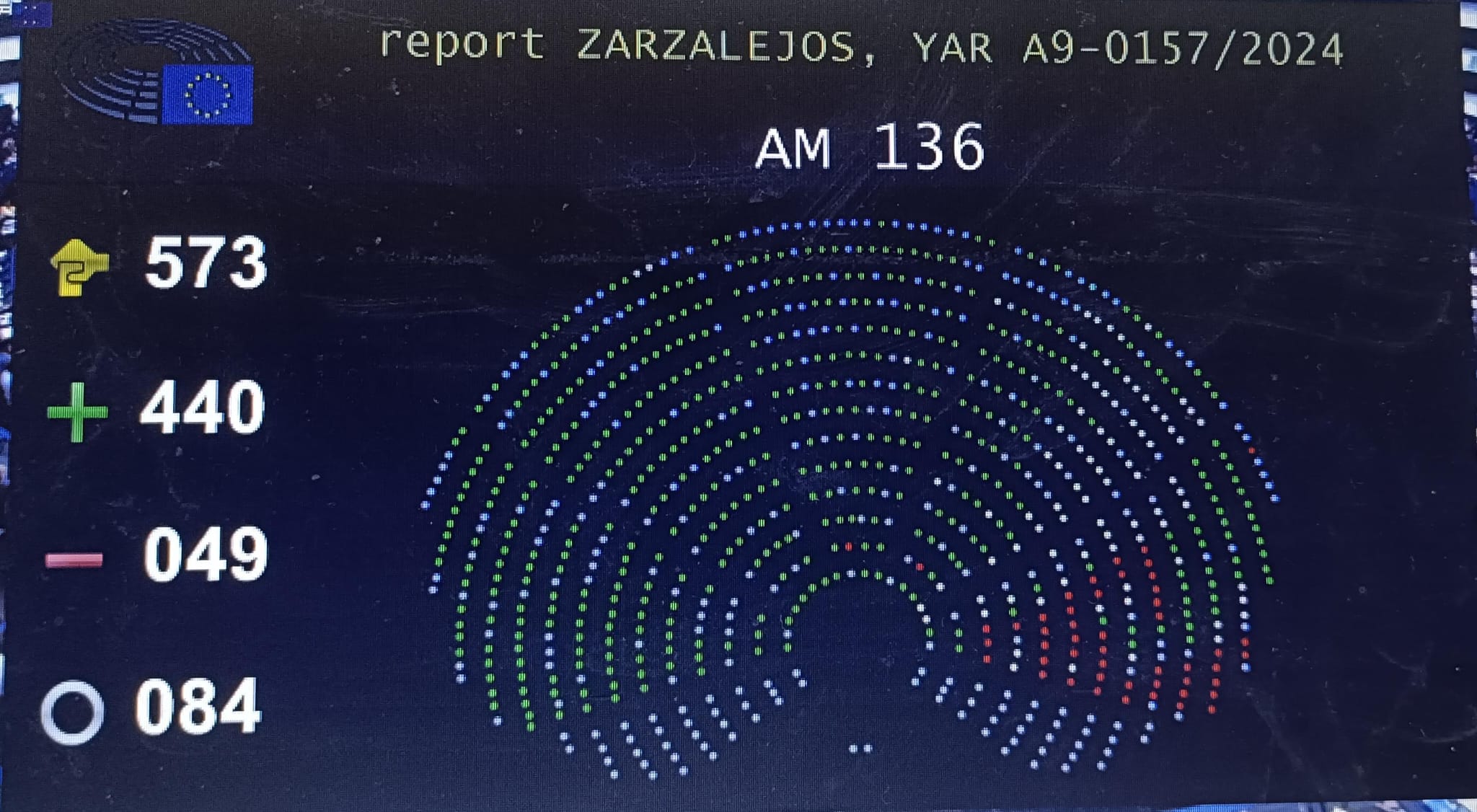 rights for all victims, including cases of abuse in the digital environment and those involving particularly vulnerable victims, such as children who are victims of online sexual abuse,” said the co-rapporteur for the Committee on Civil Liberties, Justice and Home Affairs, Javier Zarzalejos (EPP, Spain).
Specifically, the reform aims to strengthen victims’ rights during criminal proceedings, including through the provision of information and emotional support in court, a new right to privacy and to the non-disclosure of the victim’s personal data to the offender, legal aid for the entire duration of the trial for victims with insufficient means, and the acceleration of compensation payments. It establishes helplines to provide information, support, and referrals to relevant services, available online, via apps, and at the European helpline number 116 006. It introduces the possibility of reporting crimes online and ensures that even people whose freedom is restricted, such as non-EU citizens in immigration centres or people in care facilities (such as care homes for the elderly or people with disabilities), can effectively report a crime. “Reporting by third parties via civil society organisations should also be facilitated,” the Parliament specifies. It includes support services for victims with specific needs, based on an individual assessment by qualified professionals, and specific assistance and access to healthcare services for victims of sexual violence, such as emergency contraception, post-exposure prophylaxis, testing for sexually transmitted infections and access to abortion. Finally, it ensures “the highest standards of protection and support for child victims, adopting a child-centred and age-appropriate approach, and including, where possible, various services (e.g. medical examination, psychological support, video recording of testimony, administrative assistance) within the same facility,” the European Parliament specifies.
“For the first time in EU legislation, we recognise that victims of sexual violence may require sexual and reproductive healthcare, including emergency contraception and access to safe abortion,” explains Lina Gálvez, Chair of the Committee on Women’s Rights and Gender Equality (FEMM). “Denying such care to women who have been raped would constitute clear discrimination,” concludes the rapporteur. The directive requires mandatory, multidisciplinary training for all professionals involved (police, judges, lawyers, and healthcare staff), so that they know how to treat victims in an impartial and trauma-sensitive manner, thereby preventing invasive questions about victims’ private lives during trials. According to Lucia Yar, rapporteur for Renew, these new provisions make it possible to “ensure that victims’ rights are not a secondary consideration but the focus of justice.”
A key aspect of the new text concerns the recognition of and specific support for victims of hate crimes: the directive requires Member States to carry out individual assessments that explicitly take into account sexual orientation and gender identity in order to identify protection needs. “The law also includes a section from the Zan bill, which was defeated in 2021 in the Senate amid indecent applause from the right,” remarked the Democratic Party MEP, Alessandro Zan (S&D). “It is recognised that when a crime is motivated by the victim’s sexual orientation, gender identity, or disability, it is a hate crime and the resulting trauma requires strong safeguards,” he continued during the debate in Strasbourg, describing the vote as a “historic moment” and explaining that the lack of recognition of the discriminatory motive inflicts on victims a “double trauma“, that of the crime itself and that of institutional indifference. “That principle of civilisation, which had been stalled in Italy, now enters European law and will return to our country with the binding force of the law: in 2021 we said that our battle would not stop, and so it has been,” was the Socialist spokesperson’s celebratory message on social media.
Despite its adoption, the directive has not been without its critics. For Elisabeth Dieringer, MEP for the Patriots for Europe (PfE), the inclusion of non-governmental organisations in the protection process is inappropriate for this legislation. “I remain critical because once again we are faced with a text heavily influenced by ideological discourse. What place do concepts such as intersectional discrimination or gender identity have in a text that is about protecting victims?” Meanwhile, the Slovak MEP from the Europe of Sovereign Nations (ENS) group, Milan Mazurek, accused supporters of the directive of legalising “evil” and of protecting irregular migrants instead of deporting “criminals” from European streets: “You progressives have blood on your hands: you have the blood of the victims on your hands.”
The directive will be published in the Official Journal as soon as the Council has formally adopted it. Member States, including Italy, will then have two years to transpose the provisions and bring the new binding safeguards into force.
English version by the Translation Service of Withub



![[foto: European Council]](https://www.eunews.it/wp-content/uploads/2026/03/euco-260319-120x86.jpg)